
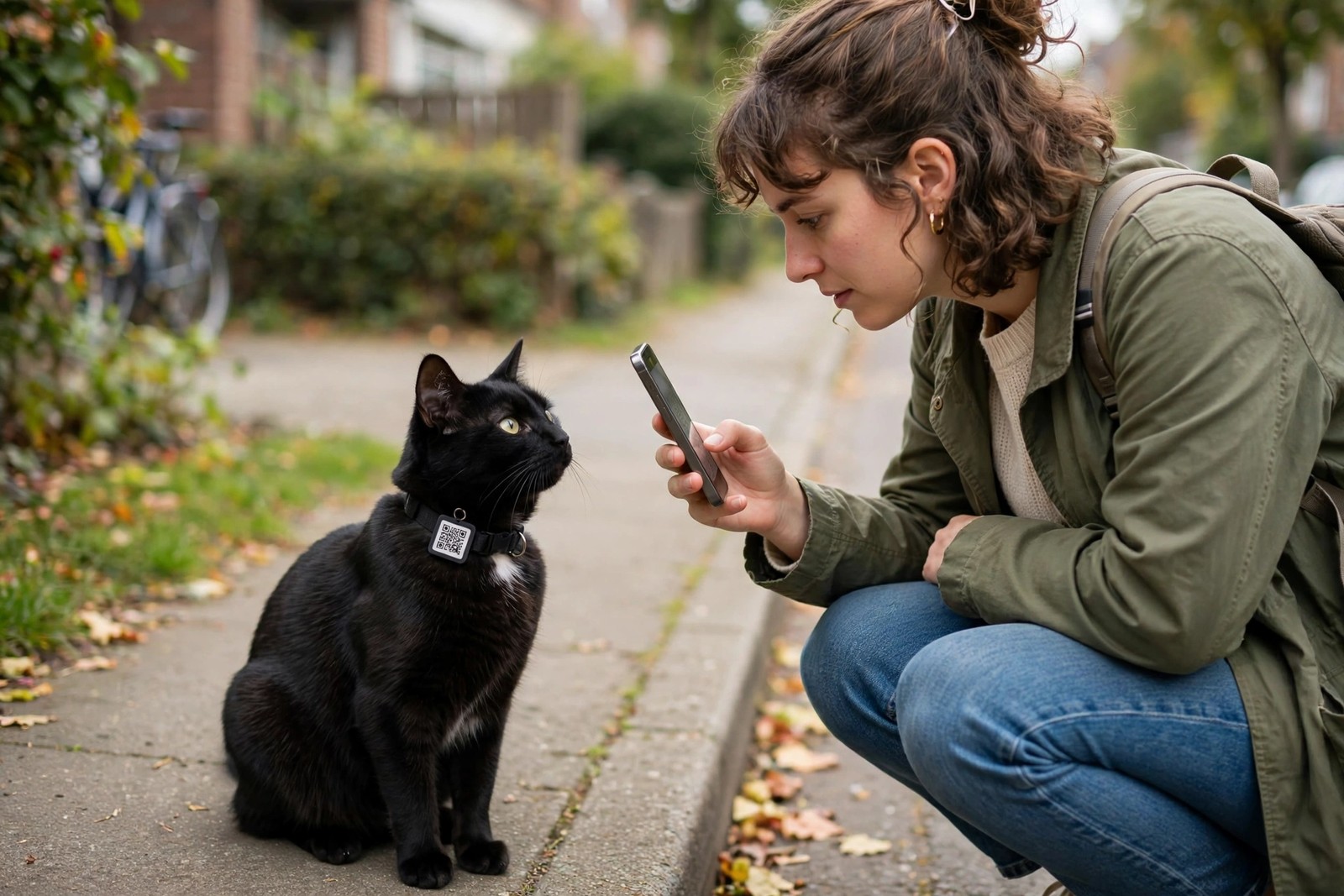
Scan the code with your phone's camera — no special app is needed. The tag opens the cat's profile, where you can contact the owner directly and let them know where their cat is. While you wait for a reply, keep the cat safely contained in a quiet place away from your own pets, offer a little water, and stay calm and slow around her. One scan can turn a stray-cat mystery into a reunion within the hour.
Step by Step: The First Ten Minutes
- Approach gently. Crouch sideways, speak softly, and let the cat come to you if she will. A frightened cat may bolt if grabbed at, so patience beats speed.
- Scan the tag. Point your phone camera at the QR code; a link will appear. Open it to see the cat's profile and the owner's contact options, then call or message straight away.
- Contain her safely. If she is friendly, guide her into a carrier, a bathroom, a porch, or a garage — somewhere enclosed, quiet, and away from traffic. Never transport a loose cat in a car; use a carrier or a secure box with air holes.
- Keep your own pets separate. Even gentle animals can clash with a stranger, and you do not know the found cat's health status. Wash your hands after handling her.
If You Can't Reach the Owner Right Away
Leave a message with your number and exact location, and text as well as call — many people ignore unknown numbers but read texts. Offer water and, if she will be with you for some hours, a small amount of plain cat food if you have it. Take a clear photo of the cat in case the owner — or a local lost-and-found group — needs to confirm it is her. If the profile lists a second contact or a vet, try them too. Most owners respond quickly once they know their cat has been found; a cat who looks well-fed and wears a tag almost certainly has a home nearby, so think "lost," not "stray."
What Not to Do
Do not take the cat to a shelter before trying the tag and giving the owner a fair chance to respond — the tag exists precisely to skip that stressful step. Do not let her back out "to find her own way home" if she seems disoriented, injured, or is in a dangerous spot near traffic. Do not post her exact location publicly in a way that lets anyone claim her; ask anyone who comes forward to describe the cat or show photos. And if she is injured, contact a local vet or animal rescue for advice — many will treat a found injured cat and help trace the owner.
Why QR Tags Work So Well
Traditional engraved tags carry a phone number and nothing else; microchips need a scanner at a vet or shelter. A QR tag bridges the gap: anyone with a phone becomes the scanner, and the profile behind it can hold far more than a number — the cat's name, her home area, medical notes a finder may need, and a direct message route to the owner.
How KinsLe's QR Profiles Are Designed to Work
That is exactly how KinsLe's Verified QR ID Pet Profiles are designed: every pet profile carries a unique QR ID, and one scan connects a finder straight to the owner, who can be messaged directly through the profile. For the finder, it is thirty seconds of effort; for the owner, it is the call they have been hoping for. If your own cat goes missing someday, KinsLe puts a direct message route in a finder's hands through the Verified QR ID Pet Profiles that her collar tag opens.