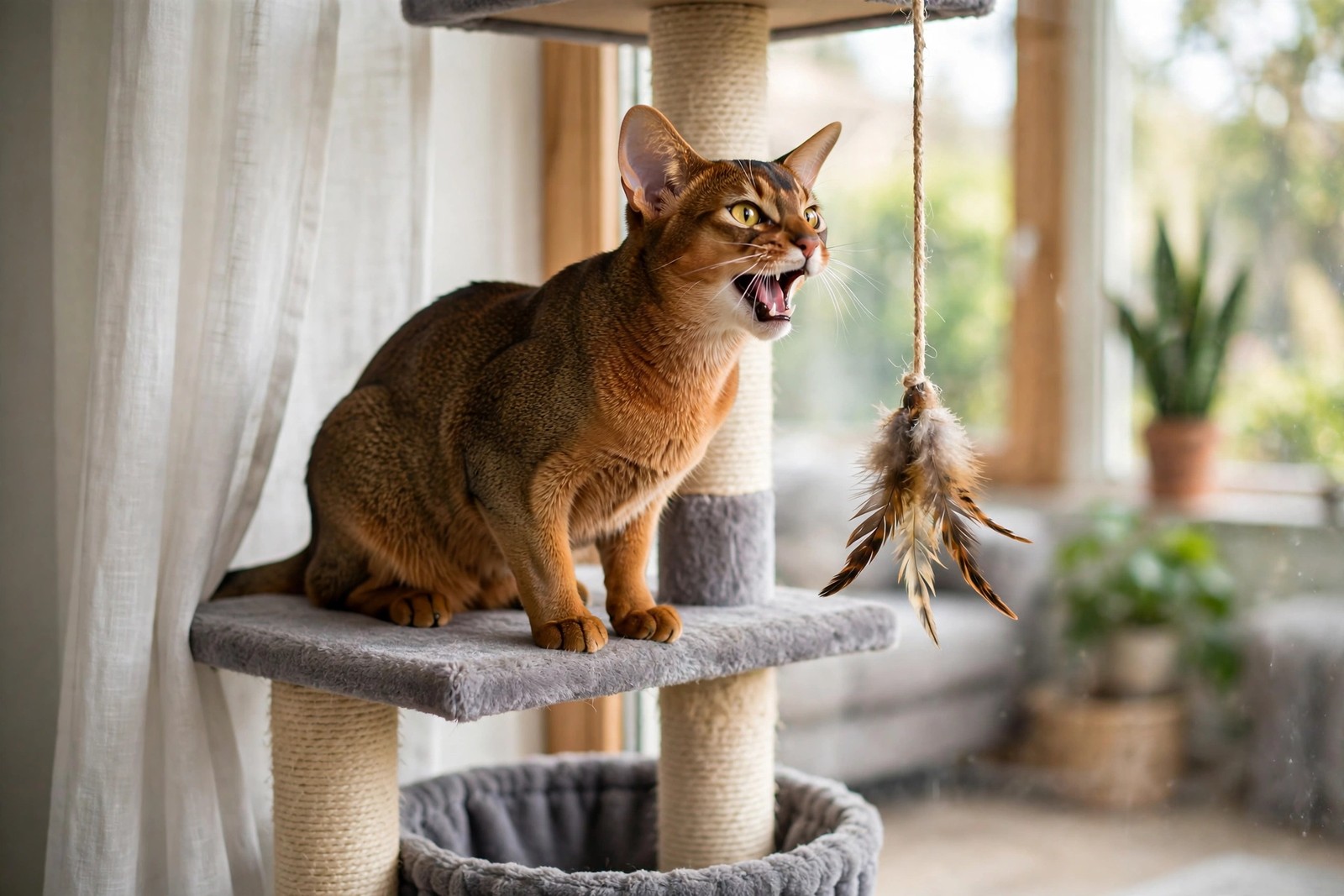
No. The Abyssinian is one of the most interactive cat breeds and one of the quieter-voiced ones at the same time, and confusing those two things is where the talkative reputation goes wrong. An Aby will shadow you, supervise cooking, ride on a shoulder if allowed, and investigate every bag that enters the house, yet the soundtrack is modest: a small, bell-like chirp, a brief trill, and an occasional short mew. If you want a cat who holds long, loud conversations, this is not that breed.
What an Abyssinian Actually Sounds Like
The typical Abyssinian voice is soft, high, and used in short bursts. Owners most often describe three sounds. The chirp is a greeting or an excited reaction to birds through a window. The trill, mouth closed, is a friendly announcement when the cat arrives beside you or jumps up to join you. The mew is short and purposeful, saved for a genuinely empty bowl, a door the cat wants opened, or play that has been promised and not delivered. Sustained yowling, repeated loud meowing, or calling through the night is out of character for a healthy, settled Abyssinian and deserves attention rather than acceptance as breed personality.
Why a Busy Cat Gets Mistaken for a Loud One
Abyssinians communicate with their whole bodies, and the sheer amount of contact can feel like chatter. This is a ticked-tabby, athletic breed that climbs to the highest shelf, fetches small toys, and inserts itself into whatever you are doing. A cat who taps your arm, stares at the cupboard, then trots ahead of you glancing back is communicating clearly without making much noise at all. People who live with Siamese-style vocal breeds notice the difference immediately: the Aby wants involvement, not an audience, and a five-minute interactive play session usually satisfies what a louder cat would announce for an hour.
When an Abyssinian Gets Louder Than Usual
Because the baseline is quiet, a change in volume is useful information. A normally soft Abyssinian who starts meowing repeatedly may be bored and under-stimulated, which for this intelligent breed often shows up first as restlessness and attention-seeking at dawn. Intact cats call far more than neutered ones, especially females in heat. In an older cat, new loudness paired with night waking, weight loss, or drinking more can point to a health problem, and a vet visit is the right next step rather than a behavior fix. Pain, hearing loss, and thyroid and blood-pressure issues in seniors can all turn a quiet cat vocal, so treat a lasting change as a symptom to report, not a quirk to tolerate.
Living Well With a Soft-Voiced, High-Energy Cat
Give the communication somewhere to go. Two short play sessions a day with a wand toy, a tall cat tree near a window, puzzle feeders rotated before they get stale, and shelves or a cleared bookcase top to patrol will cover most of what an Abyssinian is asking for when it chirps at you. Answer the trill, follow when you are led somewhere once in a while, and keep greetings calm so attention-seeking never has to escalate. Apartment dwellers generally find the breed easy on the ears; the real demand is your time and participation, not your tolerance for noise.
Recording the specific chirps, routines, and play preferences your Abyssinian uses in KinsLe's Care Teams means a partner, teenager, or sitter covering a feeding duty sees the same notes you would, so a quiet request is never missed just because the person on duty that day did not know what it meant.