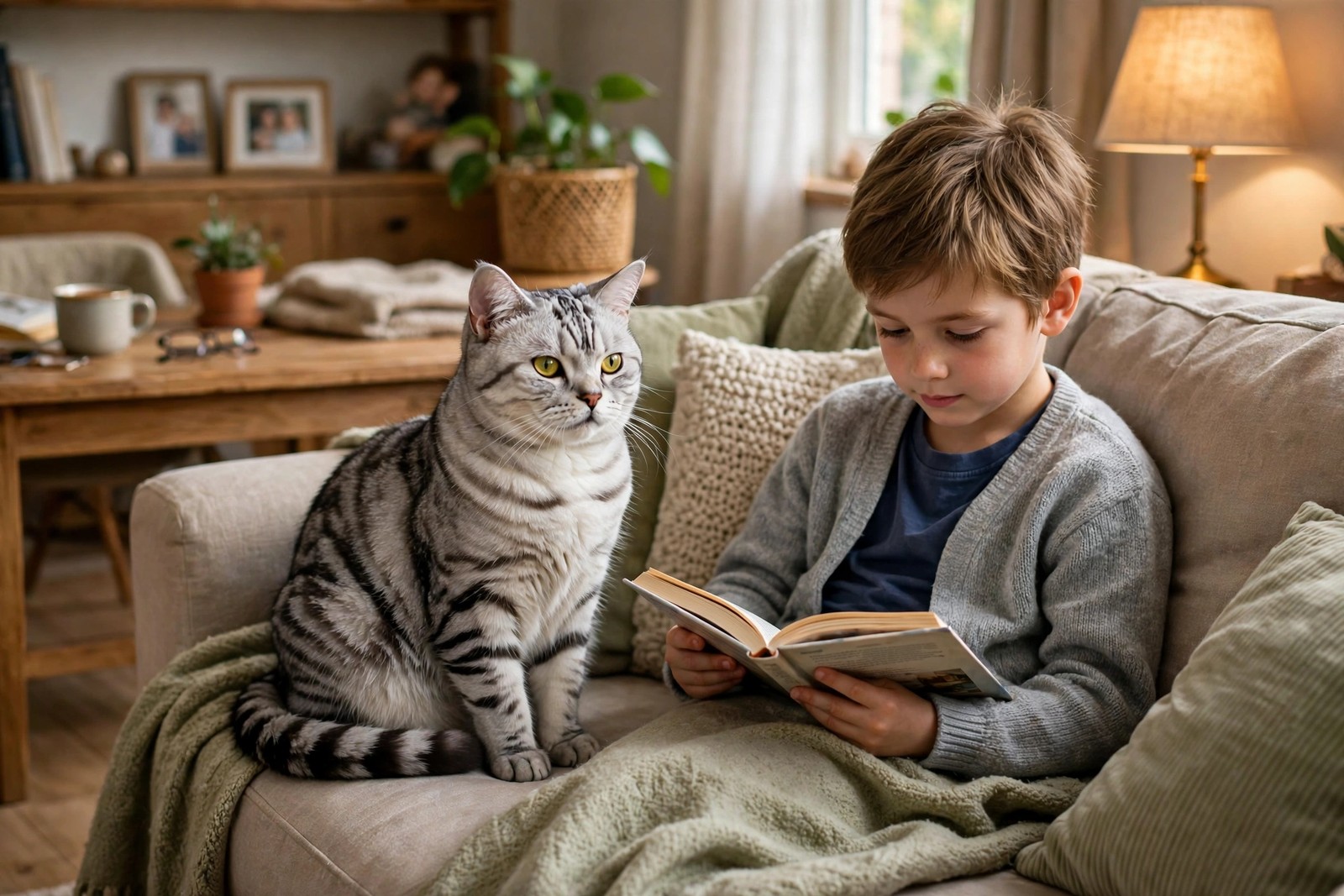
Yes, and this is one of the breeds where the answer comes with the fewest caveats. The American Shorthair was shaped by generations as a working farm and household cat, and it shows: a solid, medium-to-large build, a calm and adaptable outlook, and a tolerance for the ordinary chaos of family life that more highly strung breeds simply do not have.
The Temperament Behind the Reputation
American Shorthairs are affectionate without being clingy. A typical one will sit near the children during a film, join a play session with a feather toy for ten minutes, and then wander off to nap — no drama, no demands. That independence is a real asset in a family home: the cat does not compete with the children for attention, and children do not feel rejected when the cat chooses its own company. They are also notably even-tempered with visitors, other pets and changes in routine, which matters in a house where friends, sleepovers and schedule changes are normal.
Their sturdiness helps, too. This is a broad-chested, well-muscled cat, not a fine-boned one, so an accidental clumsy pat is less likely to hurt or frighten it than it would a delicate breed. Sturdy is not the same as unbreakable, though, and the rules below still apply.
What Children Still Need to Learn
Calm cats can be taken for granted, so teach the basics explicitly rather than assuming the cat will object. Children should stroke along the back, avoid the belly and tail, and never carry the cat around the house — most American Shorthairs prefer four paws on the ground and will wriggle free. Supervise toddlers until you have seen gentle hands many times over, and give the cat an escape route and a quiet room for the hours when small children are at their loudest.
- Let the cat come to the child, treat in hand, rather than the child pursuing the cat
- Short play sessions with wand toys keep hands away from claws and teeth
- One named child per day checks water and reports appetite changes to an adult
- Watch the waistline: this breed gains weight easily, so children learn that treats count as food
A Good First Family Cat
For a first cat in a household with children roughly five and up, the American Shorthair is hard to beat: playful enough to engage a child, independent enough not to overwhelm one, and typically healthy and long-lived. Judge the individual, meet the parents if you can, and choose the kitten that approaches calmly rather than the one that hides or the one that bounces off the walls.
Families keep that easy balance by making care a shared, visible routine — and that is where KinsLe's Care Teams earns its place, letting you assign your American Shorthair's feeding, water and play duties to each family member with notifications and time-stamped completions, so children learn real responsibility and nothing is fed twice.