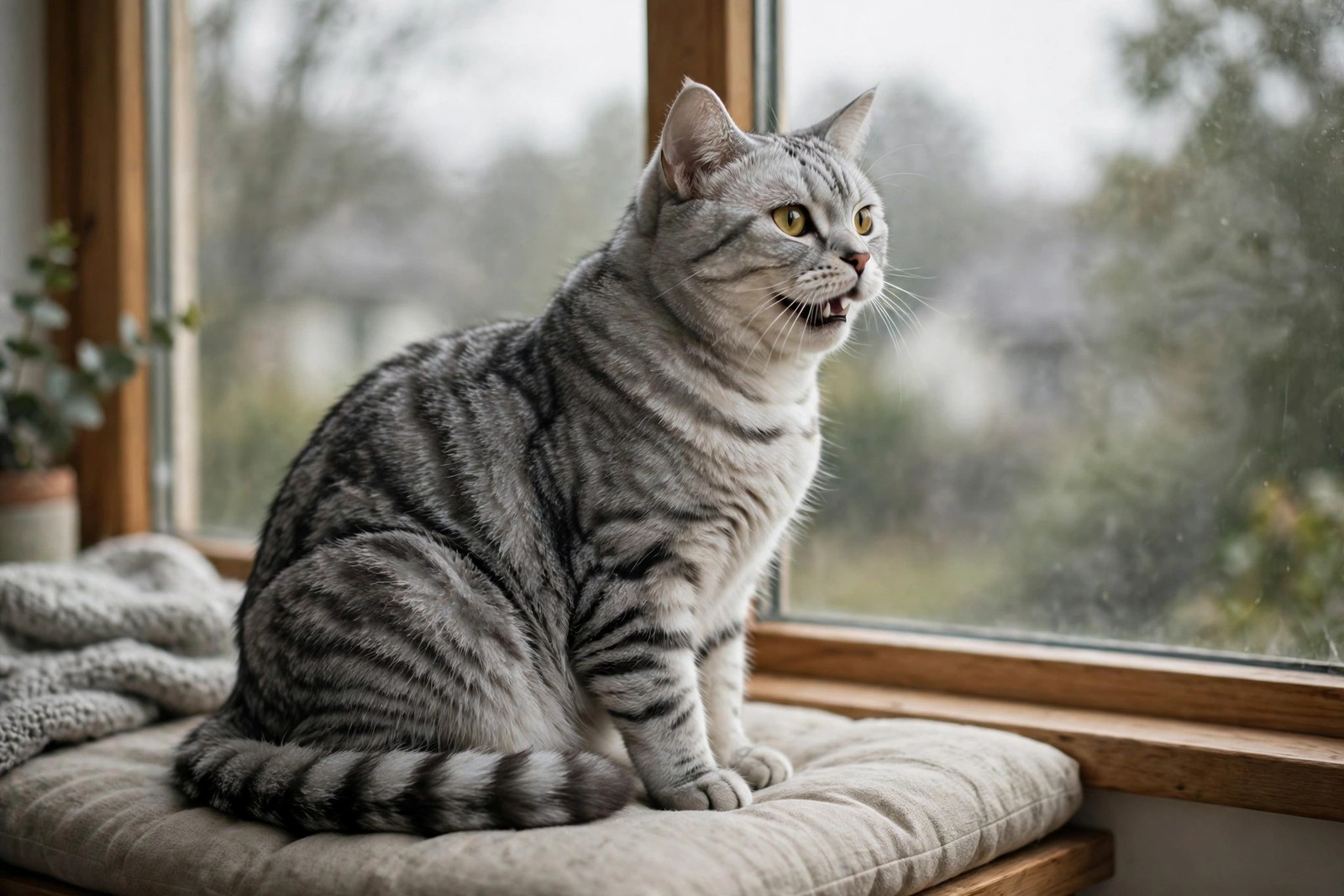
No. If a low-noise home matters to you, the American Shorthair belongs on your short list. This sturdy, easygoing breed is known for a soft voice used sparingly, and many owners go a whole day hearing little more than a purr and a single greeting chirp. Talkative is one of the last words breeders use for them, and a cat show judge or a longtime owner will tell you the same: this is a watchful, companionable cat, not a commentator.
The Sounds You Will Actually Hear
An American Shorthair's working vocabulary is small. There is a short, quiet mew for a specific request, usually food-related or a wish to come through a door. There is a chirp or soft trill of greeting when you come home or walk into the room the cat has chosen. There is the famous silent meow, mouth opening with little or no sound, which this breed is particularly associated with and which most owners find endearing once they learn to watch faces, not just listen. And there is purring, which American Shorthairs do generously when settled beside someone, even though they are not usually demanding lap cats on a schedule.
Communication Without Volume
What the breed lacks in voice it makes up for in presence and expression. Broad faces and round eyes make their intentions readable: the slow blink from across the room, the tail carried upright in greeting, the deliberate choice to sit near you rather than on you. American Shorthairs tend to follow household activity at a slight distance, supervising rather than participating in everything, and they are famously tolerant, undemanding housemates for families and for quieter single owners alike. A cat who wants something will often simply position itself where the thing happens, beside the food cupboard or the favored chair, and wait to be noticed.
When Quiet Becomes a Warning Sign
The flip side of a quiet breed is that vocal changes stand out, and they should be taken seriously. An American Shorthair who suddenly meows repeatedly, cries in the litter box, or calls at night is showing you something out of character: pain, urinary discomfort, stress after a household change, or, in an older cat, conditions such as high blood pressure or thyroid disease that a vet should check. Equally, a cat who stops even its small greetings and withdraws may be unwell rather than simply independent. With a breed this restrained, any clear departure from the individual baseline is the signal, in either direction.
A Good Match for Quiet Homes
American Shorthairs fit apartments, shared houses, and noise-sensitive owners well, and their moderate energy means they rarely fill silence with demands at dawn. Provide a scratching post, a window perch, brief daily play, and predictable feeding times, and the breed asks for little else vocally. Kittens can be livelier and slightly more vocal than adults, so judge the breed by the settled adult temperament, not a twelve-week-old's first weeks at home.
Writing down what your American Shorthair's few sounds mean is worthwhile at home, and Family Sharing through KinsLe lets relatives you pick open the profile themselves, rather than waiting for you to show it.