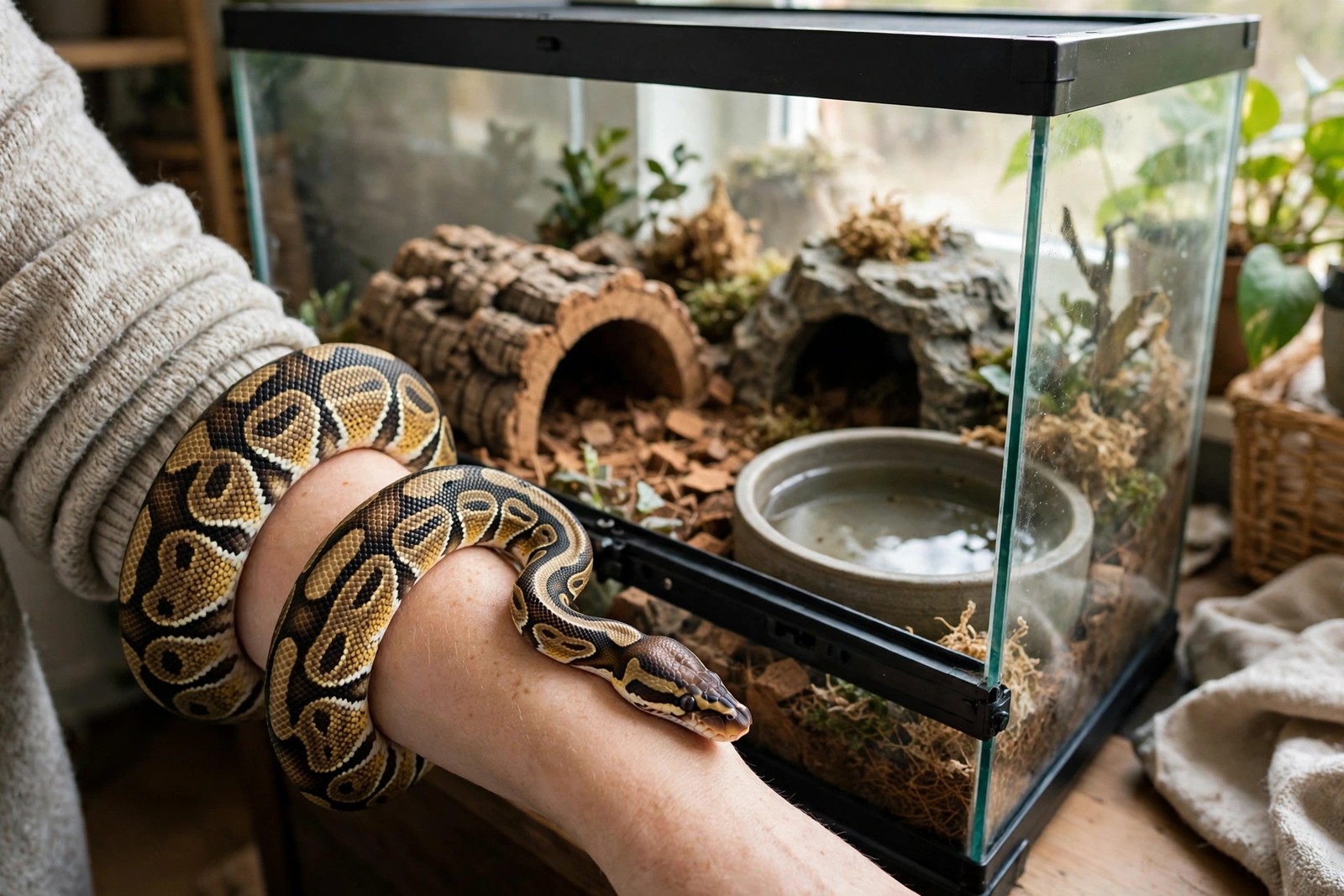
Yes — with eyes open. Ball pythons earn their beginner reputation through temperament and size, not through being effortless. Get the enclosure conditions right and this is a calm, hardy snake. Get them wrong and the same snake stops eating, sheds in ragged pieces, and becomes a puzzle a new owner may not know how to solve.
Why They Suit a First-Time Keeper
A ball python is shy rather than defensive. Startled, it typically tucks its head into a tight coil — the habit behind the name — instead of striking. Adults usually reach four to five feet, with females a little heavier than males, so handling stays manageable for one person and no giant enclosure is needed. They move slowly, tolerate gentle handling well once settled, and feed on a single rodent every one to two weeks rather than daily. For someone who wants a snake they can observe and handle calmly, that combination is genuinely beginner-friendly.
The Three Challenges Nobody Should Skip
First, humidity. Ball pythons come from West African grasslands and need humidity around 50 to 60 percent day to day, rising higher during a shed. Dry air is the most common new-owner mistake, and it shows up as stuck shed and retained eye caps. Second, temperature: they need a warm side around 88 to 92°F, a cooler side near 78 to 80°F, and a thermostat controlling the heat source, because an unregulated mat can burn a snake that will not move away from it. Third, feeding strikes. A healthy ball python may refuse frozen-thawed rodents for weeks, especially in cooler months, during a shed, or after a move. That refusal panics beginners, yet a snake holding its weight is usually safe to wait out.
Setting Up Before the Snake Arrives
Run the enclosure empty for several days first. Confirm the warm and cool ends with a thermometer at floor level, where the snake actually lives, and check humidity morning and evening. Provide a snug hide at each end — a python forced to choose between warmth and feeling hidden often chooses hiding and stays too cool to digest. Add a heavy water bowl large enough for soaking, replace the water when it is soiled, and wash the bowl itself between refills. Ask the seller for the feeding record, the last shed date, and any history of mites or refused meals. Note that snakes are not vaccinated, so there is no vaccination record to request; ask about parasite checks and past vet visits instead.
The Commitment Underneath the Question
Twenty to thirty years is longer than most dogs live, and it spans moves, children, and changing jobs. Handling stays short and calm, you never handle for about two days after a meal, and you wash your hands before and after every session. If your snake loses noticeable weight during a fast, develops bubbly mucus, wheezes, or keeps shed skin stuck over an eye, see a veterinarian who treats reptiles rather than waiting it out. KinsLe's Transferrable Profiles feature keeps that whole long story — meals accepted and refused, sheds, enclosure settings, and vet visits — in one profile that can move with your python to a new keeper, so three decades of care never have to be reconstructed from memory.