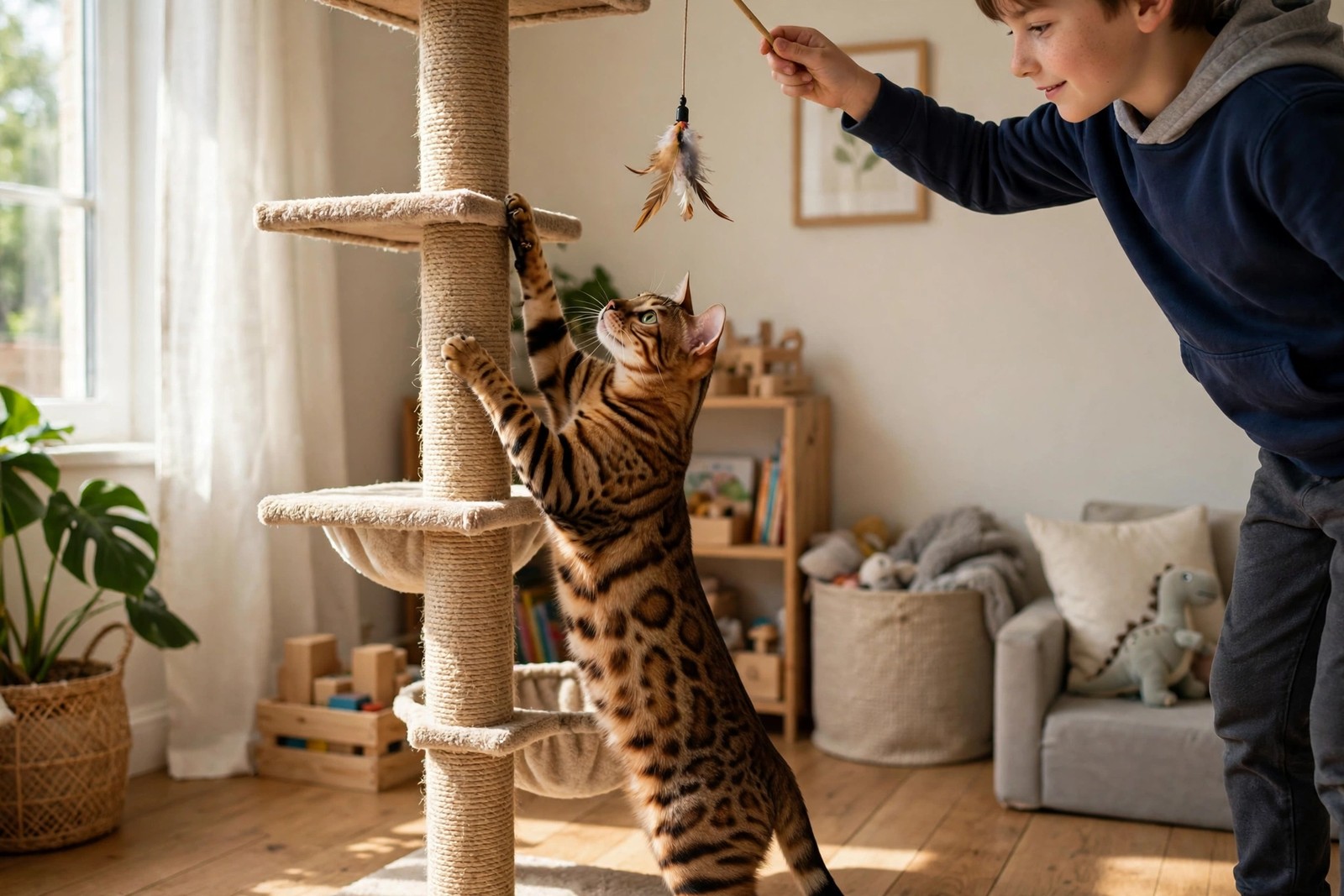
It depends almost entirely on the children's ages. A Bengal is a high-octane cat — athletic, intelligent, vocal and hungry for activity — and that profile delights a confident ten-year-old while overwhelming, and being overwhelmed by, a grabby two-year-old. Judge this match by energy style, not by friendliness: most Bengals are not aggressive with children, they are simply too much cat for the wrong stage.
What a Bengal Brings to a Family
Bengals play hard and interact constantly. They race up cat trees, leap impressive distances, fetch soft toys, splash in water bowls and supervise everything from a height. For a school-age child, that is a cat who genuinely plays back — chase games, hallway fetch, puzzle feeders built together, even lead walks in the garden for a harness-trained cat. Few breeds reward an energetic child so directly, and the bond that forms through daily games is typically strong.
They are also confident and dog-like in following the household around, so a Bengal rarely hides from normal family noise the way a shy breed might. Company is welcome — on the cat's terms.
Where Young Children Go Wrong With Bengals
The friction points are specific. Toddlers hug, squeeze, chase and shriek; a Bengal's tolerance for being restrained is low, and an overstimulated Bengal — tail lashing, skin twitching, pupils wide — will swat or bite if its earlier signals were missed, then learn to avoid children entirely. Bengals also play rough by cat standards, and an under-exercised one redirects that energy onto ankles and small moving hands.
- Best fit: children roughly seven and up who can read stop signals and play with toys, not hands
- Every child learns the overstimulation signs — lashing tail, flattened ears, sudden stillness — and that they mean hands off, now
- The cat always has a high escape route and a room children cannot enter
- Two or three vigorous play sessions a day are scheduled, not optional, before expecting calm behaviour
Decide With Eyes Open
If your household's children are past the grabbing stage and someone will reliably burn off this breed's energy every day, a Bengal can be a spectacular family cat. If your youngest is under five, most families are better waiting, or choosing a calmer breed now and meeting a Bengal later.
When a Bengal does join the family, spreading its workload is what keeps behaviour sweet — and KinsLe's Care Teams makes that easy by assigning each day's play sessions, feeding and litter care to named family members with reminders, so your Bengal's stimulation needs are visibly covered even when one person is away.