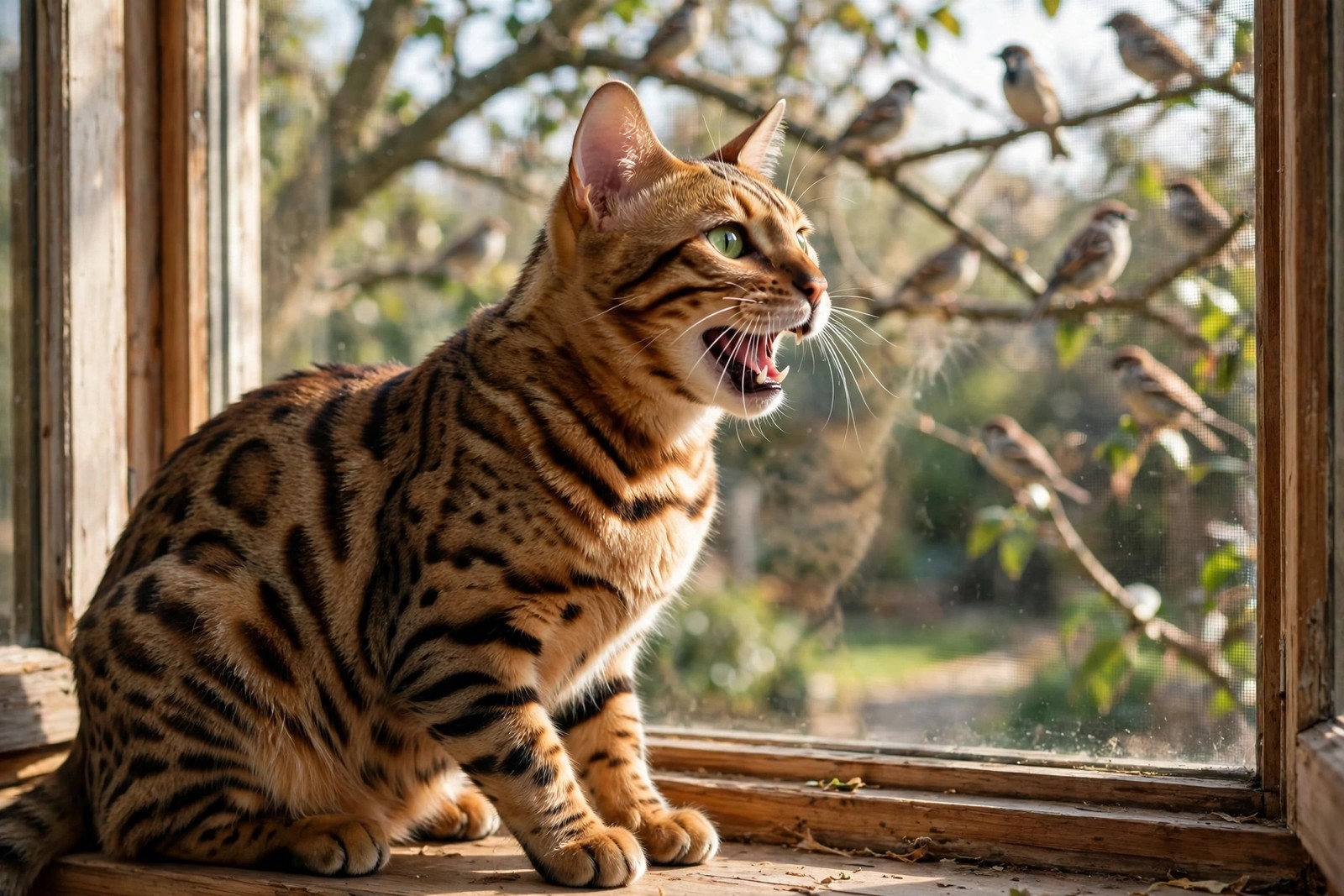
Yes, unmistakably. If you want a quiet cat, cross the Bengal off your list now. This breed inherited a broad, expressive voice and uses it deliberately — to greet, to demand, to comment and to complain — and most owners find their Bengal holds daily conversations with the household whether the household participates or not.
The Bengal Repertoire
A Bengal's vocabulary is wider than the standard meow. Owners commonly report:
- Yowls: long, loud, carrying calls, often at doors, at night, or when the cat wants the household's plan changed
- Chirps and trills: short, bright sounds used as greetings and to get kittens — or people — to follow
- Chatter: the stuttering jaw-chatter aimed at birds and squirrels through a window, part of thwarted hunting excitement
- Demand vocalising: repeated, escalating calls at feeding time, playtime or when a favourite person leaves — and this breed does not give up after two tries
Volume varies by individual, but persistence is a breed trait. A Bengal that wants the tap turned on, the wand toy out or the bedroom door opened will typically keep asking, louder, until something changes.
Why They Talk, and What It Is Saying
Most Bengal noise is functional. It clusters around transitions — your arrival home, meal preparation, lights-out — and around unmet needs: a bored, under-played Bengal is a loud Bengal, because vocal demand is how this intelligent breed recruits entertainment. Answer the pattern, not just the sound: a cat that yowls every evening at the same hour is usually scheduling you for the play session its body clock expects.
Context separates chatter from concern. A sudden change in voice, calling paired with restlessness, appetite change or litter-tray straining, or a normally chatty cat going quiet, is worth a vet visit rather than a shrug — vocal changes can be one of the earliest signs something physical is wrong.
Living With the Volume
Choose this breed with your housing in mind. Thin flat walls, a partner who works nights, or a baby whose naps you guard fiercely are all real factors, because you cannot train a Bengal into a quiet breed; you can only meet its needs earlier so it asks less desperately. Playing before bed, feeding on a predictable schedule and not rewarding 4 a.m. yowling with food all reduce the unsocial-hours performances without silencing the cat you chose.
Embrace the conversation, though, and most owners would not trade it — a Bengal narrating its day is a large part of the breed's charm. When a week of calling sounds different from your Bengal's usual commentary, Kinny can take a further question in KinsLe, and his reply is drawn from that published library of answers rather than guesswork.