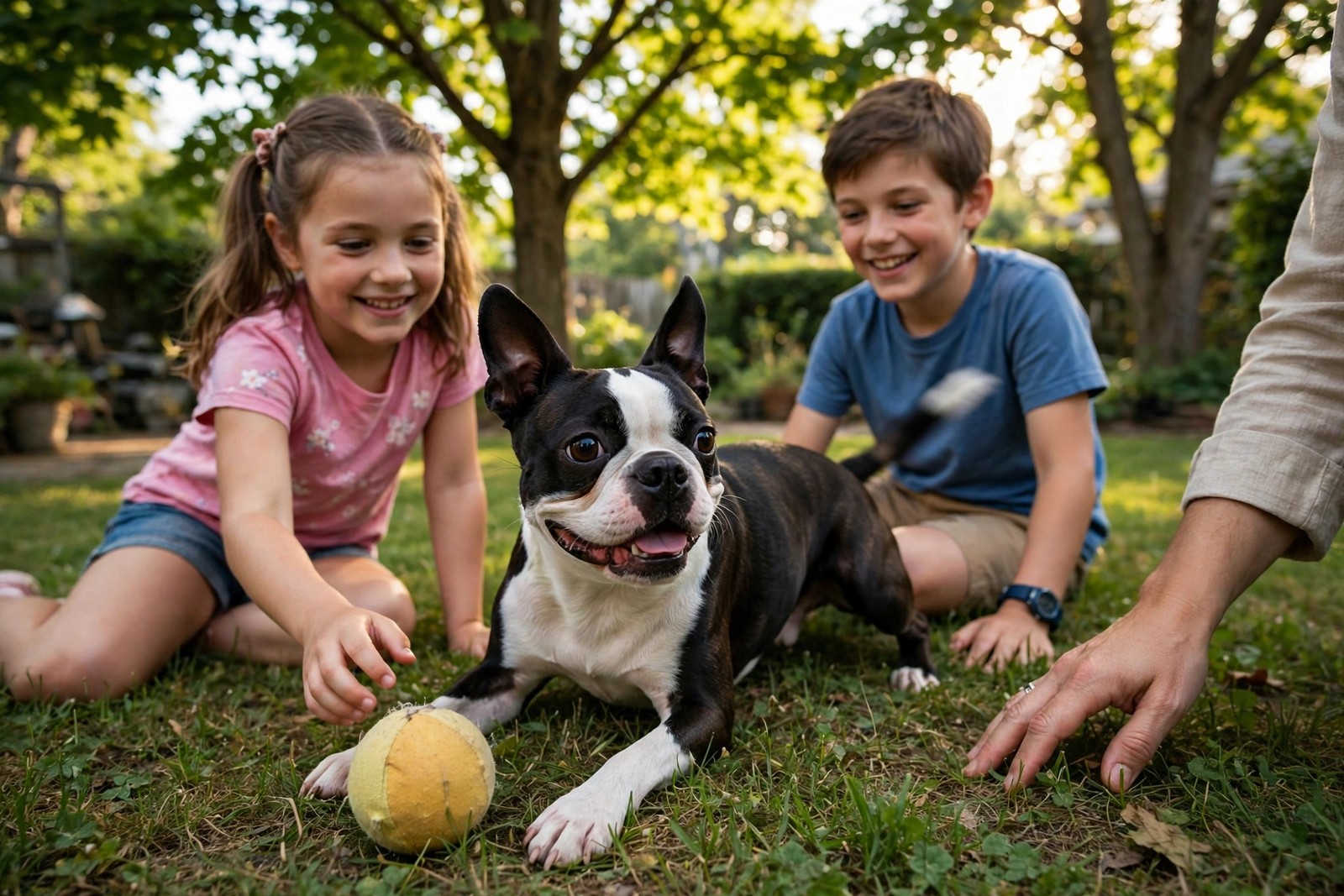
Yes — the Boston Terrier earns its family reputation honestly. This is a people-oriented, good-humoured breed that actively seeks out the household's company, and children are usually its favourite playmates. A Boston is solidly built for its size, neither tiny nor fragile, and a well-raised individual is patient, tolerant of noise and bustle, and quick to forgive the clumsiness of family life.
Why the Match Usually Works
Bostons play at a child's scale: chasing a ball in the garden, learning a trick for treats, then flopping down for a cuddle. They are not typically snappy or possessive, and their moderate energy means an active game followed by a nap fits them better than hours of relentless activity. School-age children who can throw, hide treats for a search game, and read a dog's body language get the best of this breed.
The Limits Children Need to Learn
Excitement is the first one. A wound-up Boston bounces, spins, and can knock a small toddler over without a trace of malice, so an adult supervises play with under-fives and steps in to calm the game before it peaks. The second limit is the breed's short face: Bostons overheat quickly, so children must learn that panting hard, noisy breathing, or flopping down means play stops, shade and water come out, and the dog rests — especially in summer.
Handling Rules for a Happy Boston
Teach children to stroke the back and chest, never to grab the dog's face, pull ears, or pick the dog up around the middle. Bostons have prominent eyes that can be scratched in rough play, another reason games stay supervised and wrestling stays off the menu. Give the dog a bed or crate area that is strictly its own, and make it a family rule that a Boston who walks away or goes to sleep is left in peace.
Choosing and Preparing the Individual Dog
Breed is only half the story. Choose a puppy from parents with calm, friendly temperaments, or an adult Boston whose history with children is known, and let children meet the dog calmly before committing. In the first weeks, keep introductions short and rewarding, let the dog approach children rather than being carried to them, and build the friendship through shared walks and training games.
When every adult and older child in the home works from the same play limits and rest rules, a Boston stays the relaxed family clown it should be, and KinsLe's Family Sharing puts those rules alongside feeding and health notes in one profile, so grandparents, sitters, and parents all supervise Boston-and-child time exactly the same way.