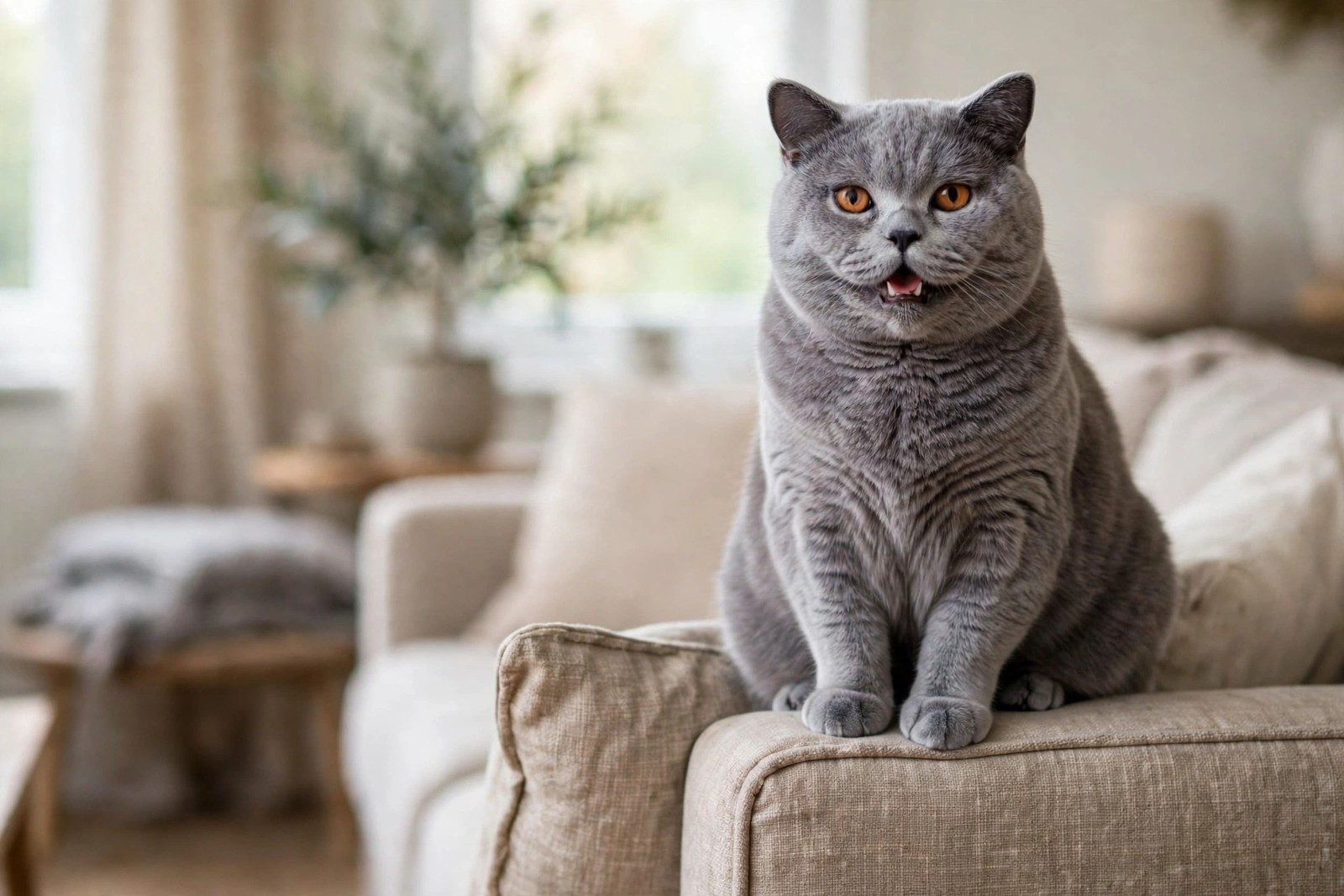
No. The British Shorthair sits near the quiet end of the cat spectrum, and owners choose the breed partly for exactly that. This is a calm, self-contained cat with a plush coat and an undemanding manner, and its voice matches its temperament: small, used rarely, and almost never raised. Expect long silent companionship punctuated by an occasional short meow, not a cat who narrates the day.
A Small Voice, Used Sparingly
When a British Shorthair does speak, the sound is typically a brief, slightly raspy mew, lower in drama than volume. Common occasions are few and specific: a meal running late, a closed door between the cat and the room it considers its own, or a polite response when you talk to the cat directly, almost like an acknowledgement. Many British Shorthairs also produce a soft chatter of contentment-adjacent sounds while watching birds, and they purr readily, but sustained meowing, yowling, or dawn choruses are simply not the breed's style. Kittens may be marginally more vocal; adults settle into quiet by around a year old.
Reading a Cat Who Barely Speaks
Because the voice is rationed, British Shorthairs communicate in posture and placement. The breed is famous for sitting or standing nearby rather than in laps, keeping company at arm's length while staying in the same room. A cat who follows you and settles facing you is being sociable by British standards. Slow blinks, a relaxed upright sit, ears in neutral position, and choosing the sofa arm over a hiding place all signal contentment. Displeasure is equally quiet: the cat simply leaves. Learning this understated language is the real skill of living with the breed, and guests who expect obvious affection cues often misread a perfectly happy cat as aloof.
When a Quiet British Shorthair Finds Its Voice
Treat new, repeated vocalisation in this breed as information, not personality development. A British Shorthair crying repeatedly may be in pain, struggling in the litter box, or unsettled by a change in routine, territory, or household members. In middle-aged and older cats, increased calling, particularly at night, can accompany conditions such as thyroid disease or raised blood pressure, and because the breed is prone to weight gain, appetite changes alongside new vocal demands are also worth mentioning to a vet. The rule is simple: in a cat who almost never asks for anything out loud, any persistent asking deserves a check, first of the obvious causes at home and then at the clinic if it continues.
Who This Quiet Suits
British Shorthairs are among the better breeds for apartment living, shared walls, home workers on calls, and anyone who finds a highly vocal cat wearing. They are tolerant, not easily startled by ordinary household noise, and content with a predictable routine of meals, a solid scratching post, and short play sessions. What they need from you is not tolerance for noise but attention to subtlety: noticing the rare meow, the slightly emptier bowl, the cat who has moved one room further away than usual.
Keeping those few baseline sounds and habits written in your cat's KinsLe Pet Pass profile means the information travels with the cat, so anyone caring for or treating your British Shorthair knows that in this particular cat, quiet is normal and calling is news.