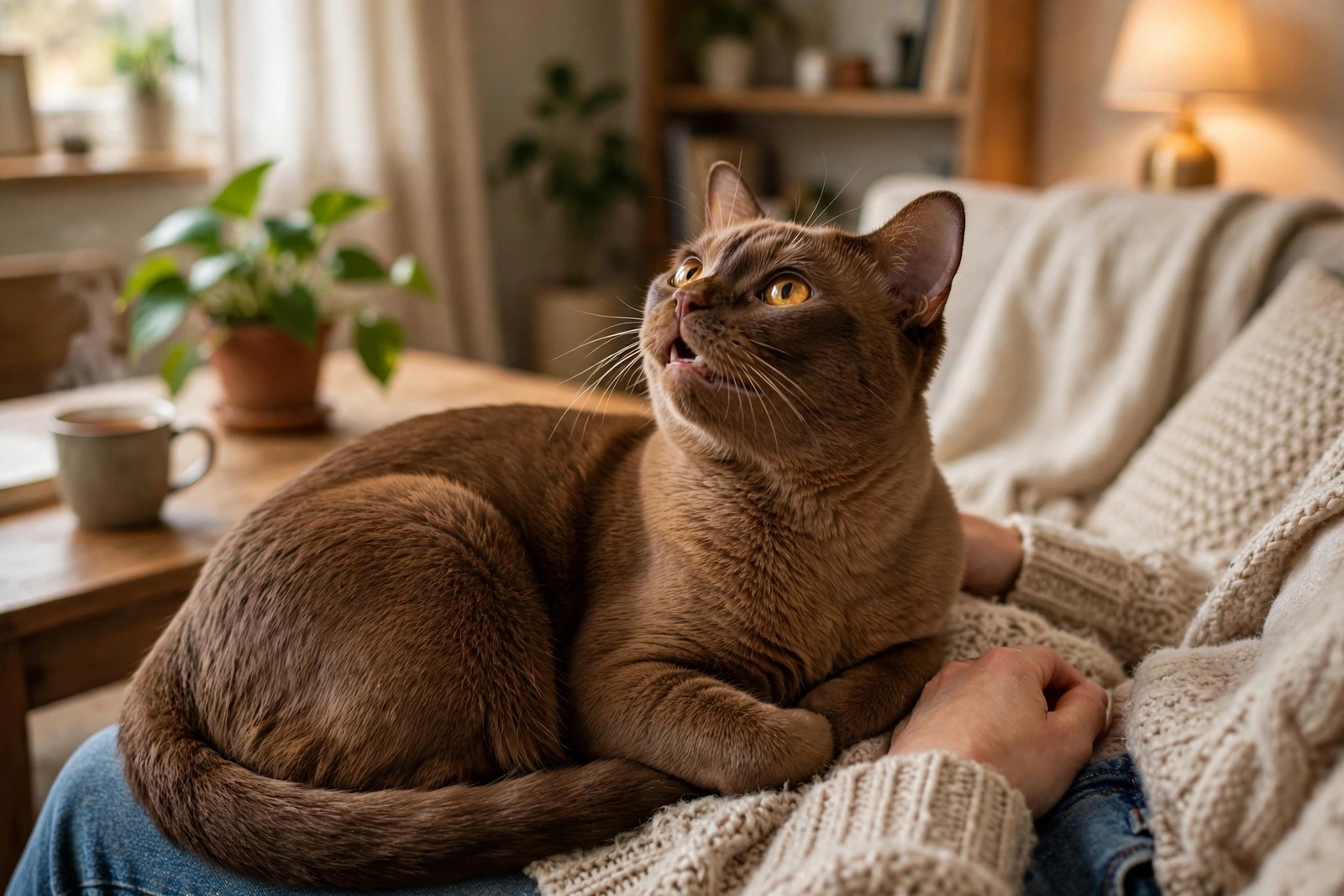
Yes — a Burmese is one of the breeds most naturally suited to indoor living, because what it wants from life is mostly inside the house already: you. Burmese are famously social cats, more like a devoted small dog in their habits than the aloof stereotype of a cat. They follow owners between rooms, hold conversations in a soft, persistent voice, and arrange themselves on laps, paperwork, and keyboards. Indoor life gives them all of that, plus safety from traffic and fights.
The Social Contract of This Breed
A Burmese does not merely tolerate company; it requires it. Left alone for long working days with no arrangement, many Burmese become anxious, unusually vocal, or develop attention-seeking habits like night-time yowling and waking owners early. Households with someone home much of the day, staggered schedules, or a second friendly pet for company fit this breed far better. If your life involves long absences most days, be honest that a Burmese may not be your cat.
Play That Lasts Into Adulthood
Burmese keep a kittenish interest in games for years. Build two interactive play sessions into the day — wand toys, balls to chase along a hallway, boxes to ambush from — and rotate toys so yesterday's favourite feels new again. They are intelligent and trainable; many learn to come when called and to walk on a harness, which gives confident individuals a safe taste of the outdoors. Puzzle feeders and food hidden around a room add mental work between your sessions.
Comfort and Setup Indoors
This is a warm-climate breed in a short, fine coat, and Burmese actively seek heat: sunny windowsills, radiators with a safe bed nearby, and laps above all. Provide a scratching post near the family's main room, a litter setup kept scrupulously clean — Burmese can be particular — and sleeping spots in the rooms where people actually spend time, not shut away. Their curiosity means cupboards, washing machines, and open windows all need a quick check before closing.
When You Travel
Do not simply leave extra food down and hope. A Burmese notices absence immediately, so arrange a daily sitter visit with real play and company time, or a stay with someone the cat knows, rather than a quick feed-and-leave call. Write down feeding amounts, favourite games, hiding spots, and your veterinarian's details for whoever steps in.
Handing that routine over cleanly matters more for this breed than most, and KinsLe's Care Pass gives your sitter temporary, scoped access to your Burmese's feeding, play, and health notes without needing an account, so the company and care this social cat depends on continue while you are away.