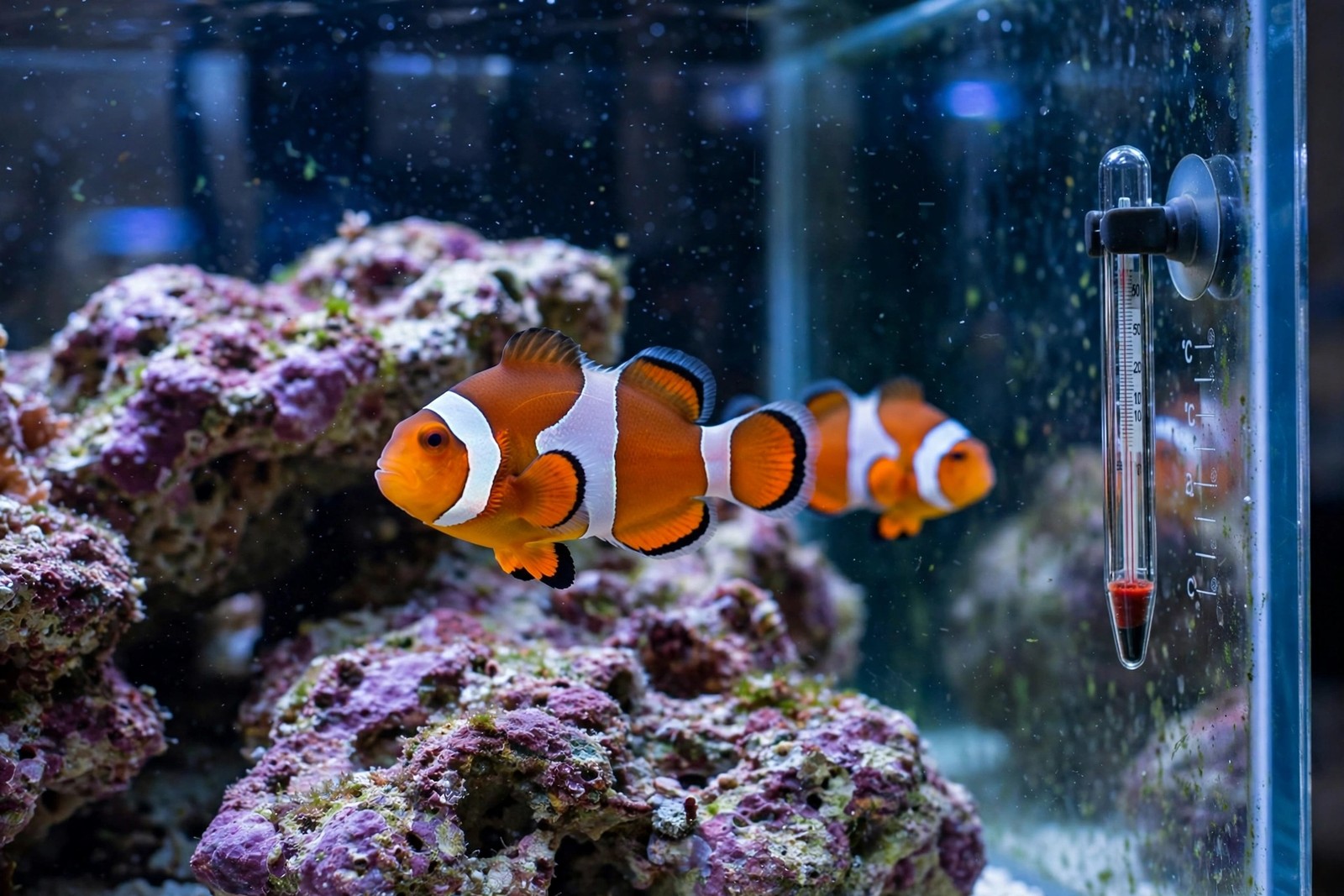
Yes, with an honest caveat: the clownfish is beginner-friendly, and saltwater keeping itself is beginner-demanding. If a first marine fish exists, this is it, which is why clownfish anchor so many first reef and fish-only tanks. But nobody should buy one believing marine care is freshwater care with salt added. The fish will forgive you some learning curve. The water chemistry will test whether you did your homework before the fish ever came home.
Why Clownfish Suit Beginners
Three traits make clownfish the standard recommendation. First, hardiness: captive-bred clownfish, now widely available and the only kind a beginner should buy, are raised in aquarium conditions and tolerate small swings in water quality that would stress wild-caught or fussier marine species. Second, size and temperament: common clownfish grow to roughly three inches, eat frozen and pellet foods readily, and hold a small territory rather than ranging the whole tank. Third, character: they are bold, visible, and interactive, developing the famous waddling swim and hosting behaviors in anemones, soft corals, or even a chosen corner, so a new keeper actually sees and enjoys the animal they are maintaining a system for.
The Saltwater Caveats Nobody Should Skip
The tank must be cycled before the fish arrives, meaning beneficial bacteria are established to process waste, a process that typically takes several weeks with testing, not days. Most keepers do best starting around twenty gallons or larger, because small volumes of seawater swing faster in temperature and salinity as water evaporates. You will mix or buy saltwater, top off evaporation with fresh water, test ammonia, nitrite, nitrate, and salinity on a schedule, and change a portion of the water regularly. Equipment and running costs exceed a comparable freshwater setup, and marine fish are lost quickly to ammonia spikes in an uncycled tank, so patience at setup is the single biggest predictor of a beginner's success.
Choosing and Settling Your First Clownfish
Buy captive-bred, from a shop that can tell you the fish is eating prepared foods. Look for clear eyes, full fins with no white film or spots, active swimming, and a rounded belly, and never accept a fish that arrived at the shop that same day. One clownfish, or a bonded pair bought together as juveniles, is the right stocking; two unrelated adults can fight seriously. Acclimate slowly, keep lights dim the first day, and expect the fish to claim one spot and venture out over the first week. An anemone is not required, and beginners are better adding one only months later, if ever, since anemones are far more demanding than the fish made famous by living in them.
The Routine That Keeps It Easy
Daily, the job is a glance: fish eating, water clear, equipment running, temperature steady. Weekly, it is testing, topping off, and a partial water change. That rhythm is genuinely manageable, and clownfish kept this way commonly live for many years, which is the other thing to accept before buying: this first fish is a long commitment, not a practice animal to discard when the hobby either sticks or bores you.
Logging each test result, water change, and feeding note in KinsLe's Care Teams turns the marine schedule into assigned, ticked-off duties for everyone in the household, so salinity checks never depend on one person remembering a tank that looks deceptively peaceful.