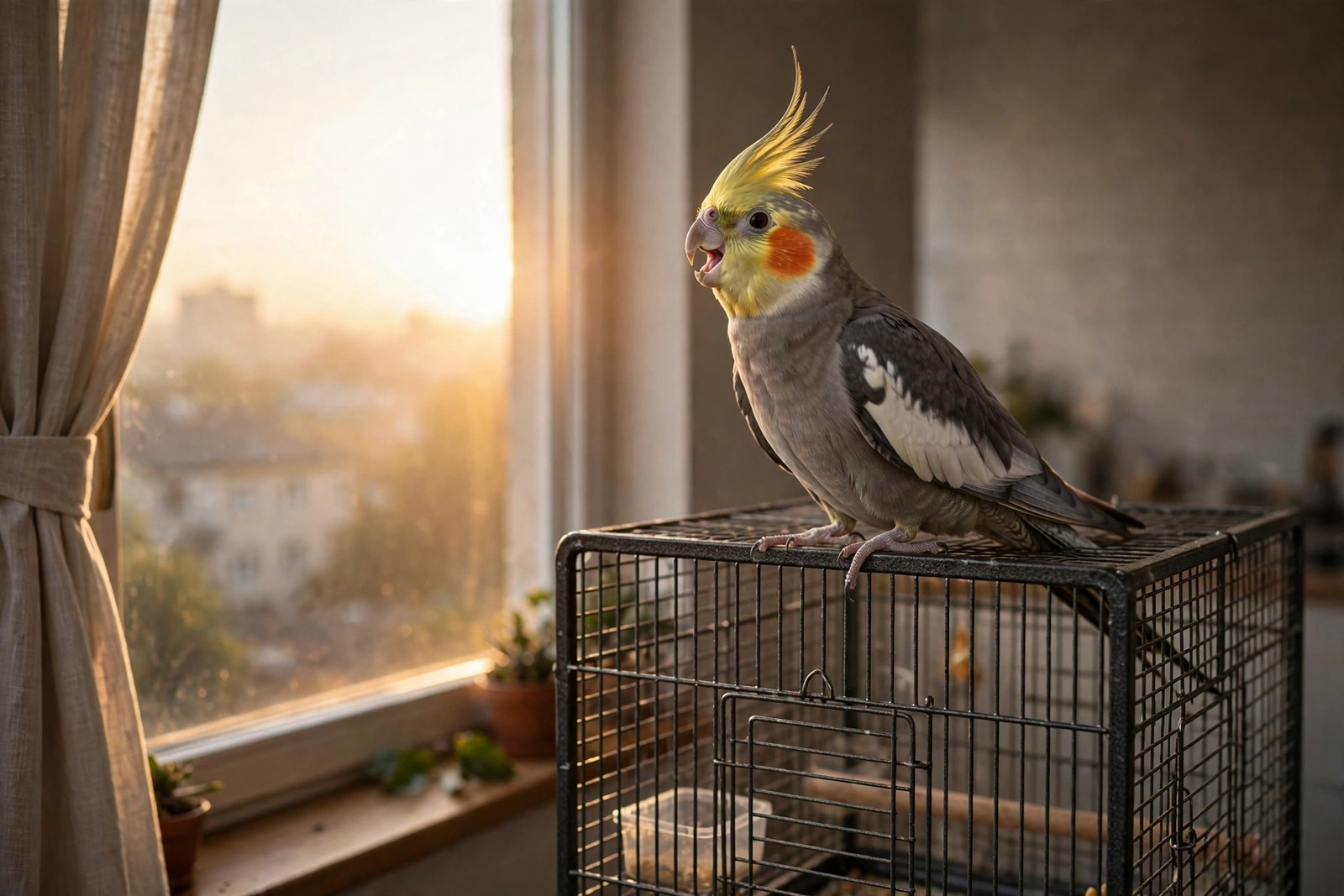
Good news first: cockatiels sit at the manageable end of the pet-bird noise scale. They are vocal — no bird is silent — but their everyday sounds are whistles, melodic chatter, and brief contact calls, not the wall-penetrating screams of a conure or cockatoo. In a typical apartment with normal walls, a cockatiel is unlikely to generate neighbour complaints, provided its routine is sensible.
When Cockatiels Are Loudest
Expect two daily peaks. At dawn, a cockatiel greets the light with several minutes of enthusiastic whistling and calling; at dusk there is usually a shorter evening chorus before roosting. Between those peaks, a contented bird mostly mutters, grinds its beak, and whistles intermittently. Contact calling also spikes when you leave the room or come home — the bird is checking where its flock is — and when household excitement rises: vacuum cleaners, loud television, and visitors all invite joining in.
Sex and individual temperament shift the volume. Males are the whistlers and mimics, learning tunes, phone ringtones, and household phrases of sound, and they perform them at full enthusiasm. Females are generally quieter, using softer chirps and calls, though no individual is guaranteed. If apartment peace is your top priority, an adult female whose temperament you can observe is the safer bet than an unsexed youngster.
What Actually Makes a Cockatiel Noisy
Persistent calling through the day is usually a management problem, not a species trait. The common causes are loneliness — cockatiels are flock birds and a single bird left alone in silence for a full working day will call for company; too little sleep, since a bird kept up under artificial light until midnight gets noisy and irritable; boredom, with no toys to shred or foraging to do; and a cage placed in a high-traffic, high-stimulation spot with no quiet corner. Covering the cage for ten to twelve hours of dark, quiet sleep, providing daily out-of-cage time and interaction, rotating toys, and leaving gentle background radio on during absences resolve most noise complaints owners actually have.
Apartment-Specific Judgement Calls
Thin-walled buildings and shift work change the calculation. If your neighbours sleep days, a dawn chorus at 6 a.m. matters more than total volume, and placing the cage away from the shared bedroom wall — plus a consistent cover routine that delays the morning performance slightly — helps considerably. Check your lease too: some buildings restrict birds regardless of noise. Finally, visit a cockatiel in person, ideally in the morning, before deciding; recordings flatter them, and ten minutes beside an excited male gives you the honest picture.
Apartment owners weighing sleep, absence, and routine against a cockatiel's calling can put a follow-up question to Kinny inside KinsLe — he answers using material drawn from KinsLe Answers.