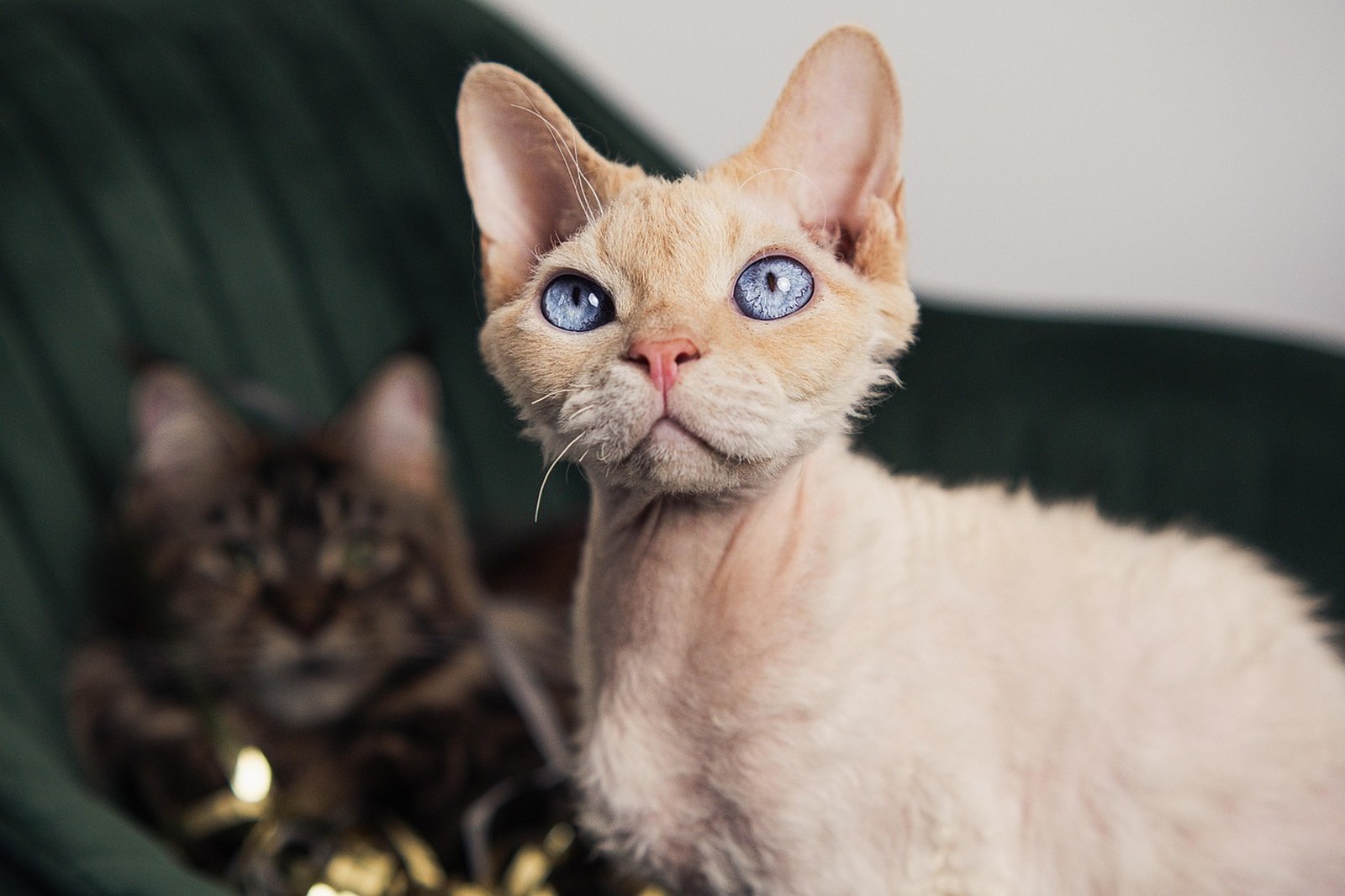
No — and that distinction is exactly why many people choose the breed. The Devon Rex is an interactive, communicative cat, but its voice is small. If your fear is a cat who delivers loud, carrying commentary through the night, the Devon is not that cat. If you would enjoy a companion who chirps a greeting when you come home and trills a question when you open the fridge, it very likely is.
What a Devon Actually Sounds Like
The typical Devon vocabulary is soft and short. Expect chirps and trills — closed-mouth, musical sounds a mother cat uses with kittens — used as greetings and invitations to play; brief, quiet mews when asking for food, a lap, or a door to be opened; and contented chatter while watching birds through a window. Volume stays conversational: audible in the room, rarely through walls. Compare that with the Oriental breeds, whose meow is engineered by generations of selection to be impossible to ignore, and the Devon sits at the gentle end of the vocal-cat spectrum. Individuals vary, of course — an entire male or a cat rewarded with instant attention for every squeak can learn to perform more loudly — but the breed baseline is a soft-voiced cat.
When Devons Talk More
Context explains most increases. Devons are intensely people-oriented, so a cat left alone for long stretches may greet you with an extended, excited debrief and follow you narrating for ten minutes. Mealtimes produce focused lobbying, and a Devon that has learned breakfast follows the first chirp will set its alarm earlier than yours. Play sessions, visitors, and changes in routine all raise the commentary level temporarily. Females in season, if not spayed, are dramatically louder than the breed's reputation — persistent calling is a hormonal behaviour, and it is one of the practical arguments for neutering a pet Devon.
The Change That Matters
Because a Devon's baseline is quiet, a sustained change deserves attention. A cat that becomes notably more vocal over days — especially at night, in an older cat, or alongside eating, drinking, or litter-box changes — may be signalling pain, anxiety, or illness, and that pattern warrants a vet visit rather than earplugs. Equally, a normally chatty Devon going silent while hiding is information. You are listening for a shift from your own cat's normal, not for an absolute noise level. For apartment dwellers and light sleepers, the summary is reassuring: a Devon Rex gives you the social pleasure of a responsive, talking-back cat at a volume most households find charming rather than wearing, as long as its company and play needs are met. And when you want breed background on a shift you have spotted, take the question to KinsLe's Kimmy in KinsLe — her replies come out of the same Answers library, which helps you judge your soft-voiced companion's new sounds against the Devon norm.