
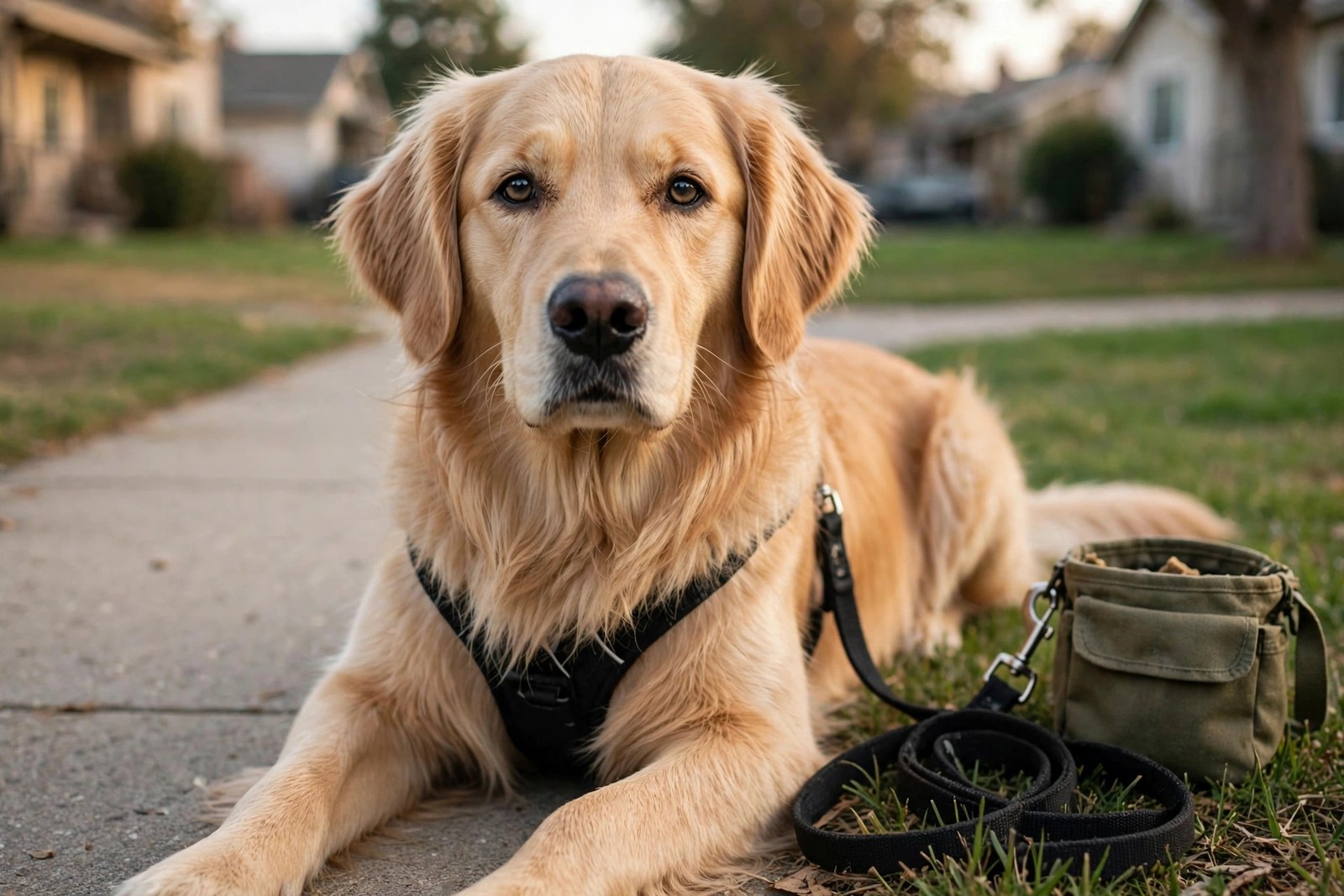
Yes — if first-time owners drew up a wish list, the Golden Retriever would be close to what they describe. This breed was built to work cooperatively with people, takes genuine pleasure in getting things right, and forgives the clumsy timing, inconsistent cues, and occasional frustration that every beginner brings to training. That forgiveness is the rarest quality in dog training, and it is why Goldens are recommended to novices so confidently.
Why Learning Comes Fast
Goldens work for almost any reward you have: food, praise, a thrown ball, your visible delight. That flexibility lets a beginner reinforce behaviour anywhere without special equipment. Most Golden puppies master sit, down, and a reliable indoor recall within their first weeks at home, progress quickly on loose-leash walking once pulling stops paying, and take to beginner classes beautifully — they are sociable with the other dogs, unbothered by new environments, and keen to engage with the exercises. Their emotional sensitivity helps too: a Golden notices your disappointment quickly, so harsh methods are both unnecessary and counterproductive; clear, kind repetition is the whole technique.
The Real Curriculum: Calm, Not Cues
Ask experienced Golden owners what training actually consisted of, and few mention sit. The real work is channelling exuberance. Young Goldens are famously mouthy — carrying, grabbing, and gently chewing hands, sleeves, leads, and visitors' belongings is hardwired retrieving behaviour, not defiance — and the training task is months of patient redirection onto toys and chews, rewarding every appropriate carry. Jumping up is the second project: a breed this delighted by people greets them at full bounce, and an adult Golden is a large dog to be launched at. Teach four-paws-on-the-floor greetings from eight weeks, with every visitor enlisted, because one person rewarding jumping undoes ten who do not.
Energy and the Slow Road to Maturity
Goldens are often described as easy so often that beginners underestimate the exercise underneath. A young Golden needs a solid hour or more of daily activity — walks, play, swimming if available, training games — and will redecorate through boredom if denied it. They also mature slowly, staying puppyish in spirit for two to three years. That is charming, but plan for a long adolescence of ongoing training rather than a six-month project, and protect growing joints by avoiding repetitive jumping and long forced runs in the first year. House-training, by contrast, is usually straightforward: the breed's desire to please and work to a routine makes the standard schedule succeed within weeks for most puppies.
For a beginner willing to supply exercise, consistency, and redirection through the mouthy months, a Golden repays the effort faster and more reliably than almost any breed you could pick.
KinsLe's Care Teams helps that first year run smoothly by splitting a Golden's walks, training practice, and chew-and-toy management between household members — so the dog hears one set of rules and gets its exercise even on the busiest family days.