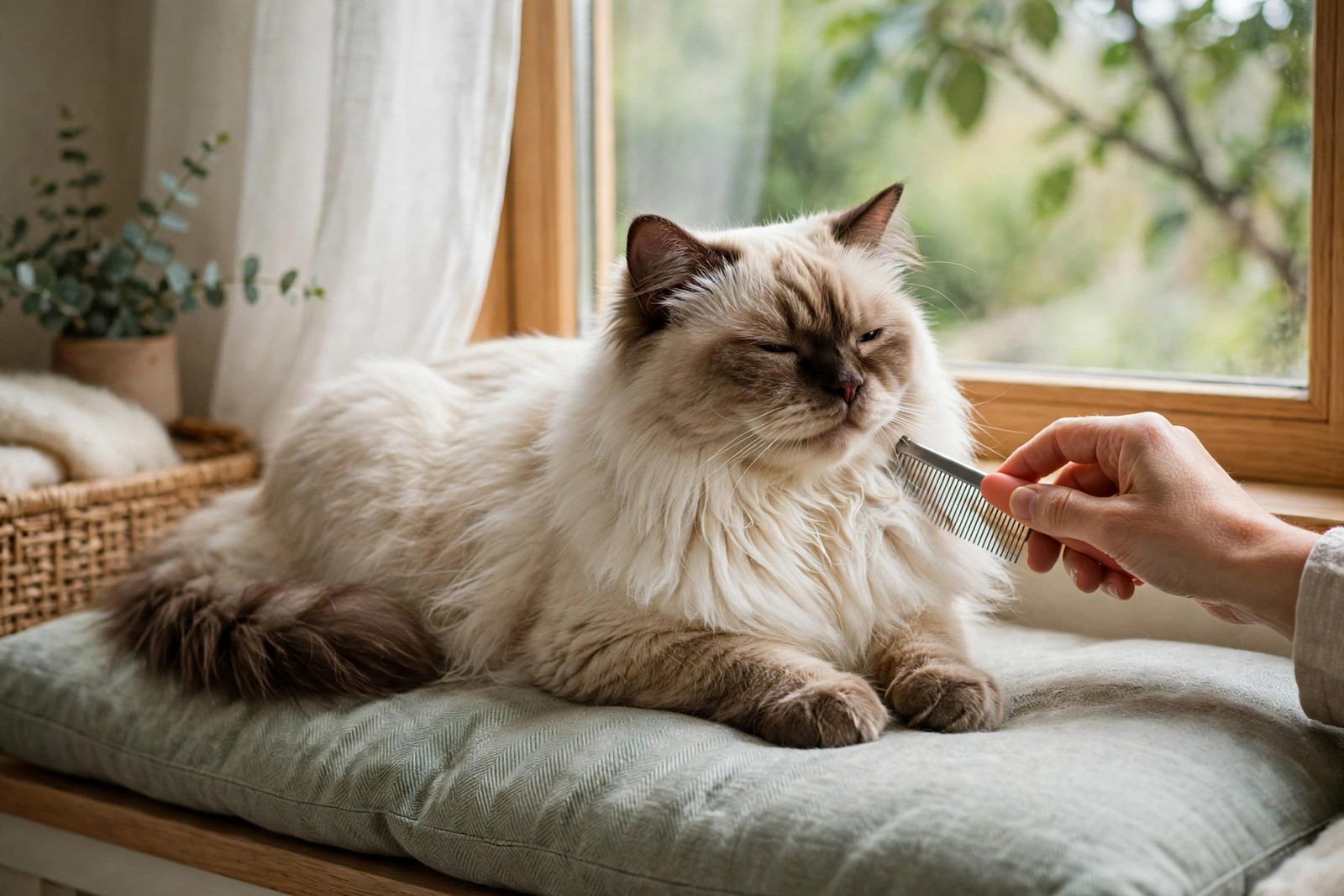
Yes — if any breed was made for indoor life, it is the Himalayan. Bred from Persian and Siamese lines, the Himalayan kept the Persian's calm, sedentary temperament and sweet, quiet manner. A Himalayan does not prowl the house looking for escape routes; it arranges itself on the best cushion near its favourite person and supervises the household from there. Indoor life also protects a cat whose long coat and flat face are poorly suited to weather, dirt, and outdoor hazards.
A Calm Cat With a Modest Activity Budget
Himalayans play, but in short, gentle bursts — a feather toy on the floor, a ball rolled across a rug — rather than the wall-climbing athletics of livelier breeds. A scratching post, a low perch or window seat it can reach without heroic leaps, and a few quiet hiding spots cover its environmental needs. That low activity makes weight worth watching: feed measured meals, keep treats small, and encourage those short daily games, because a sedentary indoor cat gains quietly.
The Daily Coat Work Is the Real Commitment
The Himalayan's long, dense coat is beautiful and entirely unforgiving of neglect. Comb it through gently every day, working in sections down to the skin, paying attention behind the ears, under the front legs, and along the belly where mats form first and pull painfully. A matted cat is an uncomfortable cat, and badly matted coats need professional grooming or clipping, so the daily ten minutes is the kind option. Most Himalayans, started young, accept this routine as part of being fussed over.
Flat-Face Care Indoors
Himalayans share the Persian's flattened face, which usually means watery eyes and tear staining that needs a gentle daily wipe with a soft, damp cloth, plus a check that the nose and mouth area stay clean and dry. They can also breathe less freely than longer-faced cats, so keep rooms comfortably cool in summer, provide cool resting spots, and avoid energetic play in heat. If breathing ever sounds laboured at rest, or your cat stops eating, see your veterinarian promptly rather than waiting it out.
The Indoor Setup That Suits Them
Place litter boxes in quiet, easily reached spots — this is not a cat that wants to hurdle obstacles to toilet — and keep them clean, since long coats and dirty boxes are a poor mix. Senior Himalayans may need lower-sided boxes and softer, lower beds as joints stiffen. Company matters too: Himalayans are devoted and do best in homes where someone is around for much of the day, even if that company is mostly shared napping.
None of that care is difficult, but all of it is daily, and KinsLe's Care Teams lets your family split your Himalayan's combing, eye wipes, and meals into named, confirmed jobs, so this gentle indoor cat gets its full routine even in the busiest week.