
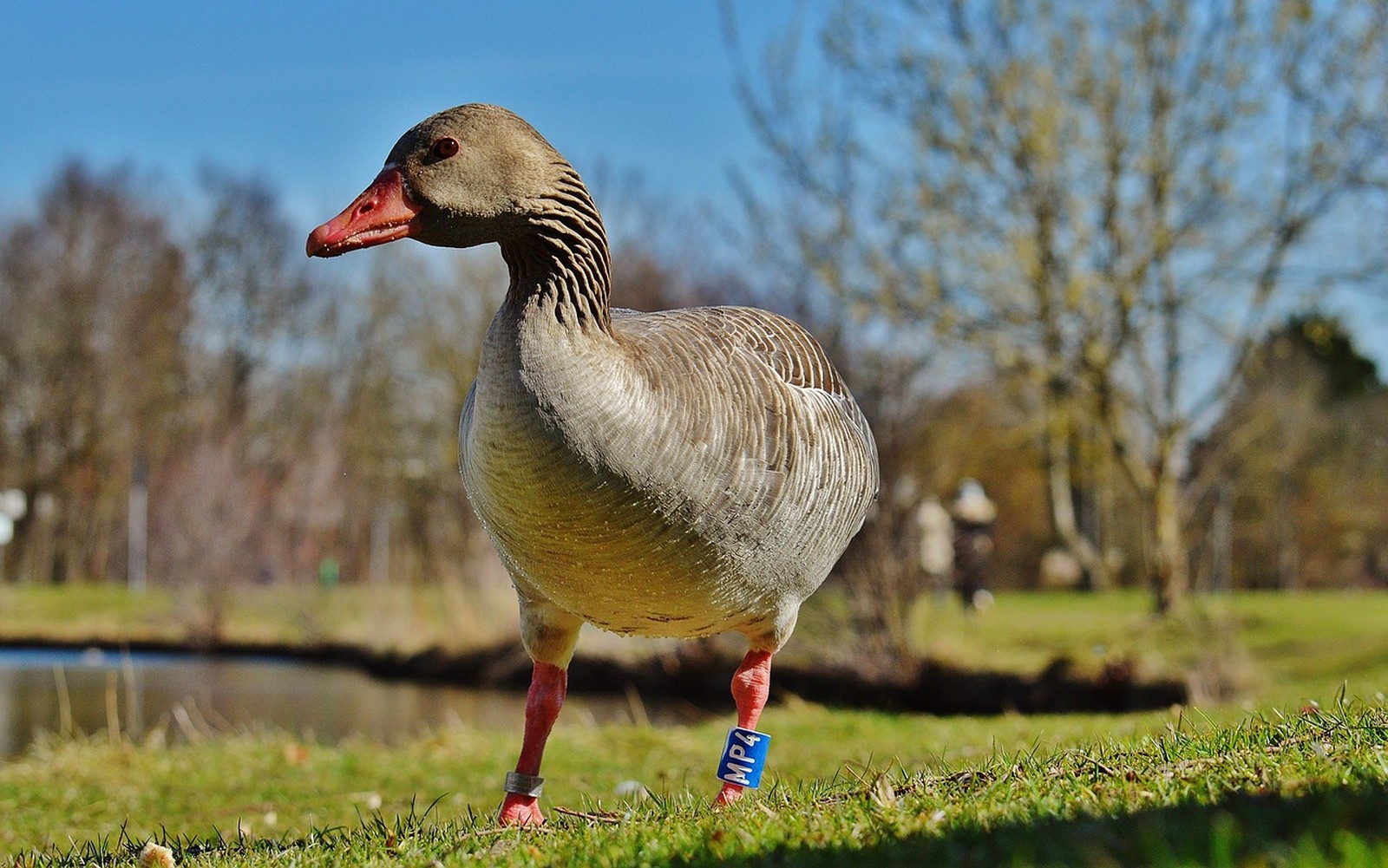
A leg band helps, but it is not enough on its own. A band can support proof of identity if its number is recorded and readable, yet a finder may struggle to check it safely, and the number means little without your contact details attached somewhere. Pair the band with written records, recent photos, and a profile a finder can actually use.
What a Leg Band Can and Cannot Do
Closed bands, fitted when a bird is a nestling, carry codes that may include a breeder's initials, a year, and a number. Open bands, fitted later, can be applied to adult birds. Either way, the band identifies the bird to people who know how to look up the code — a breeder, an avian vet, or an experienced rescue.
What a band does not do is tell an ordinary finder who you are. A neighbor who catches your cockatiel cannot scan a band, may not be able to hold the bird still enough to read tiny characters without being bitten, and will not know which registry, if any, holds the code. Bands can also become hard to read with wear, and sadly, a band can be removed by someone who does not want the bird identified. Some owners also discuss microchipping with an avian vet for larger parrots — a conversation worth having at a check-up, since suitability varies by species and size.
Never remove a band yourself to "update" it; ill-fitting or damaged bands are a job for an avian veterinarian, because a tight band can injure the leg.
Build a Proper Identity File for Your Bird
Think in layers, so that if one layer fails, others work:
- Write down the band number exactly, and keep it somewhere other than a single phone note — include it in your bird's records.
- Take recent, clear photos from several angles: face, both sides, tail, and any unusual feather patterns. Update them after a molt, since markings and color intensity can shift.
- Note distinctive details: a missing toe, an unusual crest feather, a chipped beak shape, and — uniquely avian — the words, whistles, and sounds your bird says. A phrase only your bird performs is powerful proof.
- Keep vet records together showing the band number alongside your name, which links the code to you on paper.
If your bird is ever found, this file lets you prove ownership quickly and calmly, and helps shelters and vets match found-bird reports to yours.
Safety Around Bands Day to Day
Check legs regularly as part of routine handling. A band should sit comfortably without pinching; watch for swelling, the leg catching on toys or cage bars, or debris building up beneath the band. Leg injuries need prompt avian vet attention. Also inspect the toys and cage fittings where a banded leg could snag — smooth, appropriately sized equipment matters more for a bird that wears a band for life.
Giving a Finder a Way Straight to You
The gap in the band system is contact — and that gap is exactly what a digital profile fills. KinsLe's Verified QR ID Pet Profiles give every pet a unique QR ID on its profile, adding another way to connect a found bird back to you: the profile can hold your bird's photos, description, and identifying details in one place a finder, vet, or shelter can reference, rather than a string of tiny numbers that leads nowhere on its own.
A stranger who finds your bird gets readable photos and contact details from the Verified QR ID Pet Profiles on KinsLe, rather than puzzling over tiny band numbers.