
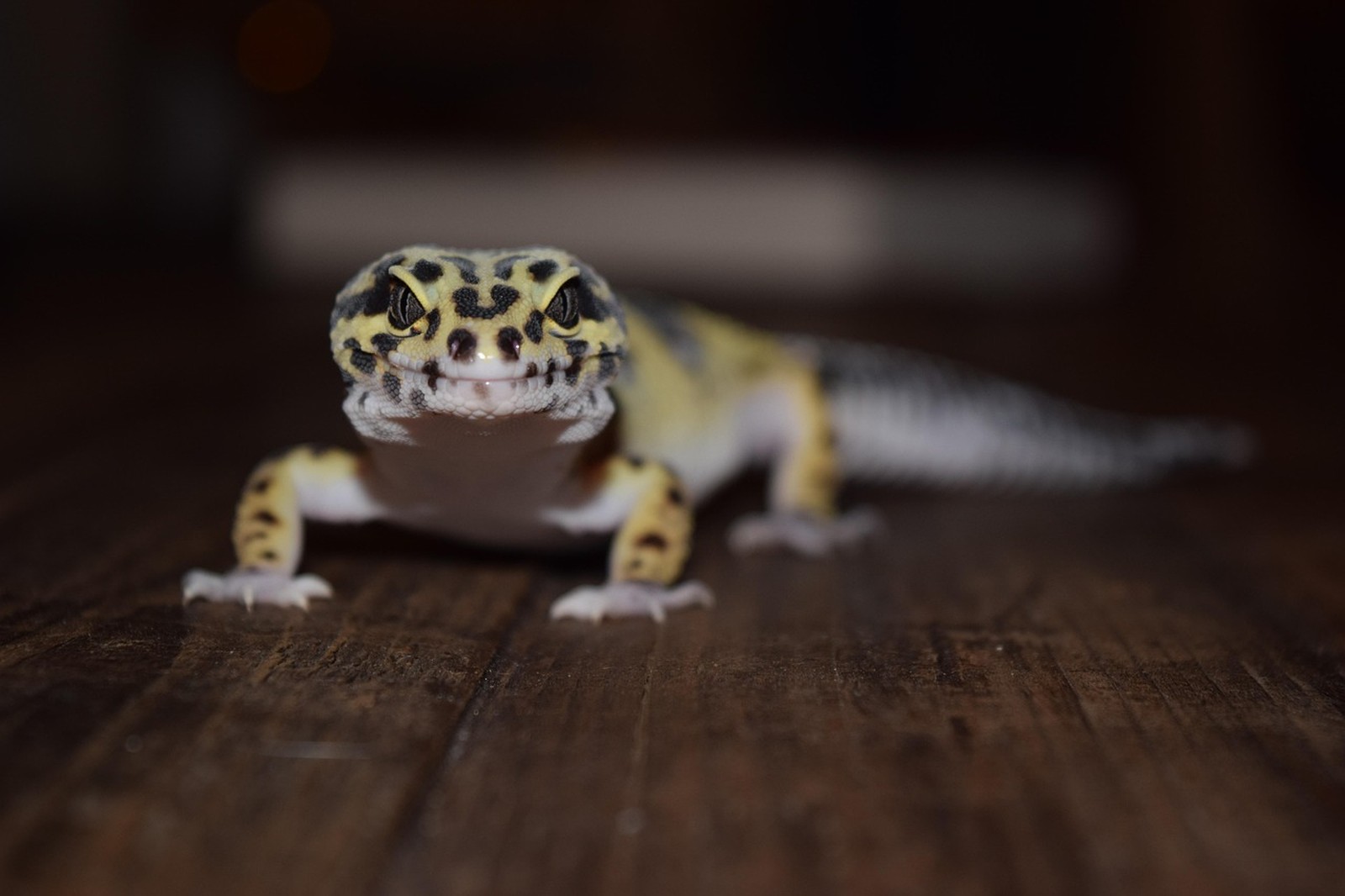
Leopard geckos earn their beginner reputation honestly. Adults reach roughly 20 to 25 centimetres, live alone happily, are awake mostly at dawn and dusk when owners are home, and rarely bite. They do not need a huge enclosure or live plants, and they shed and eat in a predictable rhythm that makes problems visible early. What they do need is a keeper who treats the first setup as the pet itself, because almost every common leopard gecko illness traces back to heat, flooring, or missing supplements.
The Enclosure a Beginner Must Get Right
Start with a low, long tank that gives floor space rather than height, with a warm end and a cool end so the gecko can regulate its own temperature. Under-tank heating controlled by a thermostat is the usual way to create a warm hide in the high twenties to low thirties Celsius, while the cool side stays nearer room temperature. Provide at least three hides: warm, cool, and a humid hide lined with damp paper towel or moss to help shedding. Use paper towel, tile, or a firm reptile carpet at first. Loose sand and fine loose substrates are a poor beginner choice because a gecko lunging at insects can swallow them, and impaction is a serious, sometimes fatal, blockage.
Feeding Without Guesswork
Leopard geckos eat live insects such as crickets, small roaches, and mealworms, offered in sizes no wider than the space between the gecko's eyes. Juveniles typically eat daily and adults every other day or so, and every insect should be dusted with calcium, with a multivitamin used on a regular rotation your vet or a reputable care guide supports. A shallow dish of clean water stays in the enclosure at all times. There is no vaccination schedule for a gecko, which is why the audit-style question lists written for puppies do not transfer; instead, ask a seller about feeding history, shedding, weight, and whether the animal has ever dropped its tail, and look for clear eyes, a plump tail base, and alert movement.
Temperament, Handling, and Lifespan
Expect a quiet animal, not a cuddly one. Give a new gecko a week or more to settle before handling, then keep sessions short, low to the ground, and always support the whole body. A gecko that stops eating for a few days around a shed is usually normal; one that loses tail thickness, keeps shed skin stuck on its toes, or stays lethargic needs its temperatures checked first and a reptile vet if things do not improve. With decent care these geckos commonly live 15 to 20 years, so a beginner purchase is a long commitment, not a trial pet.
The Honest Costs and Daily Work
Daily care takes minutes: check the thermostat reading, refresh water, spot-clean, and feed on schedule. Weekly work is a fuller clean and a look at toes after shedding. Budget for the tank, heater, thermostat, hides, insects, and supplements before the animal, plus an exotic vet visit when something looks wrong, because not every general vet treats reptiles confidently. Writing those recurring jobs down and sharing them through KinsLe's Care Teams, where each feeding, water change, and temperature check can be assigned and timestamped, keeps a first gecko thriving even when the main keeper is away.