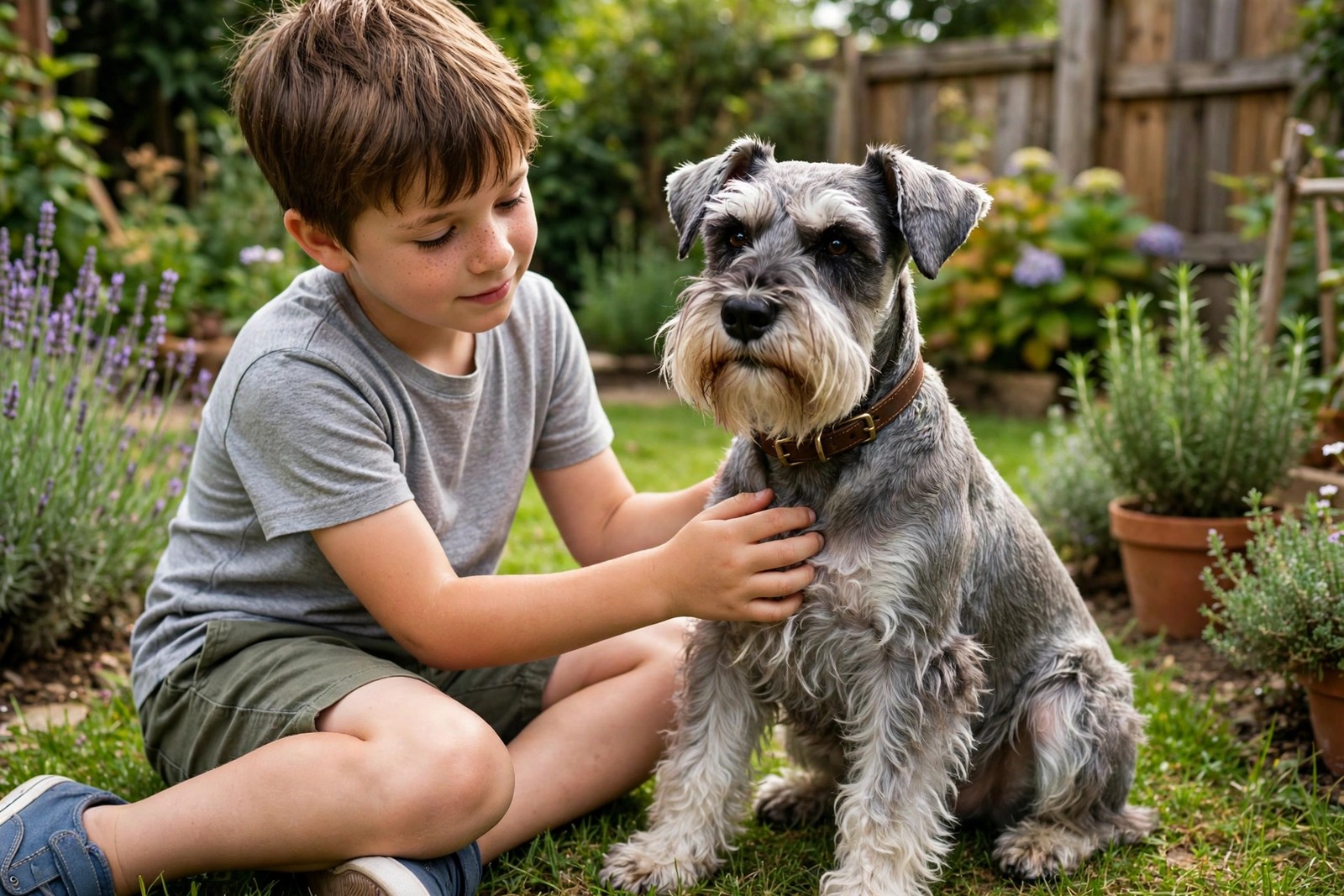
Usually yes, and better than many small breeds. The Miniature Schnauzer was kept as a ratting and farm dog before it became a house companion, so it is compact but not delicate: a well-bred adult is robust enough for family games, keen to be included, and often forms a particular bond with the children it grows up with. Many Schnauzers shadow their favourite child from room to room and sleep as close to the household action as they are allowed.
Why the Match Often Works
Size helps. A Schnauzer is small enough not to knock a child over in excitement, yet solid enough that ordinary play is less risky than it is for a fragile toy breed. Temperament helps too. The breed is typically affectionate with its own family, playful without being frantic, and satisfied with the exercise a family naturally gives: school-run walks, garden games, and weekend outings add up to the hour or so an adult needs. Children old enough to throw a ball, hide treats for a search game, or practise simple cues usually get a willing, amusing partner.
The Limits to Respect
Terrier ancestry sets the boundaries. A Schnauzer who is chased, grabbed, or cornered may snap rather than plead, and the beard, ears, and leg furnishings invite pulling from toddlers who do not yet understand. Teach children to stroke the side of the chest, to let the dog walk toward them, and to stop the moment the dog moves away, shakes off, or goes to its bed. That bed, or a crate with the door open, must be a genuine retreat where no child follows. Supervise all interaction with children under about seven, and separate dog and children at mealtimes, because a Schnauzer guards food and prized chews more seriously than its comic face suggests.
Barking belongs in the picture too. A bored Schnauzer will announce visitors, squirrels, and the post with enthusiasm, and children who wind the dog up at the window can build a noisy habit the whole street hears. Give the dog a settle place away from the front window and reward quiet watching instead.
Setting Up the First Weeks
Introduce children and dog on neutral ground if you can, keep the first meetings short and calm, and let the dog sniff while children sit rather than crowd in. Show children how to offer a treat flat on an open palm during training games, and make one adult responsible for reading the dog and ending play before anyone gets overexcited. Judge the individual dog as well as the breed: a sound-sensitive rescue Schnauzer and a confident puppy raised with children are very different propositions.
Handled that way, a Miniature Schnauzer is often a cheerful, durable companion for school-age children. KinsLe's Family Sharing puts the dog's retreat rules, feeding guard notes, and calm-handling guidance in one profile the whole family, plus grandparents and sitters, can read before they interact with the dog.