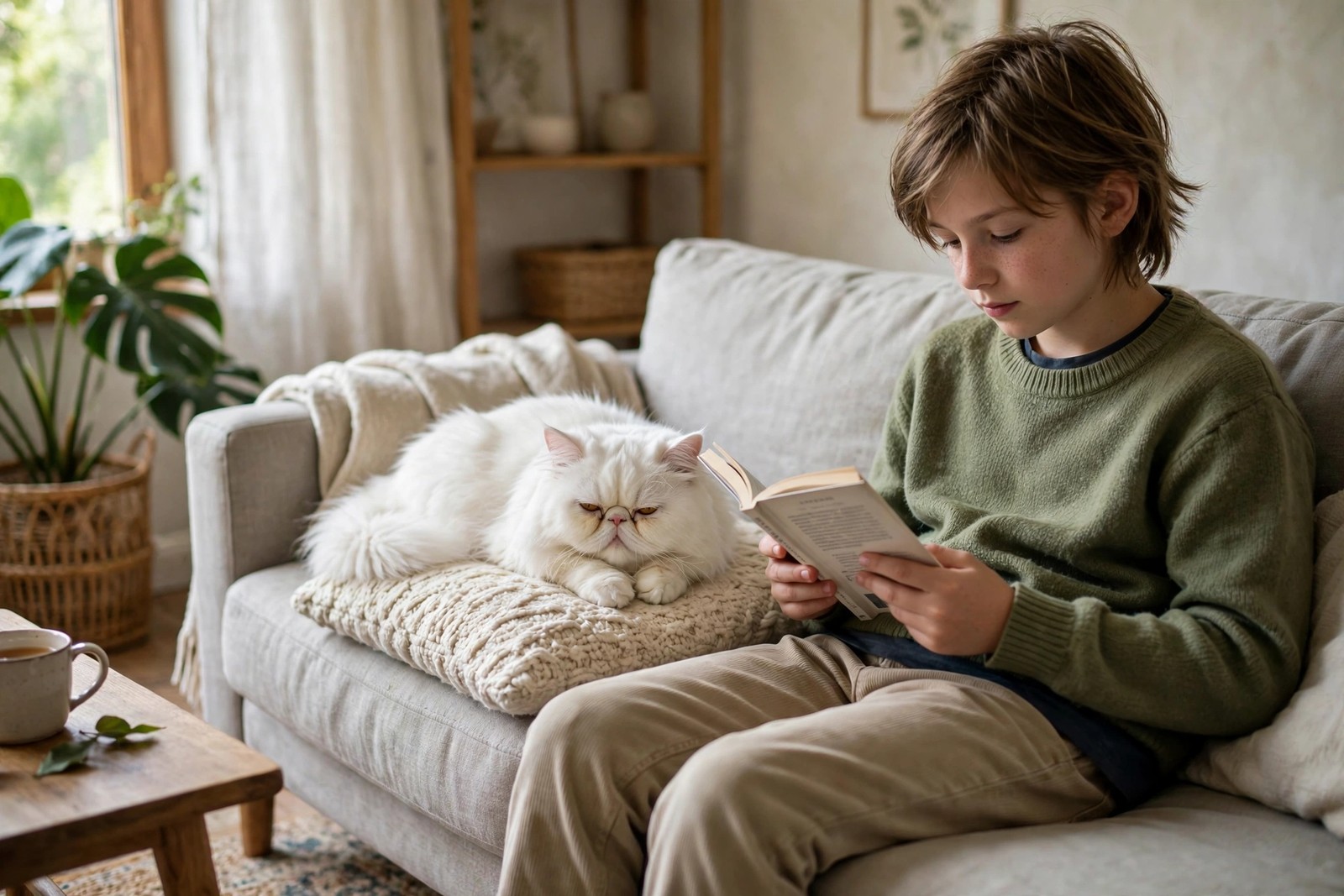
Persians can be lovely with the right children — and the word right is doing real work in that sentence. This is a calm, placid, low-energy breed that bonds quietly and enjoys peaceful company. A Persian is not a cat who wants to be dressed up, chased around the sofa, or carried from room to room. Match the cat to a gentle child and the pairing is genuinely sweet. Match it to a loud, physical household and the cat will spend its days hiding, which helps nobody.
The Persian Temperament, Honestly
Most Persians are undemanding, soft-voiced, and content to sit near their people rather than on top of the action. They tend to have favourite humans, favourite chairs, and a strong preference for predictable days. Play comes in short, dignified bursts — a few minutes batting at a feather wand — followed by long rest. They are not typically scratchy or reactive; an unhappy Persian usually withdraws, goes quiet, and stops eating with enthusiasm before anything dramatic happens. That means adults have to notice stress early, because the cat will not announce it loudly.
For children, the translation is this: a Persian rewards the child who sits still. Reading aloud beside the cat, gentle stroking while the cat is already settled, and offering a treat by hand all build trust quickly. A child who wants a wrestling partner, a constant playmate, or a pet to follow them outdoors should be steered to a hardier, busier breed.
Why Toddlers Are Usually a Poor Fit
Toddlers are unpredictable, loud, and grabby by development, not by fault, and each of those traits lands badly on a Persian. Sudden squeals startle them. Grabbed handfuls of that long coat hurt. Being picked up awkwardly and carried is frightening for a cat who likes four paws under its own control. The Persian's flat face and large eyes are also vulnerable to poking fingers in a way a longer-muzzled cat's are less so.
None of this means a family with a toddler can never have a Persian — but it means constant supervision, a genuinely cat-proof retreat the toddler cannot enter, and a realistic expectation that cat and child will mostly live parallel lives until the child is older. Most families find that an honest mismatch to plan around rather than a challenge to push through.
Setting Up a Match That Works
Give the Persian an escape-rich home: a quiet room with bed, litter tray, and water that children are taught is the cat's private space, plus high resting spots the cat can reach without being followed. Teach the golden rules early — let the cat approach, stroke the cheeks and shoulders rather than the belly, one hand, slowly, and stop the moment the cat moves away.
Involve older children in the Persian's care routine. That famous long coat needs daily gentle grooming, and a patient eight-year-old with a wide comb, supervised, can take real pride in keeping their cat beautiful. Feeding at set times and refreshing water are other calm jobs that build the bond this breed actually values.
Choose the individual, too: a confident, well-socialised kitten or a known adult who already relaxes around calm children is a far better bet than a nervous rescue with an unknown history. KinsLe Family Sharing supports the whole arrangement by keeping your Persian's quiet-space rules, handling preferences, and grooming routine in a shared profile, so every adult and older child in the home protects the cat's calm in exactly the same way.