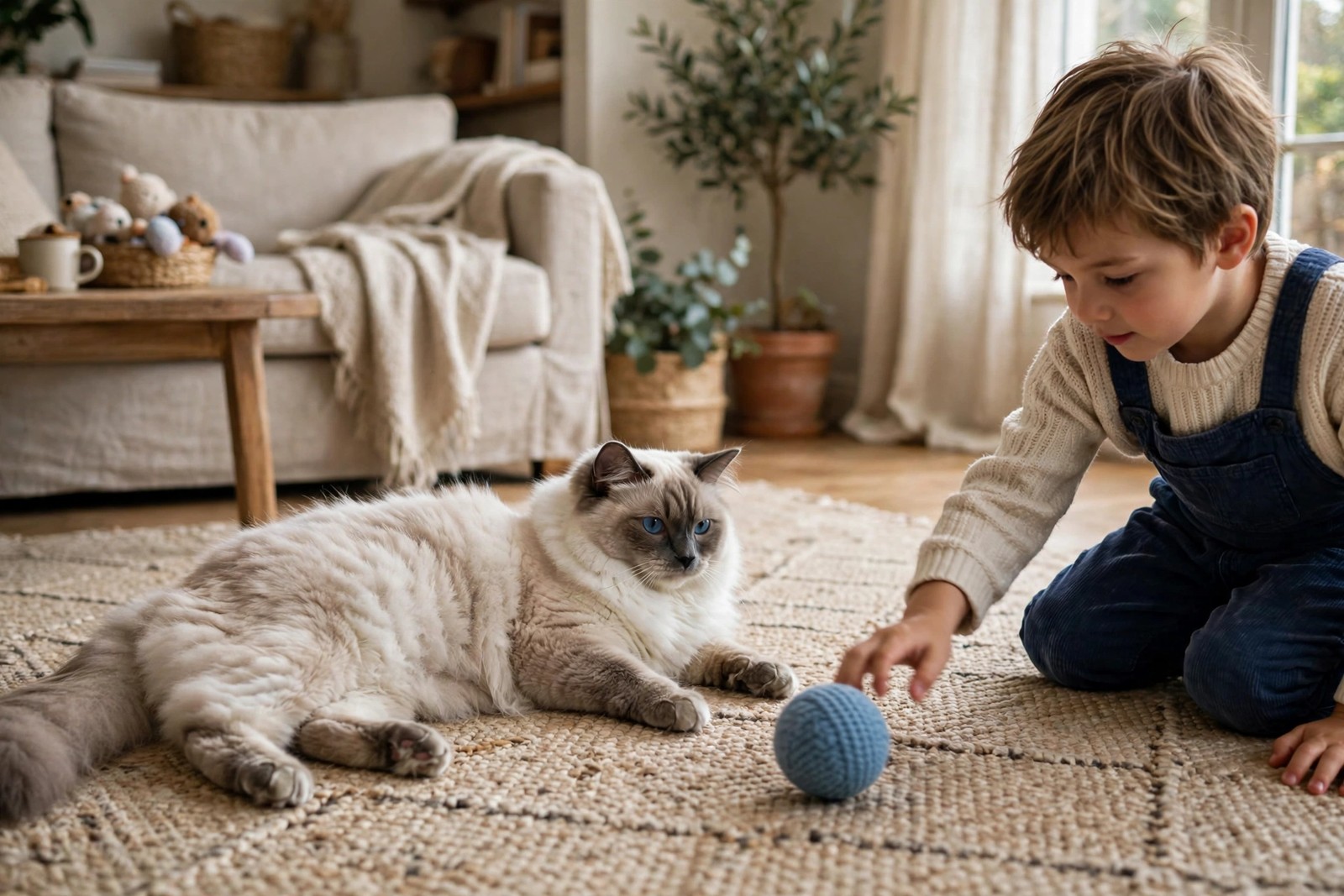
Yes, Ragdolls have one of the best reputations of any breed with children, and it is largely deserved. They are typically gentle, placid, and unusually tolerant of handling, with a famous tendency to relax completely — the floppy quality that gave the breed its name. Many follow children about like small dogs, flop down in the middle of games, and accept fuss that would send a more reactive cat out of the room. For a family wanting a cat who participates rather than observes, a Ragdoll is a strong candidate.
That same tolerance, handled carelessly, is where the problems live.
Tolerance Is Not Invulnerability
Most cats protect themselves: they wriggle, complain, and leave, teaching children limits automatically. A Ragdoll often does none of that. It stays, limp and trusting, while a well-meaning six-year-old carries it with its body dangling unsupported, or hugs it tighter and tighter. Falls from a child's arms are a real cause of injury in this breed — sprains, fractures, and internal injuries can follow a drop onto a hard floor, and the cat may never show how much it hurt.
So the central rule in a Ragdoll home is absolute: young children do not carry the cat. Ever. Play happens on the floor or sofa, where the cat arrived under its own power and can leave the same way. If an older child is allowed to hold the cat, it is seated, for a short time, with the cat's chest and hindquarters both fully supported — and the moment the cat shifts to leave, it leaves.
What Ragdolls Genuinely Enjoy With Children
Floor-level life suits them perfectly. Ragdolls tend to prefer staying low rather than climbing to the highest shelf, and many enjoy gentle fetch games, rolling balls, wand toys trailed along the ground, and simply being where the children are. Their sociable, follow-you-around nature means a child doing homework or reading often acquires a large, warm cat beside them — the kind of quiet companionship that builds a real bond.
They are also usually patient about the noise and movement of a family home once settled, though kittens and new arrivals still deserve a quiet room to retreat to and gradual introductions. Teach children the few limits that remain: no pulling the cat out from under furniture, no disturbing it asleep, and food and litter areas are out of bounds for play.
Size and Supervision Notes
Ragdolls are substantial cats — males commonly reach six to nine kilograms — which helps with sturdy older children but makes the carrying rule even more important, because that is a lot of cat for small arms. Their long coats need regular gentle brushing, a calm job an older child can help with and a good way to teach careful hands.
Supervise toddlers as you would with any large animal: not because the Ragdoll is likely to cause harm, but because a toddler cannot yet be trusted not to fall on, grab at, or lie across a cat who will not move out of the way.
Set the carrying rule, keep play on the floor, and a Ragdoll will usually repay a family with years of placid, devoted, faintly ridiculous companionship. Family Sharing on KinsLe gives relatives you select access to its profile, so the parents and older children in the family can open it whenever they wish.