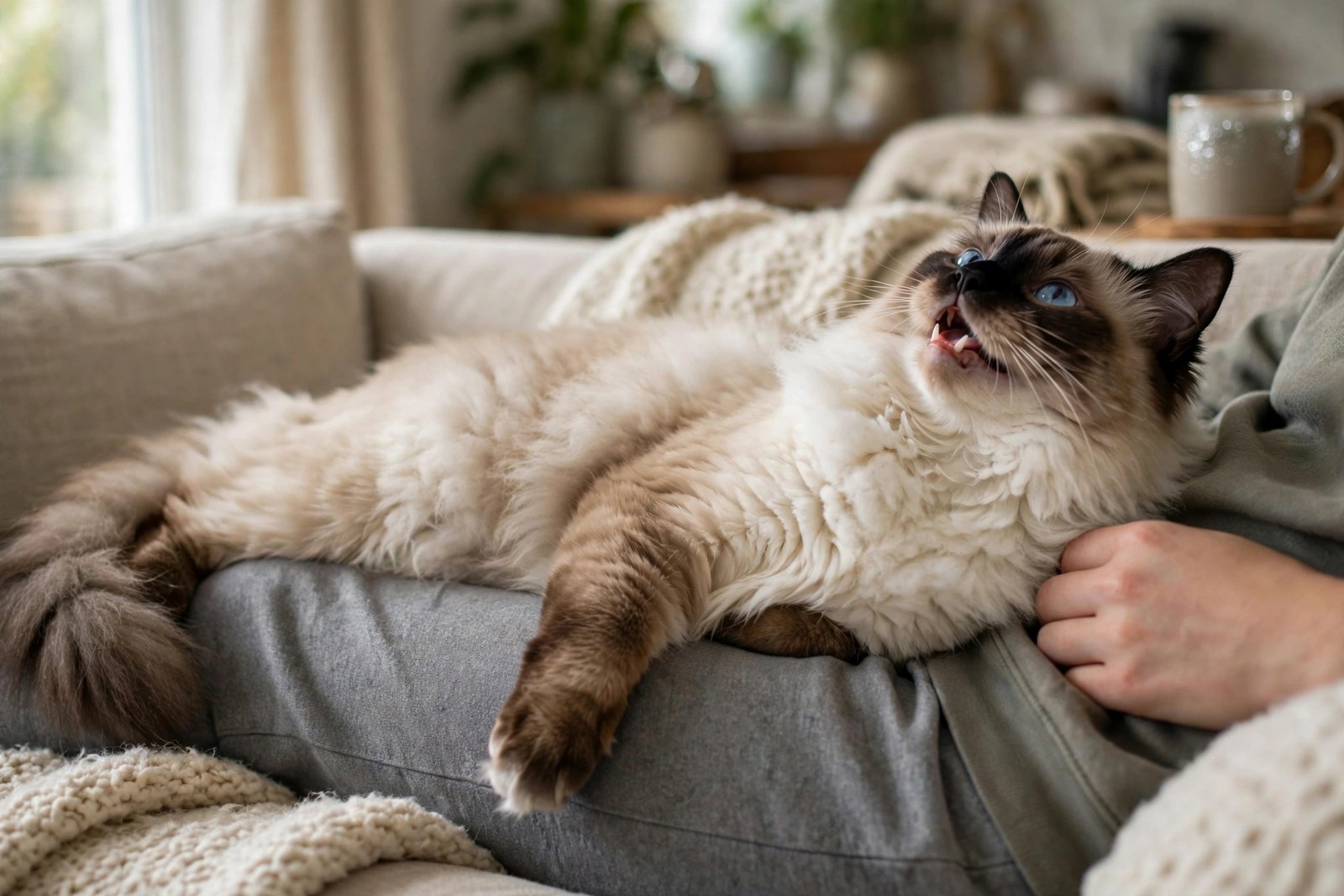
No. Ragdolls rank among the quieter purebred breeds, and their soft voice is part of the same gentle package as their relaxed bodies and people-focused temperament. A Ragdoll will follow you about, supervise your work, and flop into your arms, all while saying remarkably little out loud. Owners looking for a conversational cat who answers back all day should look at other breeds. Owners who want devoted company at low volume tend to be delighted.
The Ragdoll Voice in Practice
When a Ragdoll vocalises, expect a small, sweet-toned mew or a brief chirp, pitched softly and finished quickly. Typical occasions are limited and legible: a greeting when you return, a reminder around mealtimes, a mild protest or enquiry when picked up or moved, and occasionally soft sounds during play. Many Ragdolls are close to silent for most of the day, and even their requests tend to be delivered once, politely, with the cat then waiting nearby rather than escalating. Kittens settling into a new home may cry more during the first nights, which is homesickness and adjustment rather than the adult pattern, and it fades as routines and confidence establish themselves.
A Breed That Speaks With Its Body
Ragdolls are named for their tendency to relax completely when held, and that physical expressiveness is their main language. The full-body flop onto a foot, the slow roll to show the belly on your arrival, the habit of shadowing one chosen person from room to room and settling within arm's reach: these are the breed's sentences. Eye contact is soft and sustained, tails are carried without agitation, and affection is demonstrated by proximity more than by performance. Reading a Ragdoll means watching where the cat chooses to be. A Ragdoll glued to your vicinity is communicating attachment as plainly as any meow, and a Ragdoll who stops shadowing is saying something has changed.
When a Quiet Ragdoll Gets Vocal
Persistent or loud vocalising in a Ragdoll should always prompt a closer look, precisely because it departs so far from the breed's baseline. Repeated crying can signal pain, nausea, urinary discomfort, or anxiety after a household change such as a move, a new pet, or a favored person being away. Older Ragdolls who begin calling at night deserve a vet check for the usual senior causes, including thyroid and blood-pressure problems and cognitive changes. There is also a benign explanation to rule out first: a Ragdoll who has learned that one soft mew produces immediate food or a door opening will use the tool more often, and the remedy is a predictable schedule, not firmer discipline.
A Quiet Cat for Calm Households
Ragdolls are indoor cats by temperament and recommendation, trusting and poorly defended against outdoor risks, and their low vocal output suits flats, home offices, and light sleepers. Their needs are company and gentleness rather than entertainment at volume: daily play in short bouts, brushing a few times a week for the silky semi-long coat, and people who are home a fair amount, since a breed this attached can be lonely and quietly stressed in an empty house all day.
Keeping a shared note of your Ragdoll's normal soft sounds, favorite resting places, and routine in KinsLe's Family Sharing means every family member recognises the one polite mew at the bowl for the request it is, instead of the quietest cat in the house being the last one noticed.