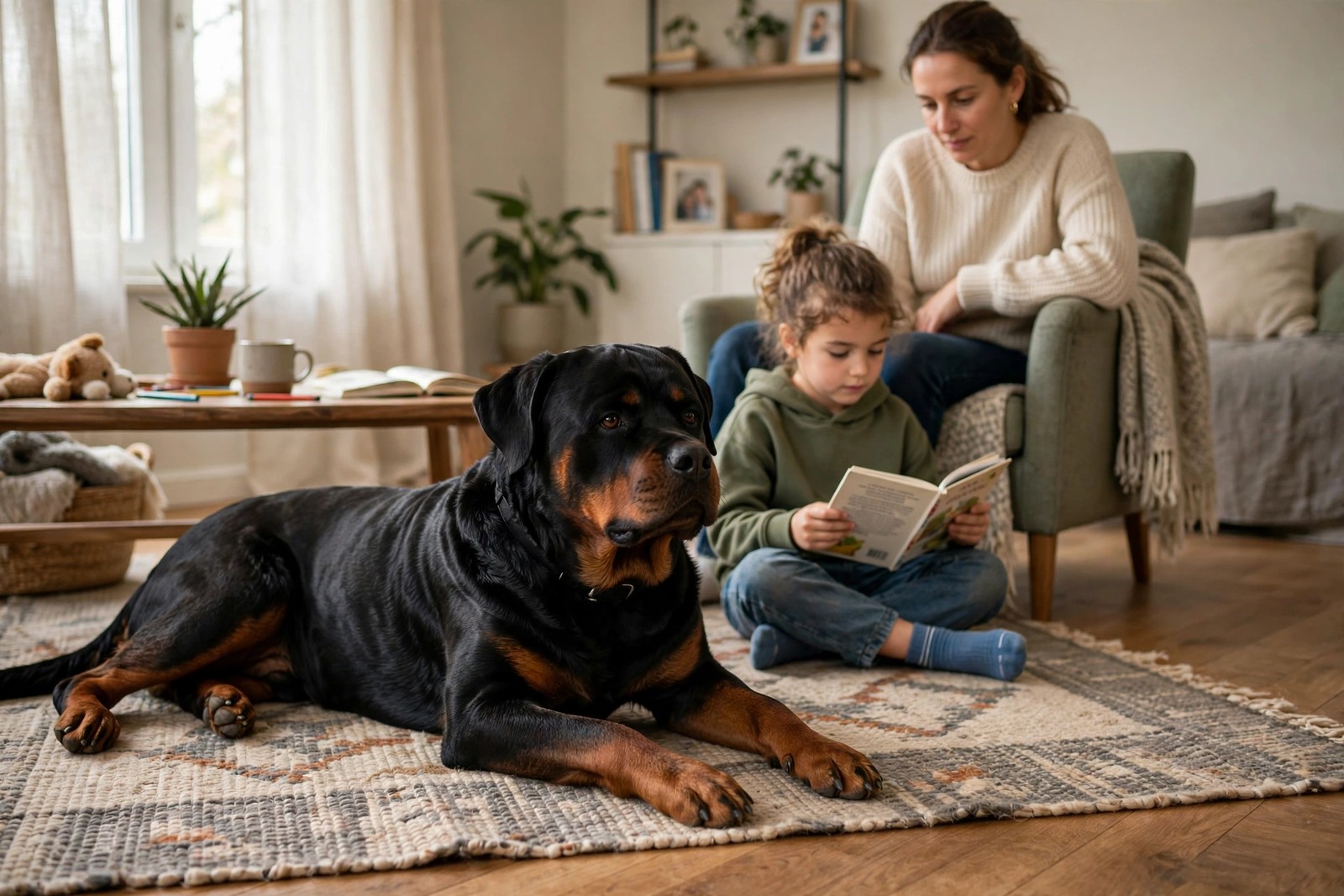
Often, yes. A Rottweiler from sound lines, raised in the home and socialised properly, is typically calm, confident, and unhurried with children, and owners commonly describe a dog who positions itself near the kids and tolerates a great deal of clumsy affection. The breed's reputation problem comes less from family life than from poor breeding, poor socialisation, and owners who wanted a guard dog and trained suspicion into the animal. Judging a Rottweiler means judging the individual dog, its upbringing, and the management around it.
Size Changes the Risk Calculation
Even a gentle Rottweiler is a large, heavy dog. Adult males commonly pass one hundred pounds, with a broad chest and a boisterous adolescence in which the dog may not know its own strength. A happy lean, a swinging turn during play, or a charge to the door can put a toddler on the floor without a hint of ill intent. That is why the supervision rule has no exceptions for a good dog: an adult should be present and attentive for interactions with young children, the dog needs a child-free resting place it can choose, and toddlers and dog are separated by gates during meals, excited play, and the dog's sleep.
The Guarding Background
Rottweilers were droving and guarding dogs, and the instinct to watch the property and weigh up strangers is part of the breed. With the family's own children this usually shows as steady protectiveness, but it needs channeling. A dog who decides that a play-fight between your child and a visiting friend is an attack can intervene, so children's rough games happen away from the dog until you know exactly how yours reads them. Guarding can also attach to food, chews, and toys, so children are taught never to approach a Rottweiler who is eating, and the dog is fed in a quiet, separate spot as routine rather than as a punishment.
Socialisation Is the Real Decider
The difference between a reliable family Rottweiler and a liability is mostly made before six months. A puppy needs wide, calm, positive exposure to children of different ages, visitors, traffic, handling, and other dogs, followed by training classes that reward steadiness rather than flooding the dog. Teach children their side of the contract at the same time: no riding, ear pulling, tail pulling, or disturbing a sleeping dog, treats offered with an adult present, and the dog's retreat always respected. Adolescent Rottweilers test rules and need consistent boundaries from every adult, delivered calmly.
Given sound breeding, thorough socialisation, and supervision that treats size seriously, a Rottweiler can be one of the steadier big breeds around children. KinsLe's Family Sharing keeps the household aligned on that management, with the dog's feeding spot, visitor rules, and supervised-play guidance stored in a shared profile that parents, older children, and guests can all read.