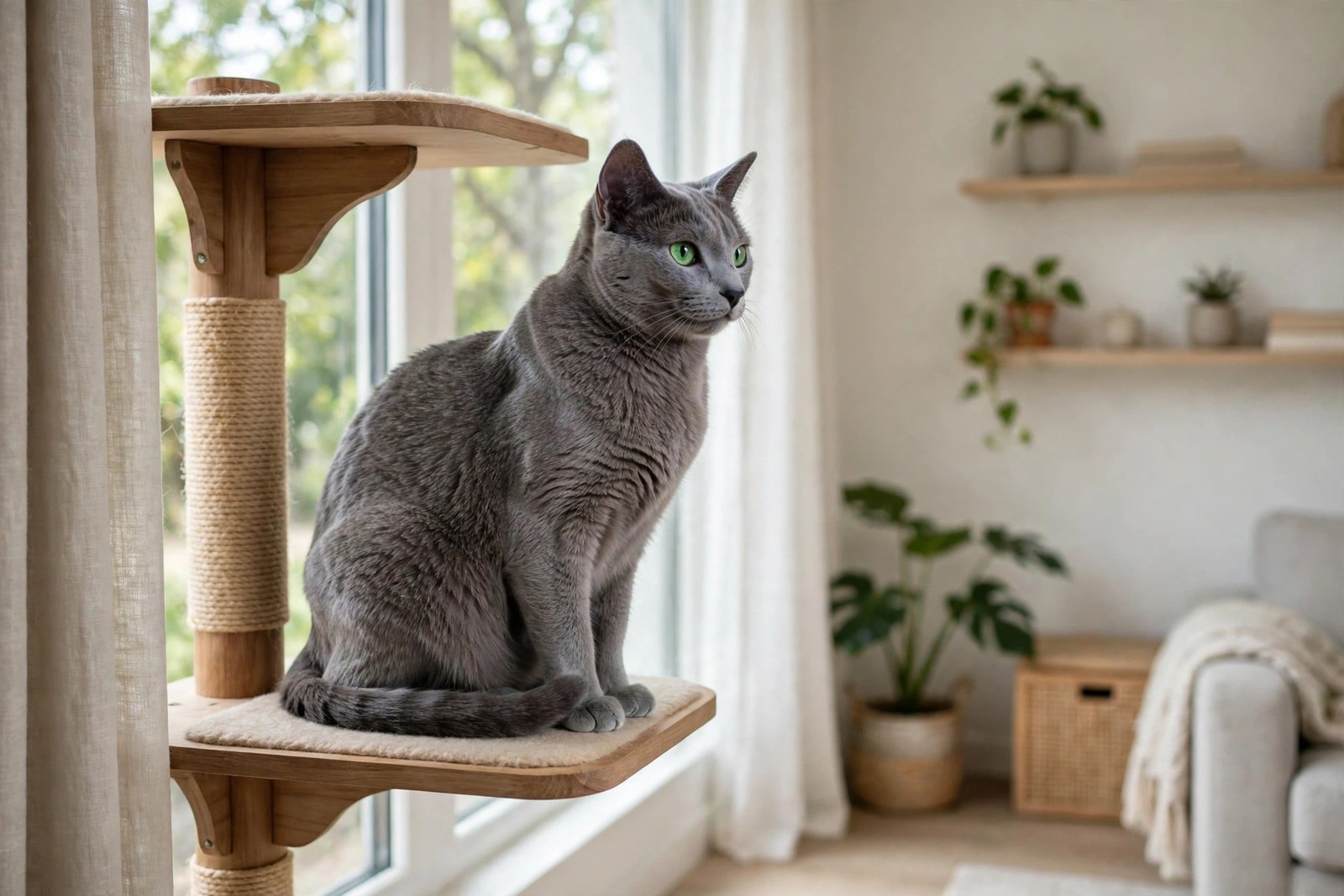
Yes, and for this breed indoor life is often the happiest option rather than a compromise. The Russian Blue is a quiet, observant cat with a dense silver-blue double coat and striking green eyes, known for choosing one or two people and following them with dog-like loyalty while remaining polite but distant with everyone else. A cat who dislikes change, startles at novelty, and organises its day around fixed habits is not missing out on the street. It is usually relieved to avoid it.
Temperament Is the Whole Answer
Russian Blues are creatures of schedule. They notice when dinner is ten minutes late, nap in the same place at the same hour, and greet their favourite person at the door. Indoor living protects that order: no territorial disputes through the window with neighbourhood cats, no traffic, and no strangers reaching for a cat who would rather be admired from across the room. The same sensitivity has a flip side indoors. Loud parties, frequent house guests rummaging through the cat's room, rearranged furniture, and a new pet introduced abruptly can unsettle a Russian Blue for days, so changes should come one at a time, with hiding places and high perches left exactly where they were.
What an Indoor Russian Blue Needs
This is a more athletic cat than its serene expression suggests. Provide a tall, stable scratching and climbing post, because Russian Blues like height and use it to observe safely. Schedule two short interactive play sessions a day, since the breed enjoys games with its chosen person and often learns to fetch a soft toy. Keep play gentle and end before the cat is wound up, because overstimulation is a common trigger for this sensitive breed to leave the room entirely. Mental routine helps too: puzzle feeders at the same times, a window seat for bird watching, and a warm sleeping spot that nobody moves.
Coat, Weight, and Company
That plush double coat sheds less dramatically than many breeds but still needs a weekly comb-through, which most Russian Blues accept if it is brief and part of the routine. Indoor cats of this breed can drift toward weight gain once the playful first year passes, so measure food, weigh the cat every few months, and adjust portions gradually rather than relying on how the bowl looks. Company matters more than square footage: a Russian Blue whose people work long hours benefits from a midday visit or a compatible companion cat introduced slowly, because loneliness in this breed shows as withdrawal rather than destruction.
For a calm household wanting a devoted, undemanding companion, few breeds fit indoor life better. Through KinsLe's Family Sharing, you can share its profile with relatives you select, giving each family member you choose their own access to the cat's profile in KinsLe, even through busy weeks and holidays.