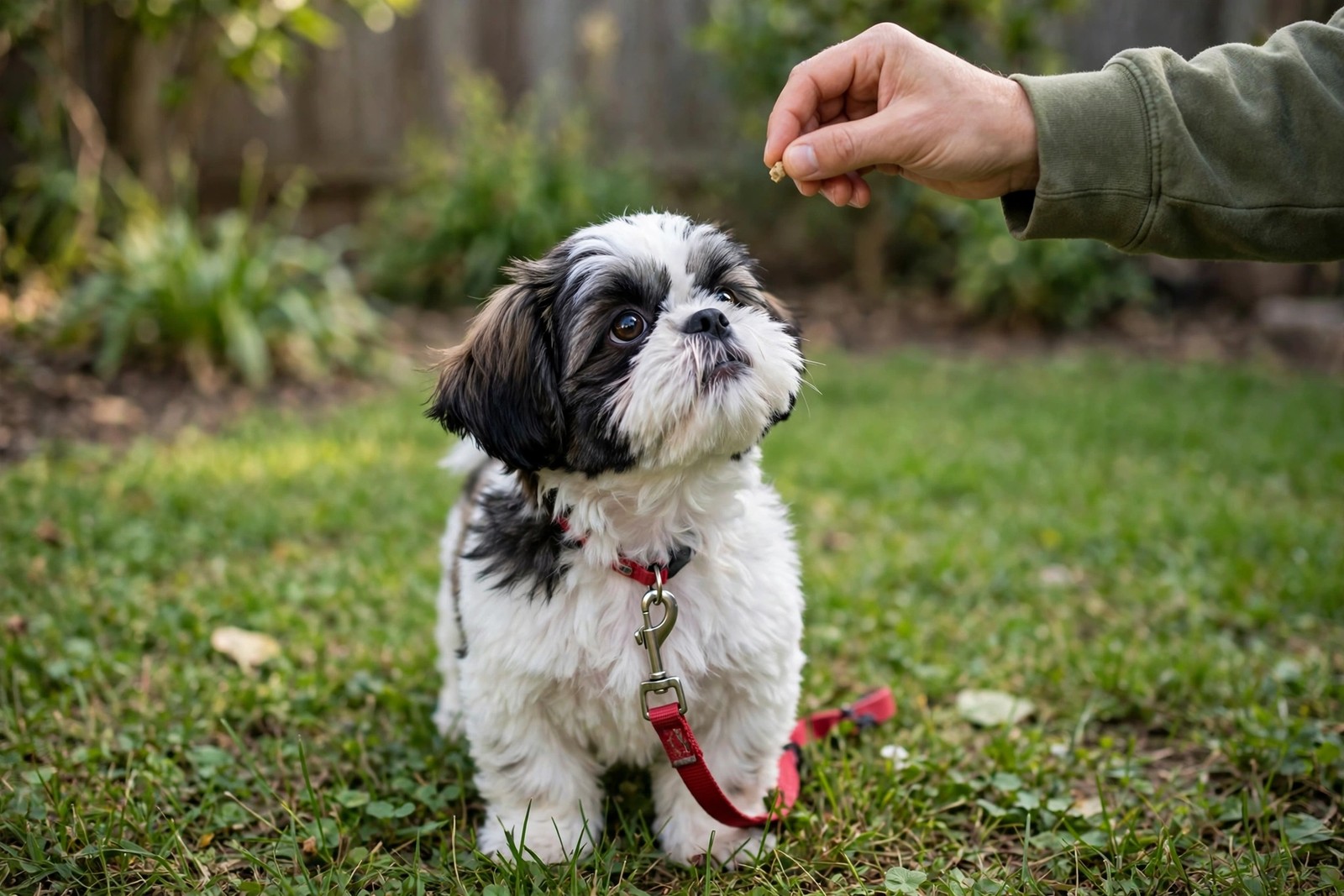
A Shih Tzu is an easy dog to live with and a moderately tricky dog to train, and first-time owners do best when they know which half of that sentence to expect. This breed was developed as a palace companion, selected for charm, affection, and company-keeping rather than for work, obedience, or problem-solving alongside a handler. The result is a dog who adores you, wants to be near you, and may still look thoughtfully at a recall cue and decide the cushion is better.
What Comes Easily
Manners around the home usually come well. Shih Tzus are generally friendly with people and other dogs, not wired to chase or guard, and content with modest exercise, so lead walking, settling beside you, and learning simple cues and tricks with food rewards all progress at a fair pace in short sessions. They are also forgiving of beginner handling: a slightly late reward or a clumsy repetition rarely ruins anything, because the dog is not analysing your technique. Keep sessions to a few minutes, pay with pea-sized pieces of something genuinely tasty, and end while the dog is still keen, since repetition past that point is where the famous stubbornness appears.
House-Training Is the Real Test
This is the part breed guides soften and owners should not. Shih Tzus have a longstanding reputation for slow house-training, built from a small bladder, a low tolerance for going out in rain or cold, and an independent streak that finds the warm rug perfectly acceptable. A realistic plan assumes months, not weeks: outside on waking, after meals, after play, after naps, and last thing at night, with praise and a treat delivered outside the moment the puppy finishes. Confine to a small, easy-clean area when unsupervised rather than giving free run of the house, and clean accidents with an enzymatic cleaner while saying nothing at all, because scolding teaches a puppy to hide the evidence, not to wait. Rainy-day refusals are solved with a covered outdoor spot and your own patience, standing out there with the dog rather than letting it back in unproductive.
The Companion-Breed Extras
Grooming is part of training life. A Shih Tzu in a long coat needs daily brushing; most pet owners choose a short clip every few weeks instead, and either way the puppy must learn to stand for handling, have its face and feet touched, and accept eye-area cleaning as routine. The breed's short face and large eyes also mean care in heat: train and walk in the cooler parts of a summer day, and never expect a Shih Tzu to keep up with athletic exercise in warm weather. Finally, because this breed bonds closely and hates exclusion, practise brief, cheerful departures from puppyhood so being left alone is boring rather than alarming.
A patient first-timer who treats house-training as a long routine and grooming as a daily habit usually ends up with a delightful companion. KinsLe's Care Teams supports exactly that routine, assigning the frequent garden trips, short practice sessions, and coat care to named helpers and time-stamping each one, so consistency survives a busy household.