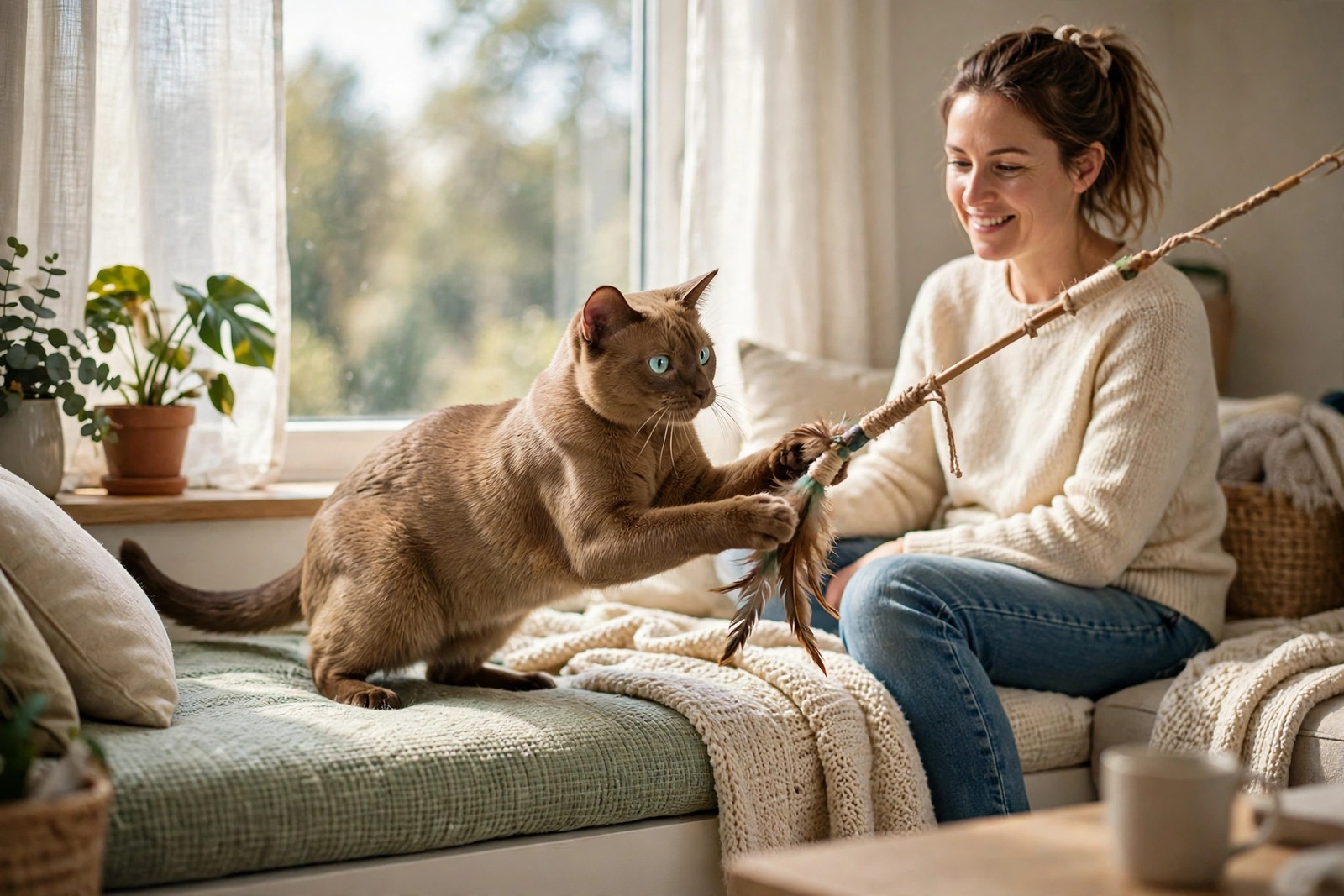
Yes, and indoor life fits a Tonkinese for a specific reason: this breed's world revolves around its people. Developed from Burmese and Siamese lines, the Tonkinese took the Burmese warmth and the Siamese sociability and landed in between, producing a cat who greets visitors instead of hiding from them, supervises cooking from a shoulder-height perch, and treats an empty house as the one genuine hardship. A trusting, outgoing cat like that is safer indoors, and usually perfectly content there, as long as the social and playful side of the bargain is honoured.
Company Is the Non-Negotiable
A Tonkinese kept alone in a silent flat for a full working day, five days a week, is the scenario where indoor life fails this breed. Loneliness shows up as persistent calling, door-dashing when you leave, over-grooming, or a cat who ricochets off the furniture at midnight burning the energy nobody spent with it. The fixes are practical. A second cat, ideally a Tonkinese or another sociable breed, is the classic answer and the breed generally takes well to companions. If yours is a single cat, a midday visit, a staggered household schedule, or a solid play session morning and evening becomes essential rather than kind. Many Tonkinese also learn harness walks happily, which can add an outdoor dimension without free roaming.
Play, Height, and Warmth
This is an athletic, curious breed that stays playful well past kittenhood. Give it a tall cat tree it is allowed to launch from, wand-toy sessions that end with a catch and a small meal to complete the hunting sequence, and puzzle feeders rotated often enough to stay interesting. Tonkinese cats enjoy warmth and seek out sunbeams, radiators, and laps, so a window bed in the sunniest spot in the home will be used daily and is worth arranging deliberately. They are also famously fond of riding on shoulders and joining conversations in a moderate voice, softer than a Siamese but far from silent, so expect commentary and answer it; talking back is part of the relationship this breed expects.
Reading Contentment Indoors
A happy indoor Tonkinese has a recognisable shape to its day: active play in the morning and evening, long warm naps between, regular appearances to check what each person is doing, and a steady appetite. Contrast that with the warning pattern of a cat spending long hours staring at the door, calling at night, or losing interest in games it used to demand, which points to loneliness or boredom rather than a breed unsuited to the home. Adjust company and play first, and mention any lasting appetite or behaviour change to a vet, because this demonstrative breed usually makes its feelings obvious early.
For households with people around, another pet, or a genuine commitment to daily play, a Tonkinese indoors is an affectionate, entertaining companion. Through Family Sharing in KinsLe, you can give the relatives you choose access to that profile, so each relative you pick can open it for themselves.