
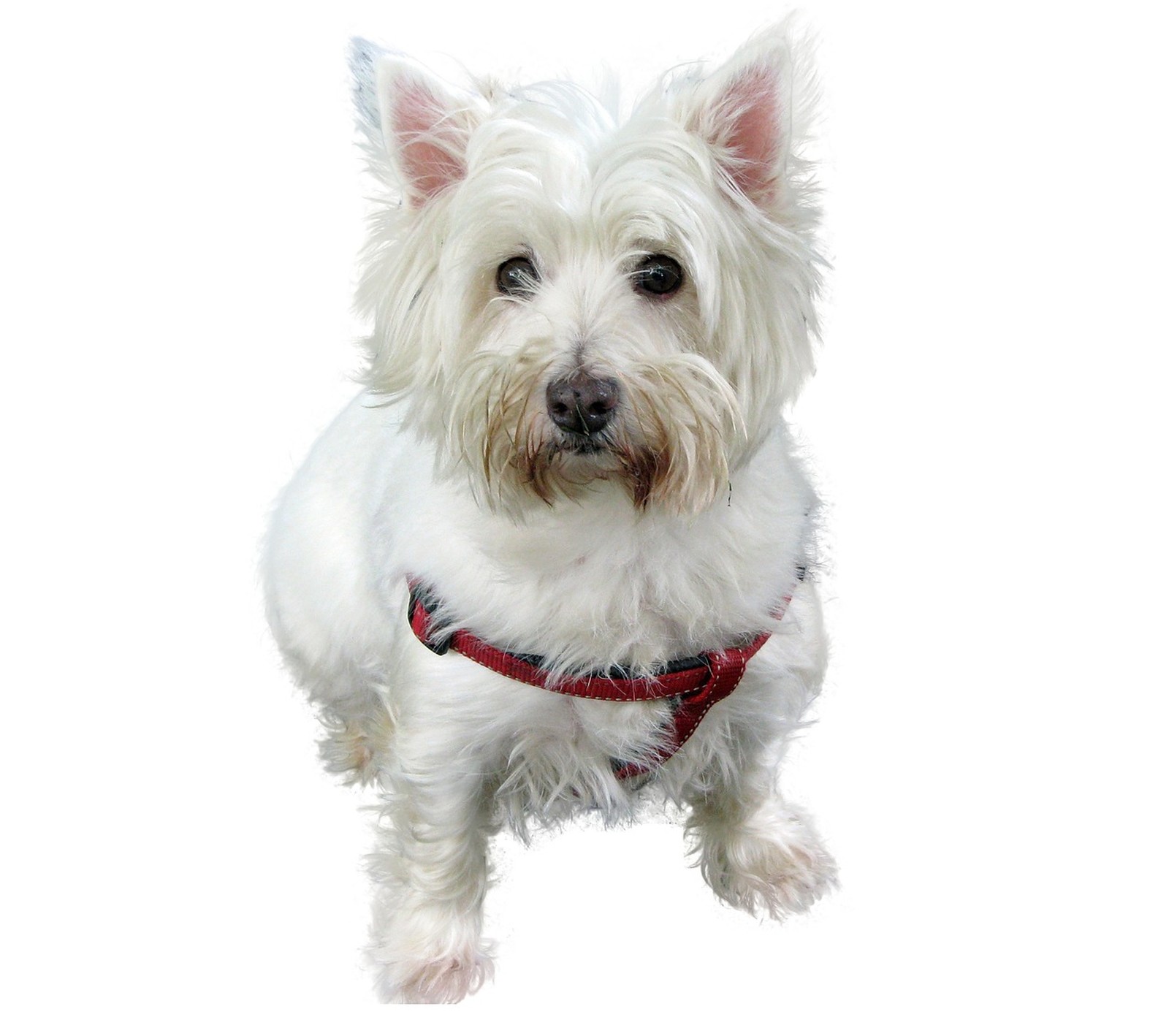
Yes, West Highland White Terriers are genuinely good dogs for a cold climate. The breed was shaped in Scotland to work outdoors in rough weather, and the coat tells that story: a hard, wiry outer layer that sheds wind and moisture over a softer, insulating undercoat. For a small dog, a Westie is unusually well equipped for frosty mornings, snowy paths, and blustery walks, and most relish winter outings rather than tolerating them.
Where Cold Actually Reaches a Westie
The weak points are specific, not general. Wet cold defeats the coat faster than dry cold does, because once the undercoat is soaked through, it stops insulating, so a rainy near-freezing day can chill a Westie more than a crisp day well below freezing. Short legs put the belly close to snow and slush, so deep drifts and icy puddles soak the underside quickly. Paws pick up road salt and grit, which irritate the skin between the toes and get licked off afterward. Finally, standing still is the enemy: a Westie generating heat on a brisk walk copes easily, while the same dog waiting tethered outside a shop loses warmth fast.
A Winter Routine Shaped Around This Breed
Build the day around shorter, livelier outings rather than one long slow wander, and head out during the mildest part of the day when you can. After each walk, dry the belly and legs with a towel, check between the toes for salt, ice balls, and grit, and rinse paws if your streets are treated. Keep a clear, shovelled toilet patch near the door, because asking short legs to plough through fresh snow for every bathroom break quickly becomes a house-training problem. A well-fitted coat is optional for most healthy Westies on active walks, but it earns its place for older dogs, puppies, and any outing that involves waiting around. Indoors, the breed's terrier energy still needs an outlet on storm days, so rotate in scent games, tug, and short training sessions when the weather closes in.
Skin, Coat, and the Heated-House Problem
Cold climates often trouble a Westie less outdoors than indoors. Central heating dries the air, and this breed is already prone to sensitive, itchy skin, so winter can mean more scratching, flaking, and dull coat even when the dog loves the snow. Brush regularly to distribute coat oils and clear dead undercoat, bathe only when needed so you do not strip what protection the coat has, and mention persistent itching, redness, or hair loss at your next vet visit rather than assuming it is just the weather. A dog who is shivering, lifting paws repeatedly, or trying to turn home early is telling you the outing has gone far enough, whatever the thermometer says.
The Verdict for Cold-Climate Homes
Choose a Westie for a cold region with confidence, provided your household can supply the paw care, drying, and indoor play the season demands rather than expecting a low-effort winter. KinsLe helps a cold-climate household stay consistent through Care Teams, where feeding, paw checks, and outing duties are assigned per pet so nothing winter-specific slips when one person is busy.