
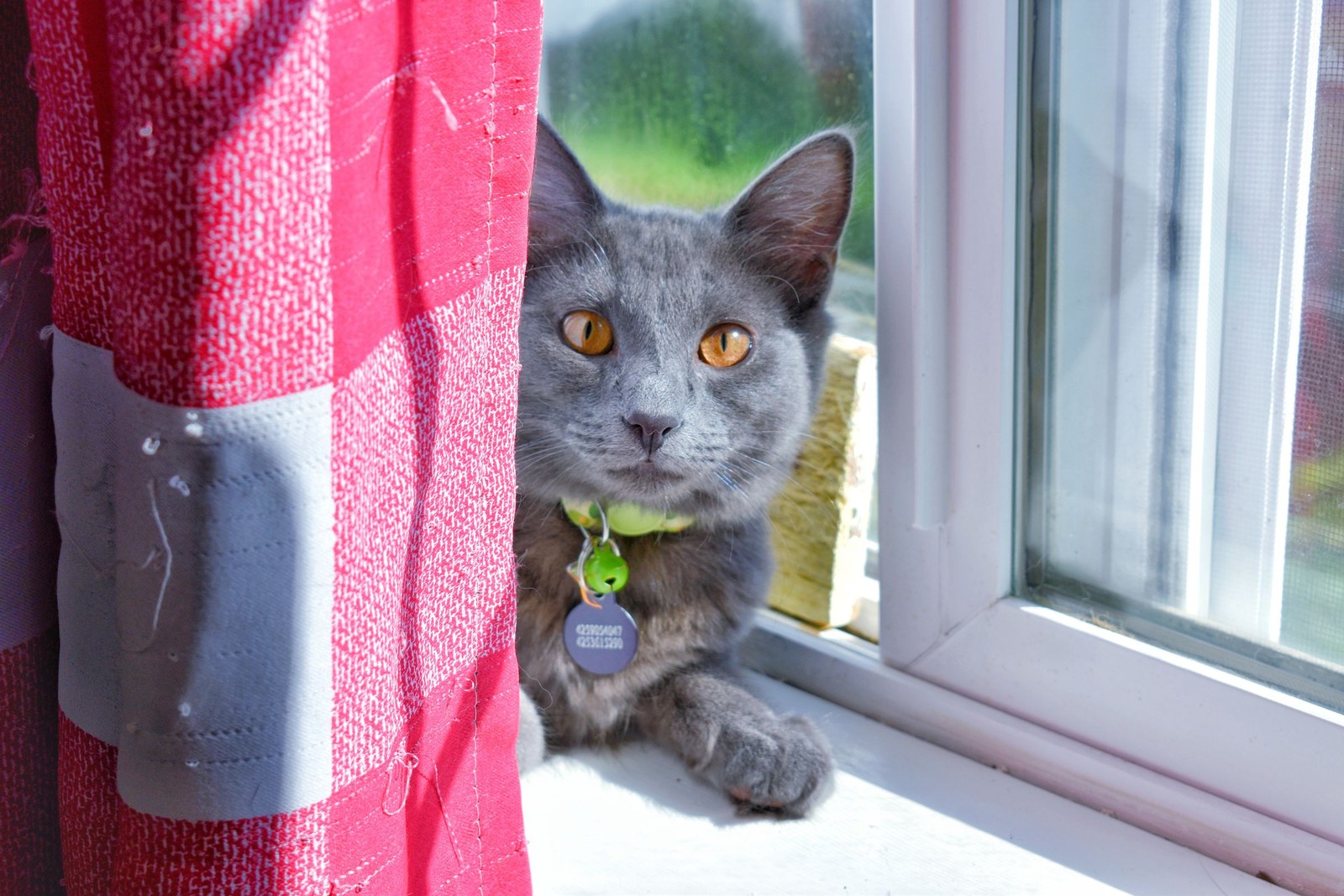
No — ordinary window screens are not enough to keep your cat from falling. A standard screen is designed to keep insects out, and its mesh and frame are held in place by light tension; a cat leaning, sleeping against it, or lunging at a bird can push the whole screen out in one motion. Falls from windows are a well-documented cause of serious injury, especially in apartment buildings.
How Screen Failures Happen
The dangerous scenario is usually relaxation, not recklessness. Cats seek out sunny sills and press their full weight against the warm screen, dozing for hours against mesh that was never load-rated. Screens age, too — sun and weather make mesh brittle, frames warp, and the spline holding everything in place loosens year by year, so a screen that held last summer may not hold this one. A startle completes the picture: a bird on the ledge, a loud noise behind, and the cat pushes backward or forward with real force.
Even ground-floor windows deserve respect. A cat who pops a screen out doesn't just risk a short fall — she's now an indoor cat loose outside, which is its own emergency.
Upgrades That Actually Work
Pet-resistant screen mesh is made from much stronger, claw-tolerant material and is the single best upgrade for windows your cat loves. Pair it with a properly fitted, firmly secured frame. For windows that open wide, install window guards or stops that limit the opening to a gap too small for a cat's head — if the head can't fit, the body can't follow. Adjustable window locks and vent latches made for child safety often serve the same purpose well.
Where your cat has a favorite lookout, consider a window perch mounted to the frame or wall rather than the screen, so her weight lands on hardware designed for it. And rearrange climbing routes: a tall cat tree parked beside an open, unscreened window is a launchpad, so position furniture so it doesn't funnel her toward weak points.
A Seasonal Check Worth Scheduling
Screen safety is a springtime job. Before warm weather arrives and windows start opening daily:
- Press firmly on every screen from inside — any flex, bow, or movement means repair.
- Check mesh for tears, claw holes, and brittle patches.
- Confirm frames are fully seated and latches are engaged.
- Decide which windows will open this year and upgrade those first.
- Repeat a quick press test mid-summer for the most-used windows.
Renters can usually swap in pet mesh or add removable guards without permanent changes, and landlords rarely object to safety hardware that protects the property too.
Let Kinny Carry the Reminder
The risk with seasonal checks is simply forgetting — the first warm weekend arrives, windows fly open, and the screens are whatever condition last fall left them in. KinsLe's Kinny, the built-in AI assistant, can send you reminders and nudges, so a screen check lands on your list when the weather turns rather than after the first scare. Small prompts, timed well, prevent the accidents that happen in the gap between intention and action. Kinny on KinsLe will field further queries you pose about a loose mesh panel giving way and letting her slip outside, where each response comes out of the library powering KinsLe Answers.