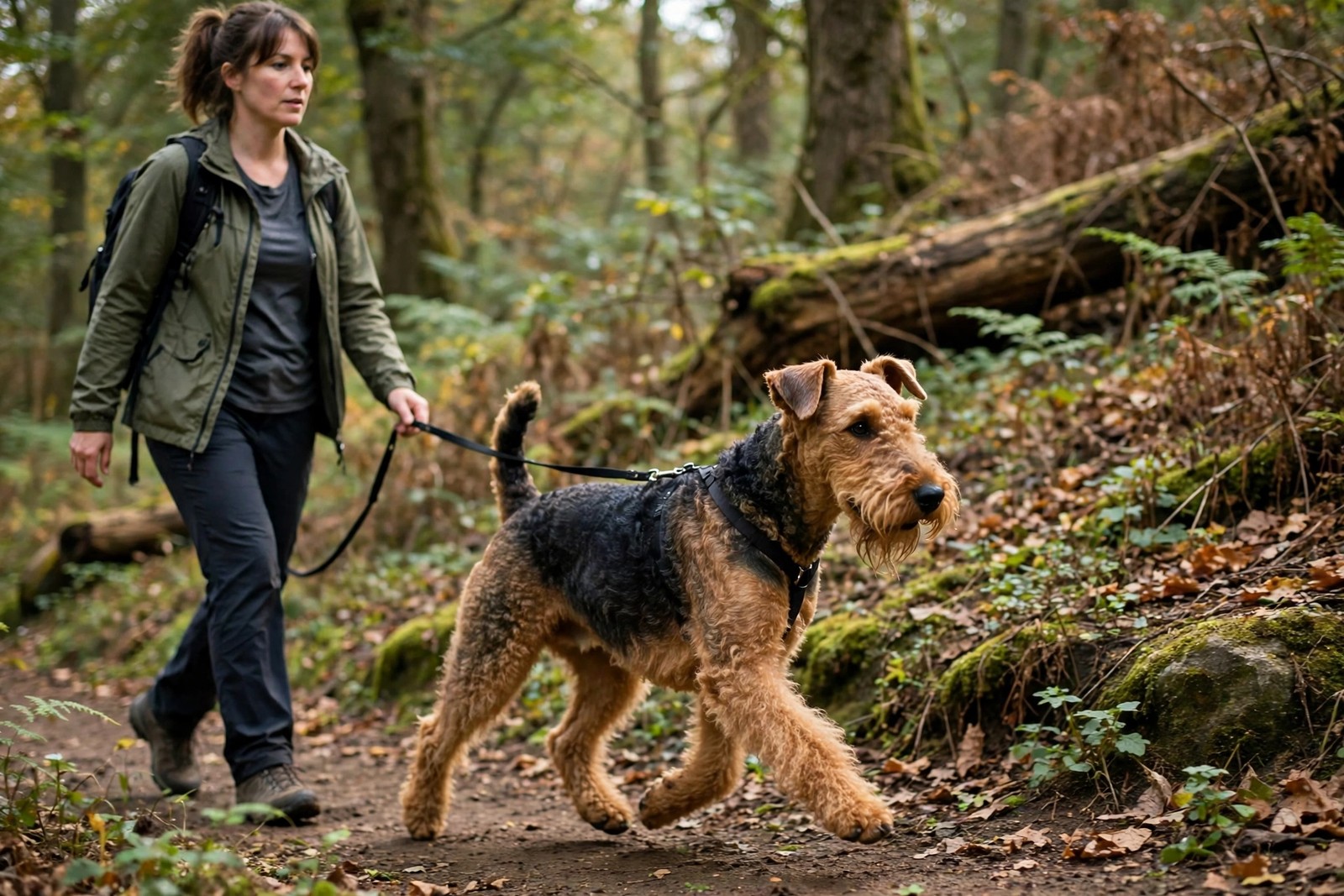
An Airedale is the largest terrier, and it lives like one: strong, athletic, bright, and completely unwilling to spend its life as a decorative dog. Livable in the house does not mean tired once a week. It means a daily pattern in which physical exercise and mental work together use the energy and the brain that this breed brings into every room. A healthy adult typically needs a good couple of hours a day split between those two kinds of work. Owners who meet that need usually describe a clownish, affectionate companion; owners who miss it describe an inventor whose projects involve the garden, the sofa, and anything within reach.
Physical Exercise: More Than a Walk Around the Block
Build the physical share around real exertion rather than a slow amble. Longer walks with inclines, changes of pace, and room to move, plus free running in a secure space where recall and local rules allow it, suit a dog bred to work across rough country. Swimming, steady jogging with an adult dog who is fit for it, and active play all count, as long as the dog finishes satisfied rather than frantic. Spread effort across the day where you can; a morning outing that genuinely uses energy makes the working hours calmer than a single late burst after a whole day of waiting and winding up.
Mental Work Is Half the Job
For an Airedale, thinking is exercise. Short training sessions of a few minutes, repeated through the day, teach new skills and rehearse manners while giving that stubborn intelligence something approved to solve. Scent games do similar work at home: hide treats or a favorite toy around a room or garden, let the dog search systematically, and make the hides harder as its skill grows. Puzzle feeding, scattering part of a meal in grass, or asking for a known behavior before everyday rewards all turn routine moments into small jobs. A dog who has searched, learned, and solved settles differently from a dog who has only been walked.
What Under-Exercised Looks Like in the House
The warning signs are usually inventive rather than mysterious. Digging appears in gardens and sometimes in bedding or carpet, chewing expands from toys to furniture and door frames, and redecorating follows: cushions moved, bins investigated, laundry redistributed. Barking at small provocations, pestering people in the evening, and an inability to settle after a normal walk often mean the mental share was missing even when the physical share happened. Treat that pattern as information about the plan, not as a character flaw in the dog. Add work first, especially scent and training work, before concluding that the breed is simply too much for the house.
Variety Across the Week, and Young Dogs
Rotate the week's work so neither of you gets bored: a long countryside walk one day, training and scent games at home on a wet day, a new route with different smells and surfaces on another. Adolescents need patience as well as volume, since a young Airedale can look grown long before its judgment arrives. Build young dogs up gradually, keep sessions shorter and more frequent, and protect growing joints from forced endurance or repetitive jumping while still giving the young brain plenty to do. Senior dogs often keep the mental appetite after the physical range shortens, so shorten the walk before you shrink the thinking work.
Writing Down What This Dog Actually Needs
Transferrable Profiles keeps a written record of this dog's real routine: the daily couple of hours, how that time splits between walks and brain work, which scent games settle it fastest, and which warning signs mean the day fell short. That record matters because Airedales are often cared for by sitters, groomers, family members, and sometimes a future household, and a dog explained only as needing lots of exercise is easy to under-serve. If care changes hands one day, exercise notes that travel with the Transferrable Profiles file on KinsLe offer the next household a truthful starting point.