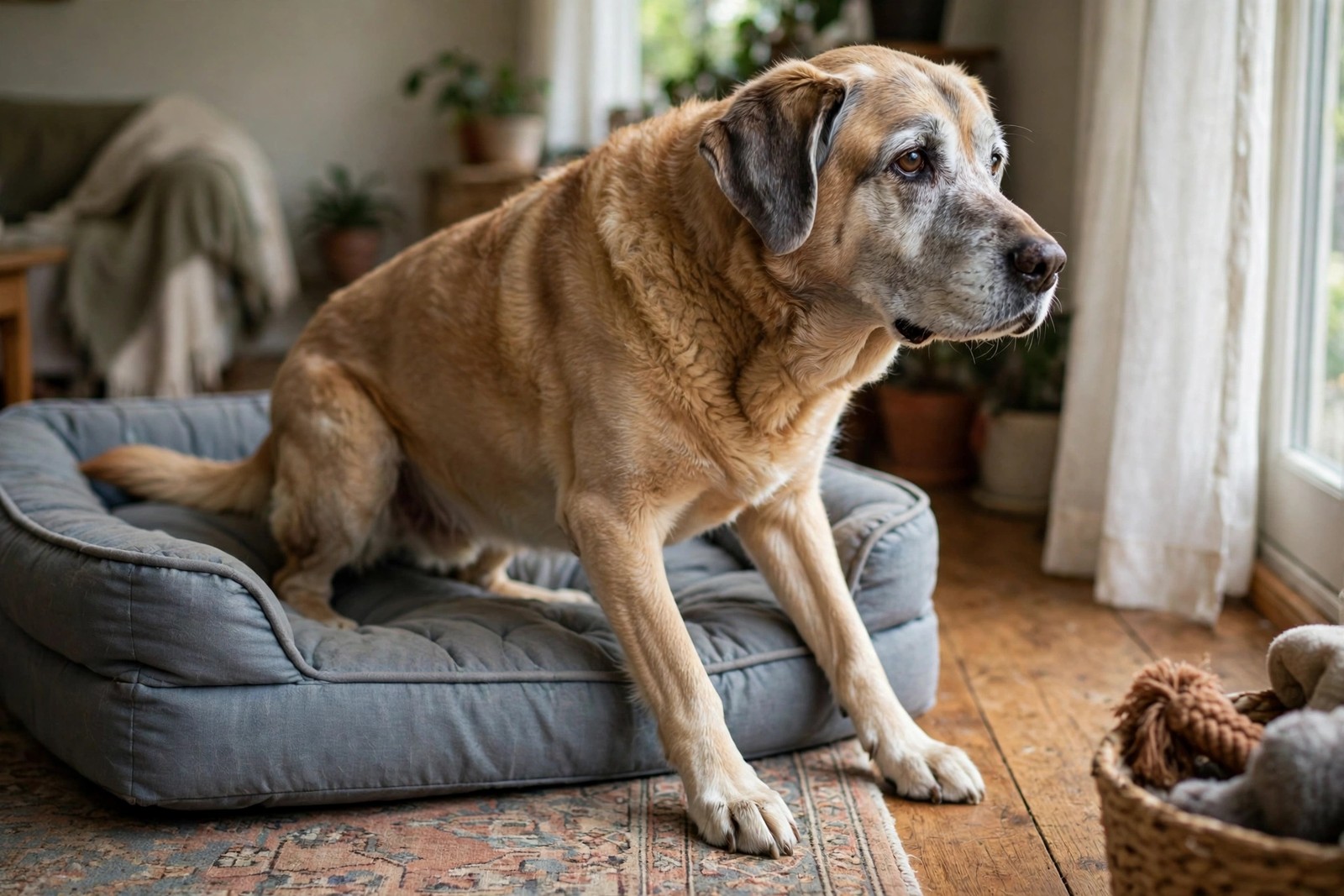
Arthritis — wear and inflammation inside a joint — most often appears in a dog's senior years: commonly from around seven or eight in large and giant breeds, and a little later, eight to ten, in smaller dogs. That is a guide, not a guarantee, because a dog's joints age according to their history as much as their birthday.
Why Size and Breed Shift the Timeline
Big dogs load their joints harder with every step, so cartilage in hips, elbows, and shoulders tends to wear sooner. Giant breeds often count as senior at six or seven, and their arthritis timeline follows that earlier ageing. Smaller dogs usually reach old age later, so joint wear often shows later too — though small breeds are not immune, and a small dog with kneecaps that slip (luxating patella) can develop arthritis in that knee well before old age.
Breed shape matters as well. Long-backed dogs stress spinal joints, heavy front-loaded breeds stress shoulders and elbows, and any breed with known hip or elbow dysplasia may have abnormal joint mechanics from youth, which grinds cartilage down years ahead of schedule.
The Dogs Who Get It Young
Post-traumatic arthritis is the exception every owner should know. A joint that has been injured — a torn cruciate ligament, a fracture crossing the joint, a dislocated hip — often develops arthritis in that one joint within a few years, even in a dog who is only three or four. Dogs diagnosed with hip or elbow dysplasia as puppies may show stiffness in those joints by middle age. If your dog has any of these in their history, ask your vet about joint checks from around age four or five rather than waiting for senior screening, and watch the known joint, not just the dog's general energy.
The Early Signs Owners Miss
Arthritis rarely announces itself with limping at first. The classic early pattern is stiffness after rest that warms out: slow to rise in the morning, then moving almost normally ten minutes later. Other early clues include lagging behind on walks that used to be easy, hesitating before jumping into the car or climbing stairs, licking at a sore joint, bunny-hopping with both back legs together, sleeping more, and becoming grumpier about being handled or about other dogs bumping them. Because these creep in over months, owners often read them as just slowing down. A useful test is comparison: film your dog rising and walking today, then compare in three months.
What Actually Helps Once It Starts
There is no cure, but early management changes how much arthritis limits a dog. Weight is the biggest lever an owner controls: extra kilos load sore joints with every step, and slimming an overweight arthritic dog often improves comfort more than any single other measure. Exercise should stay steady and moderate — short, frequent walks on soft, even ground — rather than quiet weeks followed by one huge weekend hike, which flares sore joints for days.
At home, add grip and remove jumps: rugs or non-slip mats on hard floors, a ramp or steps for the car and sofa, a supportive bed away from draughts, and food and water raised slightly for dogs with neck or shoulder pain. Your vet builds the medical side of the plan, which may include pain relief, joint diets or supplements, and physiotherapy or hydrotherapy, reviewed as things change. Never give human painkillers unless your vet has specifically advised it; some are dangerous for dogs.
Keep a dated record of good days, stiff days, weight, and what helped, and bring it to twice-yearly senior checks. KinsLe's Pet Passport keeps that log alongside X-ray reports and your vet's current plan in one portable packet, so a covering vet, physio, or boarder sees the full joint history instead of starting from your memory at the door.