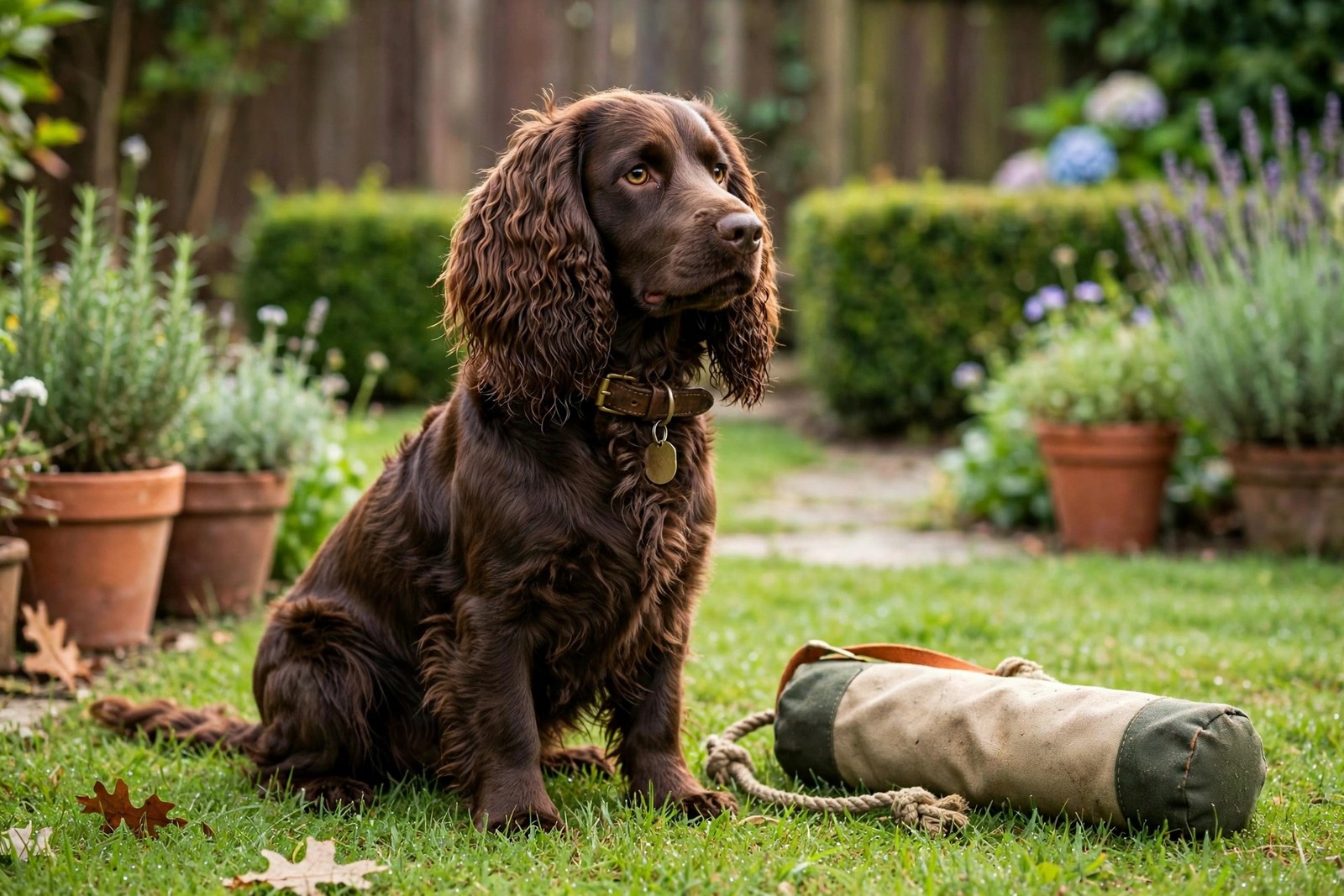
The Boykin workday, without wishful thinking
A settled adult Boykin Spaniel can be left during a normal workday, but this is a breed where the honest answer is heavily conditional. The Boykin is South Carolina's state dog, developed to hunt from small boats and work all day in partnership with a person. The result is a compact, chocolate-coated spaniel with a big engine, a strong retrieving drive, and a genuine wish to be included. A Boykin does not regard your absence as rest time; an under-exercised Boykin regards it as an unscheduled shift.
Owners who succeed with working hours share a pattern: the dog's exercise and mental work are treated as fixed appointments, not as things that happen if the evening allows.
What an under-occupied Boykin actually does
Spaniel energy turns inventive indoors. Expect chewing directed at anything that smells of you, digging motions on carpets and sofa cushions, shredding of soft items, and alert barking that escalates because nobody is there to close the story the dog has started.
Attachment is the other half of the picture. This breed bonds closely and usually wants to be in the same room as its people, so alone time should be taught, not assumed, particularly for puppies and for the many Boykins who arrive as young rescues. Distress often looks like frantic greeting, shadowing you from room to room on evenings, and vocalising that starts at the door closing rather than at outside noises.
A workday plan built for a sporting spaniel
The morning needs to contain real work. A Boykin's best pre-work session combines physical output with thinking: retrieving games with steadiness practice, a swim where safe and permitted, scent games in the garden, or a run with training woven through it. Forty-five unhurried minutes of that will settle this breed more deeply than a much longer lead walk, because the brain has been on duty as well as the legs.
Treat the midday break as part of the breed's care, not a bonus. A walker, family member, or neighbour who can offer a toilet break, a short retrieving game, and fresh water turns one long stretch into two manageable ones, and for dogs under two years old it is close to essential. In the house, leave the settling kit in the dog's usual rest area: a safe chew, a food puzzle refreshed that morning, and bedding that can survive muddy paws.
Checking that the plan is genuinely enough
Review the evidence weekly while a routine is new. A coping Boykin sleeps, eats breakfast normally, and greets you keenly but recoverably. A dog who is regularly destroying something, whose greeting takes many minutes to settle, or who is reported barking through the day is being asked for more than the current plan supports, and the fix is more outlet or a shorter gap, not more telling off.
If vocalising, destruction, or frantic shadowing persist even with strong exercise and a midday break, or if your dog injures himself trying to get out, involve your veterinarian to exclude pain or illness and to guide behaviour help for separation difficulties.
Sharing the Boykin workload fairly
The Boykin plan has more moving parts than most: morning work, midday visit, evening training, wet-coat management, and feeding, often split between partners or family. When those jobs live in people's heads, the morning session quietly shrinks on busy days and the dog pays for it by noon.
Naming who owns each duty, and marking it done, keeps the standard honest even in a hectic week. KinsLe supports that division of labour through Care Teams, where you can assign your Boykin's care duties per pet and see completed tasks marked with a timestamp, so nothing in the workday plan is left to assumption.