
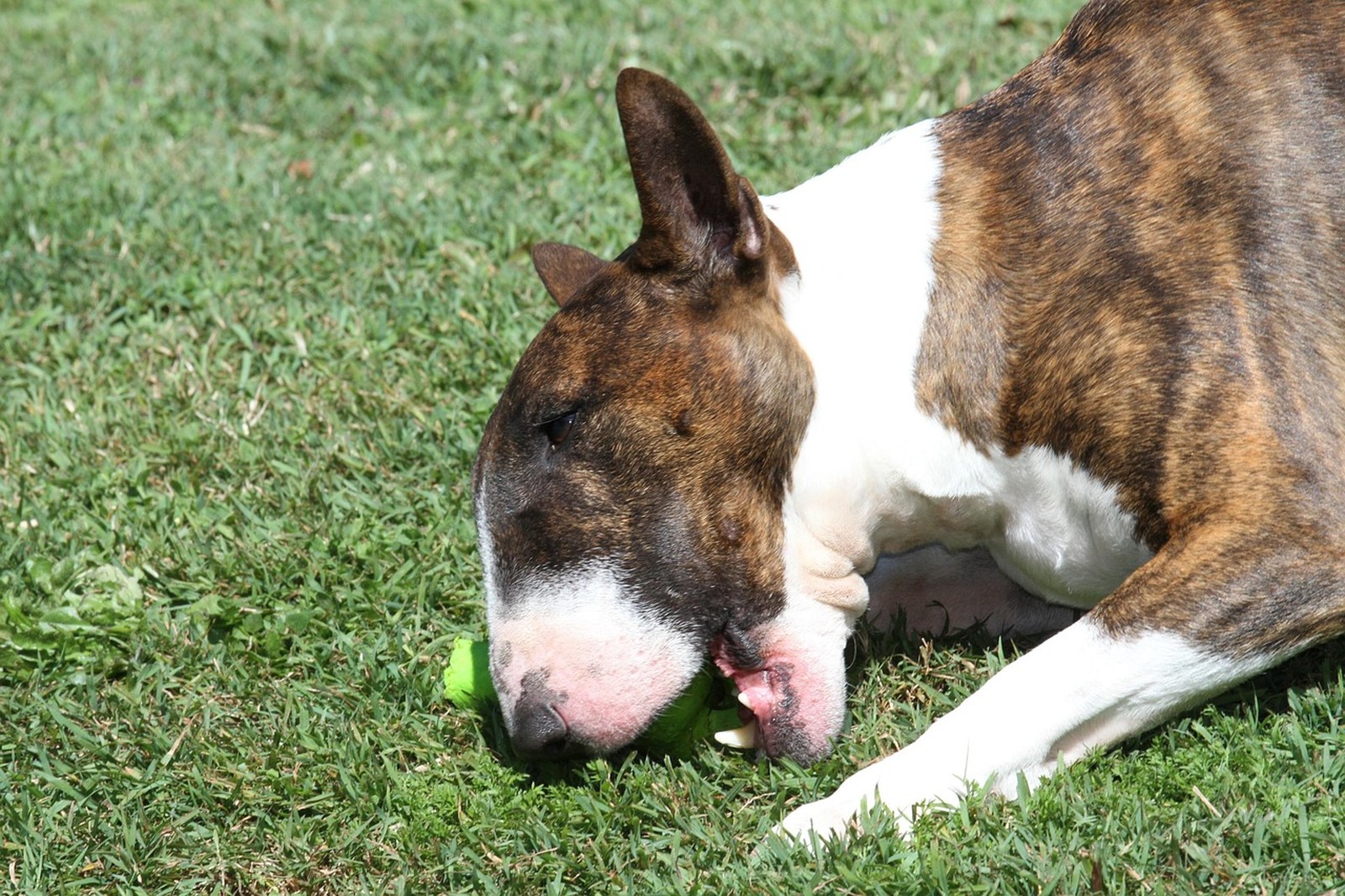
Bull Terriers and the empty house
A settled adult Bull Terrier can manage a normal workday alone, but of all the arrangements in a dog's week, this is the one this breed would vote against. The Bull Terrier is a comedian with a powerful engine: affectionate, game for anything, and happiest in the middle of whatever the family is doing. Left alone badly, the same dog becomes a one-dog renovation crew.
The difference is almost entirely preparation. Bull Terriers are not dogs who quietly pine by the window for eight hours as their first choice, and they are not dogs who entertain themselves politely with a single toy.
Company hunger and a famous jaw
Two breed traits drive the workday plan. The first is sociability: Bull Terriers bond intensely and often follow their people about the house, joining in rather than observing. Alone time is a skill this breed learns in stages, with short, successful absences repeated until leaving looks ordinary.
The second trait is chewing power paired with determination. A bored Bull Terrier does not nibble; he commits. Skirting boards, chair legs, doors, and anything rubber or stuffed are all realistic targets, and this breed can also be prone to swallowing pieces of what it dismantles, which turns a behaviour problem into a safety one. The resting area for an alone Bull Terrier therefore needs to be genuinely chew-proofed, not merely tidied, with electrical cables, remote controls, shoes, and children's toys all out of the project zone.
A workday structure that gives the clown an outlet
Spend the morning like you mean it. Bull Terriers respond best to play with rules: a vigorous game of tug with pauses, a retrieving session, a walk that includes training games and chances to sniff, finishing before you leave so the dog comes home warm, satisfied, and ready for breakfast. A dog who has only had a lead walk to the corner will still have a full tank of play at nine in the morning, and the furniture will be offered the difference.
Set up a safe room or pen area with the strongest safe chews you have, a stuffed food toy prepared the night before, and water in a bowl that cannot be tipped into bedding. For dogs under about two, and for any Bull Terrier still earning trust alone, book the midday visit as standard: toilet break, a short play session, a fresh chew, and company.
Knowing when the day is too long
A Bull Terrier coping well sleeps, works through the chews provided, and greets you with joy that settles within minutes. Destructive chewing that is getting more ambitious, barking that neighbours report as sustained, indoor toileting from a previously clean dog, or a greeting so frantic it takes half an hour to come down all say the current day is too long or too empty for this individual.
If your dog has swallowed pieces of chewed items, seems unable to settle even on short absences, or the behaviour is worsening over weeks, contact your veterinarian promptly, both for the swallowing risk and for guidance on behaviour support.
Making the midday visit foolproof
The midday visitor carries this breed's workday, so they need instructions that match the dog: play is welcome but must include the pause rules, only the approved chews are given, and anything already damaged gets photographed and moved rather than left for round two.
Putting those instructions where the visitor can actually see them, for exactly the days they are helping, removes the guesswork. KinsLe helps with Care Pass, which lets you give a trusted sitter temporary clear access to your Bull Terrier's care routine and key details while you are away, so the midday break runs your way.