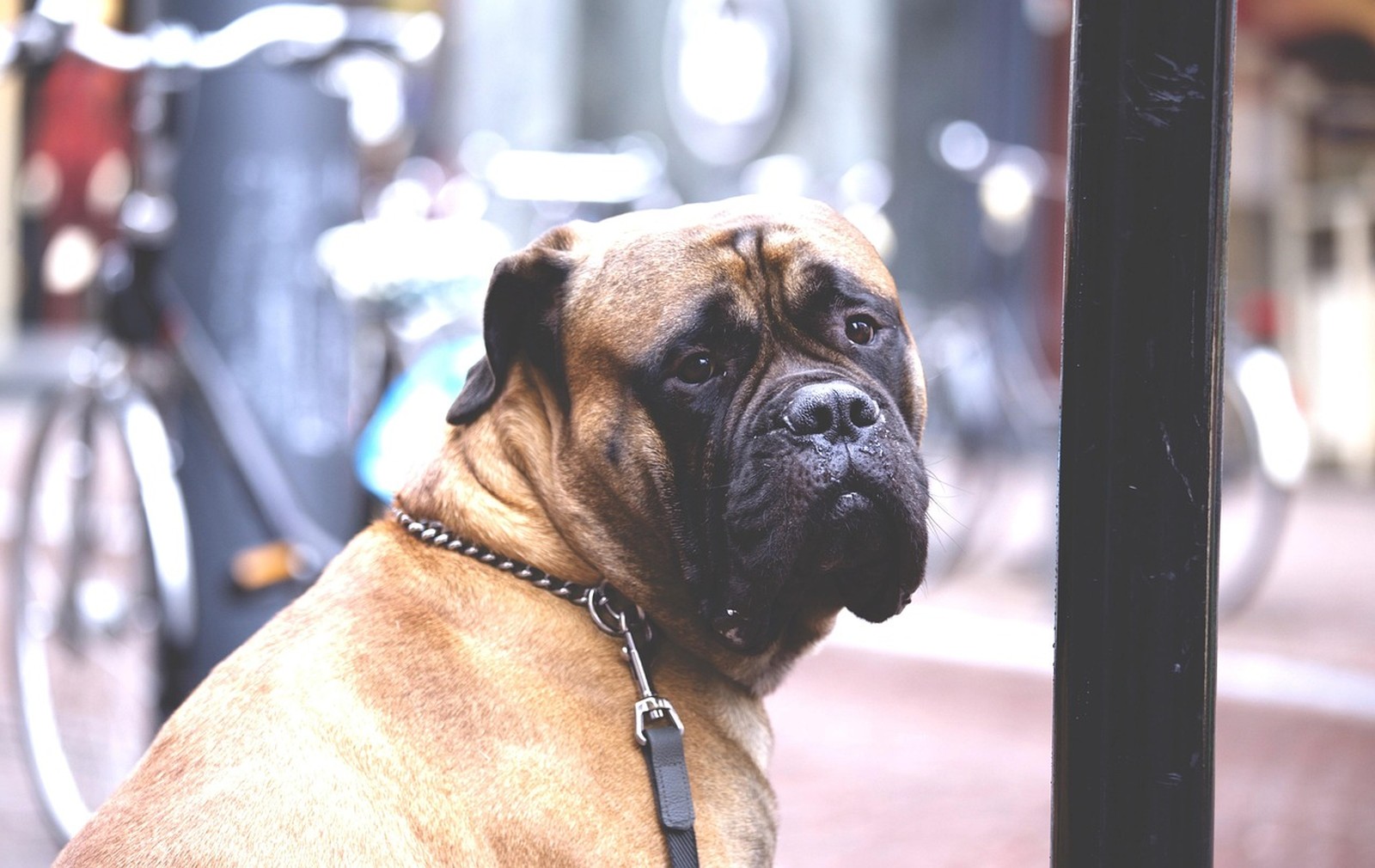
A guardian who mostly wants to sleep
Yes, a healthy adult Bullmastiff is one of the more workday-compatible large breeds you could choose. Developed as a gamekeeper's guarding dog, the Bullmastiff was bred to wait quietly, watch, and act only when needed, and that temperament survives in the pet home as a dog who conserves energy indoors with real dedication. After a morning walk and breakfast, most settled Bullmastiffs will sleep deeply for the bulk of the day, changing position occasionally and monitoring the house from a chosen vantage point.
This is still a very large, strong dog who bonds closely to family, matures slowly, and can be destructive or anxious if young, under-exercised, or left far beyond the routine he knows.
Low energy, high mass, real guarding instincts
Owners sometimes misread the breed's calm as meaning the morning walk is optional. It is not. A Bullmastiff who has not been out will not run laps of frustration like a spaniel, but he may chew on a grand scale, lean and push at doors, or become increasingly alert to every sound outside, guarding with a deep bark that carries through walls. The exercise need is moderate, measured in a good steady walk rather than miles, but it is non-negotiable.
Guarding also shapes who can visit. A Bullmastiff is typically calm with people he knows and reserved with strangers, so a midday walker should be introduced properly and become a familiar figure rather than a rotating cast.
The workday plan for a dog built like this
Give the morning walk its full value: a steady, unhurried outing long enough for sniffing and a proper toilet, at a pace this heavy breed enjoys, with no running games in warm weather. Back home, breakfast, fresh water in a large heavy bowl, and a cool room with hard flooring the dog can stretch out on, plus a mat for choice, set up the long midday sleep this breed is built for. In warmer months the plan hardens: curtains drawn against sun, ventilation checked, and if the house cannot stay comfortably cool, a known person checking in person is part of responsible ownership, not an extra.
Puppies and adolescents need a different day entirely. A young Bullmastiff is growing fast, toilets often, chews seriously, and is learning alone skills, so arrange a midday visit as routine and keep total alone time well below an adult's.
Warning signs in a stoic giant
Bullmastiffs do not always advertise difficulty, so look for changed patterns rather than drama. A dog who stops finishing breakfast on workdays, who is found panting and restless in the evening, whose barking at the door has sharpened week by week, or who has begun chewing door frames is telling you the day needs adjusting. Any sign of heat distress, such as heavy laboured breathing, drooling far beyond the usual, or disorientation on a warm day, is an emergency for this breed and needs immediate veterinary help.
If anxiety signs persist, if guarding toward visitors is intensifying, or if mobility or breathing seem changed, your veterinarian should examine the dog, because pain and breathing difficulty in a Bullmastiff can hide behind what looks like stubbornness or laziness.
Keeping the simple routine from slipping
The Bullmastiff workday is blessedly simple, which is exactly why it slips: the walk gets shortened on a rushed morning, the cool room is forgotten on the first hot day, the evening feed drifts.
One shared record of the routine keeps the standard where this breed needs it, with the heat checks written as plainly as the feeding times. KinsLe supports that through Family Sharing, keeping your Bullmastiff's profile and care information in one place so family who help all work from the same details.