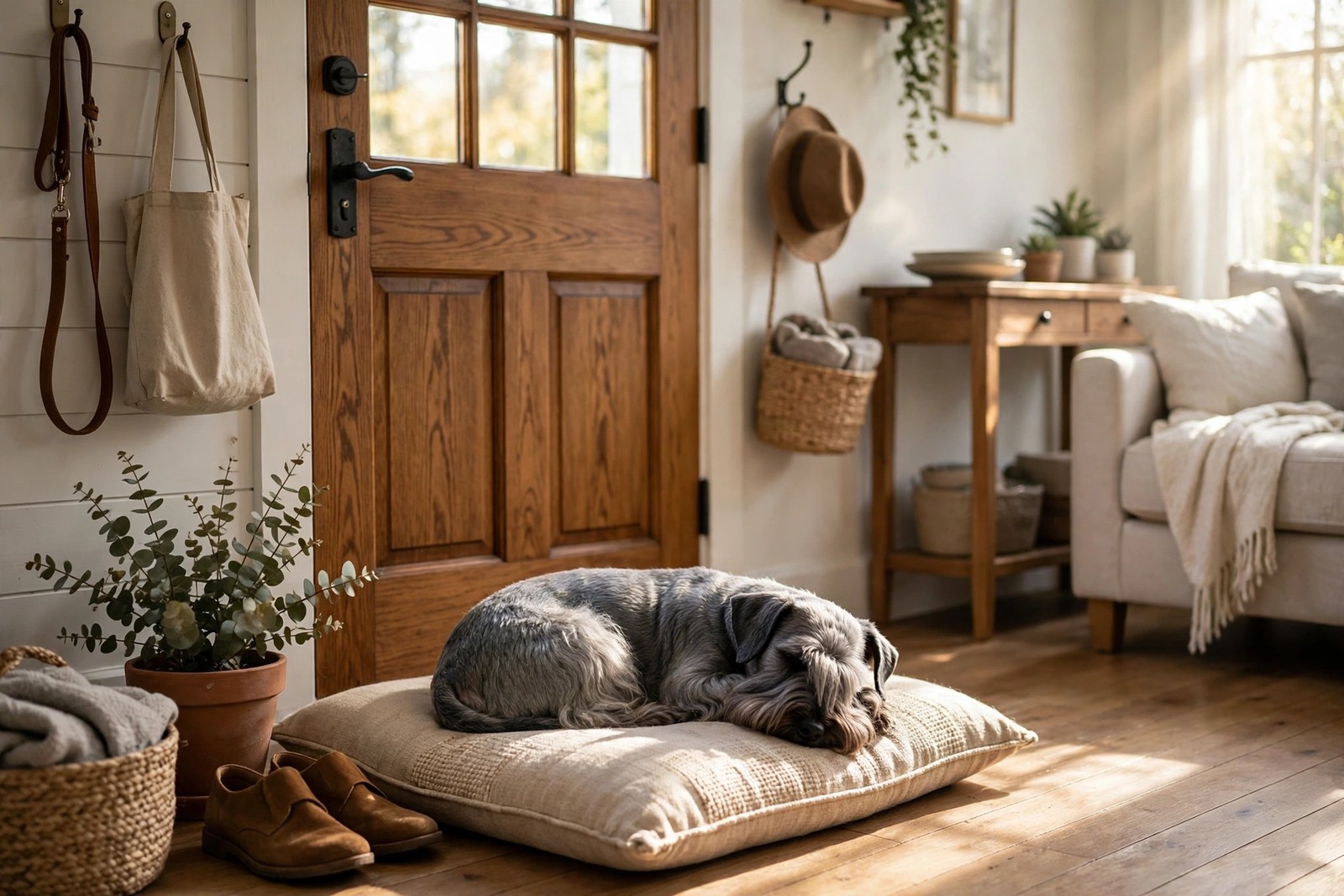
The short verdict for a Cesky Terrier
Yes, a healthy adult Cesky Terrier can usually be left alone for a normal workday, and this breed starts with an advantage many terriers do not have. The Cesky was developed in Czechoslovakia as a more biddable, less frantic terrier, and most adults settle indoors once their exercise needs are met. That does not mean any Cesky can be shut in from breakfast to dinner on day one. Puppies need far more frequent toilet breaks, adolescents test boundaries, and a dog who has never practised being alone will not magically understand an eight-hour absence.
Why this breed copes better than most terriers
Where a high-strung terrier might patrol windows and react to every hallway noise, a well-bred Cesky tends to alternate between following you around and curling up independently. The breed is loyal without being quite as clingy as a true companion breed, and its moderate energy level means a satisfying morning outing genuinely empties the tank for several hours. Its long, silky coat also tells you something about its temperament: this is a dog bred to work, then come inside and live closely with people, so home is a place it knows how to relax in.
Setting up the Cesky's workday
Start the morning with a walk that includes sniffing, not just distance, because scent work tires a terrier brain as much as steps tire its legs. Feed after the walk, offer a final toilet opportunity, and leave without a long emotional farewell. Settle your Cesky where it normally relaxes rather than confining it somewhere unfamiliar, leave water within easy reach, and provide one or two safe items it only gets when alone, such as a long-lasting chew you have already supervised. A radio left low can soften sudden outside noises that might otherwise trigger barking.
If your commute stretches the day well beyond eight hours, arrange a midday visit for a toilet break and a change of scene. Even a breed that copes well should not routinely hold its bladder through an unusually long day, and a midday break turns one long stretch into two manageable ones.
Building the skill if your Cesky is new to it
Teach alone time in small doses before you need a full day. Step out for a few minutes and return before your dog worries, then stretch the gaps across days and weeks. Practise departures at weekends too, picking up keys or putting on shoes without always leaving, so those cues lose their charge. If your Cesky whines, paces, or toilets indoors only when left, those are signs the training has moved too fast or that anxiety, rather than stubbornness, is driving the behaviour. Slow down, shorten the absences, and speak to your vet if the distress looks intense or is getting worse, since a frightened dog needs a different plan from a bored one.
Watch-outs specific to this breed
Ceskys can develop a watchdog streak, and an under-exercised one may redirect that energy into barking at passers-by or chewing skirting boards. Boredom damage almost always points back to the morning: not enough movement, not enough sniffing, or no practice at settling. Keep departures and returns boringly low-key so alone time feels ordinary rather than dramatic. Senior Ceskys are a separate case again, as they may need more frequent toilet breaks and should not be expected to match a younger dog's schedule.
When the routine lives in one shared place, nobody in the household has to guess whether the morning walk or midday visit actually happened, and KinsLe Family Sharing keeps your Cesky's profile and care details in front of every family member who helps, so the workday plan runs the same way whoever is home first.