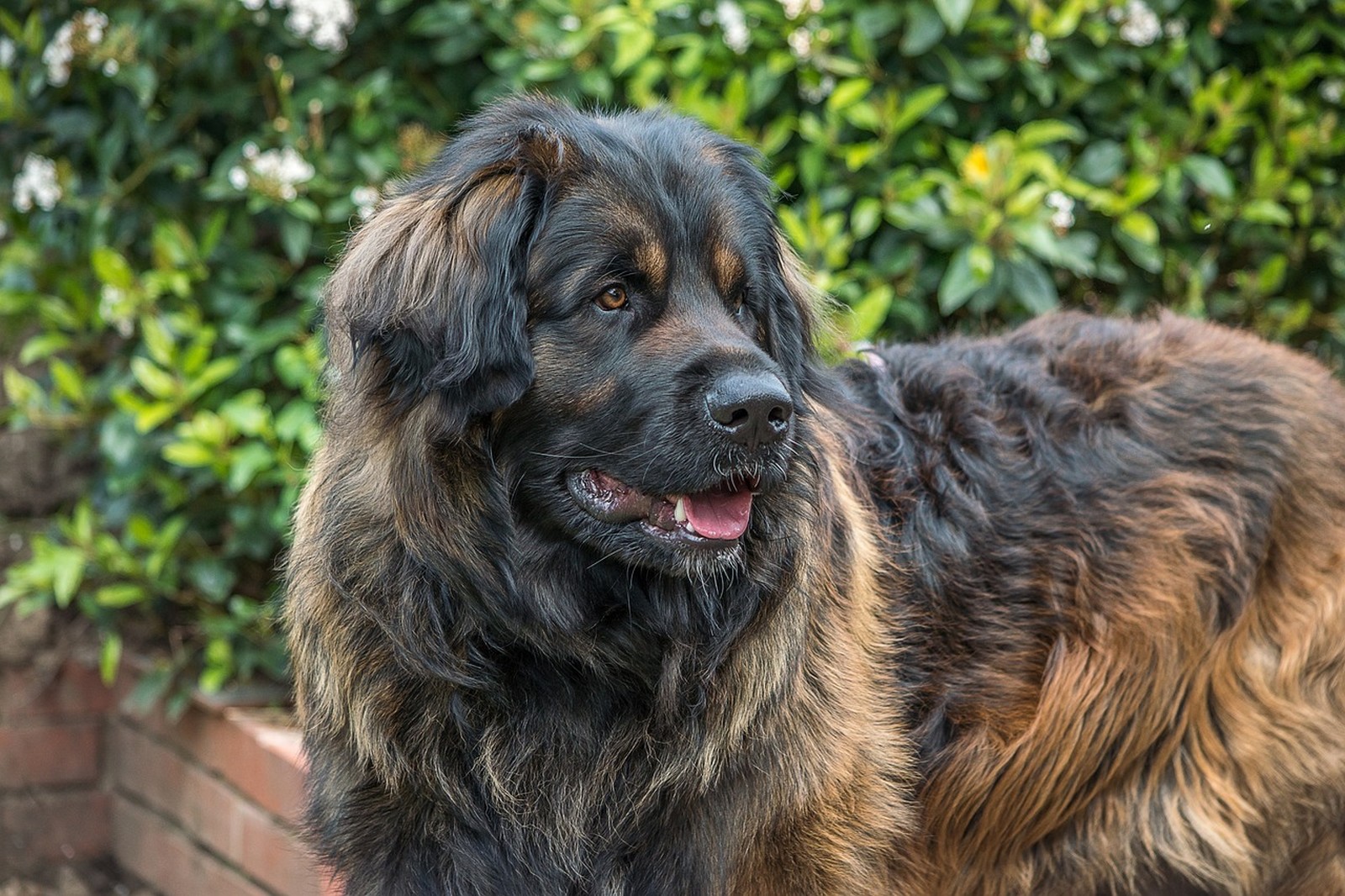
A Leonberger can be left alone during a normal workday, and many are, but owners should understand that this giant breed was created to be a family dog first and foremost, and his favourite place in the world is wherever his people are. A settled adult Leo handles the empty house with his characteristic calm, sleeping deeply for long stretches and greeting the returning household with slow, whole-body joy. The dogs who struggle are usually the young ones, because Leonbergers mature slowly, stay playful and mouthy well into their second year, and eventually do everything at a scale where mistakes are measured in furniture.
Comfort Is a Bigger Issue Than Company
For an adult Leo, the practicalities of the day matter as much as the loneliness question. He needs a cool resting place, since that magnificent double coat and his sheer mass make warm rooms hard work, plus constant access to plenty of fresh water and a bed that genuinely supports his joints. Floors he must cross should not be treacherously slippery for a heavy dog rising after hours of sleep. A midday visit earns its place here as much as socially: it gives him a toilet break, a drink refresh, a chance to move stiff muscles, and a check that a dog prone to deep, dramatic sleeping is simply asleep and well.
The Young Leonberger Problem
A Leo under two left for a full day is a project few houses survive unchanged, because boredom plus size plus a puppy's need to chew equals skirting boards, sofa corners, and anything wooden at exactly his height. Young Leos need the day broken properly, shorter alone stretches that grow gradually, and a dog-proofed area rather than the run of the house. Building the routine slowly also protects his developing joints better than a sudden life of long static days followed by frantic evening exercise, which is a pattern giant breeds in particular do not need.
Mornings and Evenings Around the Quiet Middle
Leonbergers are not high-energy dogs, but they do need their steady daily exercise and, just as much, their social ration. A calm morning walk with time to amble and sniff suits him better than a forced march, and the evening should carry the longer outing, some gentle training, and unhurried time in the middle of family life, ideally including the regular grooming that keeps that coat from becoming a felted project. A Leo who gets his people time in solid blocks at both ends of the day generally donates the middle to sleep without resentment, but a Leo whose evenings are also empty will start to show the breed's sadness in destructiveness and withdrawal.
Reading a Giant's Signals
Because Leos are stoic and gentle, under-stimulation can hide behind good manners for a while before surfacing as chewing, restlessness at night, or a dog who will not let you out of his sight in the evenings. Any sudden change in a normally settled adult, new destructiveness, appetite change, or unusual quietness, deserves a vet conversation rather than a training assumption, since big dogs mask discomfort well. Neighbour feedback matters too, as a lonely Leo's bark is a sound with serious carrying power, even if he uses it less readily than the guarding breeds.
With a cool room, a midday break, and full evenings, the workday suits most adult Leos well, and KinsLe Family Sharing keeps his considerable care details, from food quantities to grooming notes, in one profile shared by everyone who looks after him.