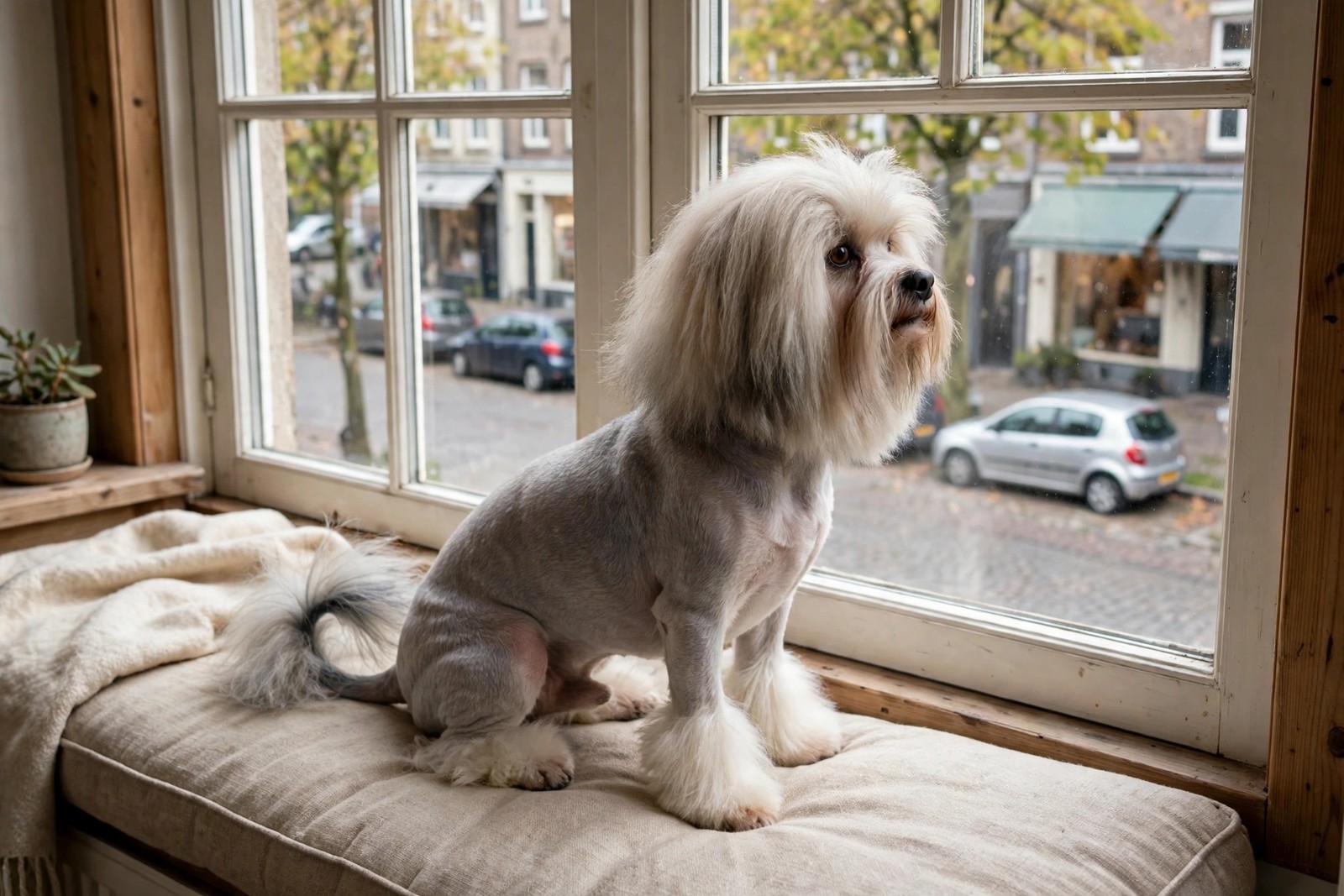
A Lowchen can be left alone during a workday only in a carefully supported version of one, because this little lion dog was never designed with solitude in his job description. Lowchens were bred as companions for European nobility, carried, cuddled, and kept at the centre of household life, and the modern dog still treats togetherness as the default state of the world. That does not make a working owner impossible, but it does mean the plan has to supply company deliberately rather than hoping a companion breed will quietly reclassify himself as independent.
Why the Full Stretch Is Hard for This Breed
Small companion dogs feel absences at full size, and the Lowchen's attachment shows up as following from room to room, sleeping in contact with a person, and monitoring the door. Left for eight or nine unbroken hours, many become vocal, some toilet indoors despite knowing better, because a small bladder and rising stress make a poor combination, and others simply go flat and miserable in a way owners notice as a changed dog by evening. None of this is naughtiness; it is a dog bred for company reporting, accurately, that company is the thing his day is missing.
Shortening the Day Without Changing Jobs
The fixes are structural rather than disciplinary. A midday visitor who lets him out, plays for a while, and settles him again turns one long absence into two manageable ones, and is close to non-negotiable for puppies and young adults. Doggy daycare on some days, a neighbour who works from home, or adjusting shifts within a household can spread company through the week so no single day is entirely empty. A second pet sometimes helps and sometimes simply gives you two dogs watching the door, so treat companionship from another animal as a bonus rather than the foundation of the plan.
Training Independence in Small, Kind Steps
Lowchens who cope best have usually been taught that alone time is safe in tiny increments long before a full workday is required: brief absences after play, returns that arrive before worry does, and a special chew or food toy that appears only when you leave. Practising on weekends, keeping departures unemotional, and leaving a worn item of clothing in his bed all lower the stakes of the door closing. If he shows real panic, drooling, frantic door-scratching, or hurting himself trying to follow, that has moved beyond training territory, and a vet conversation about his anxiety is the right next step rather than longer practice sessions.
The Rest of His Day Deserves Attention Too
Because he is small and often carried, it is easy to under-exercise a Lowchen, yet he is a bright, agile little athlete who needs a real walk and play in the morning and again in the evening, both for fitness and to make rest during the day genuine. His long coat needs regular grooming sessions built into the week, which conveniently double as the close contact he craves. Puzzle feeders, short training games, and a window seat where he can watch the world give his busy mind legal employment between visits, and a happily tired Lowchen with a visitor booked is a very different proposition from a rested one facing silence until evening.
Judged honestly, the Lowchen asks more of a working household than most breeds, but repays the effort completely, and a KinsLe Care Pass lets you hand his daily visitor his feeding times, favourite games, and settling routine in one clear, temporary package.