
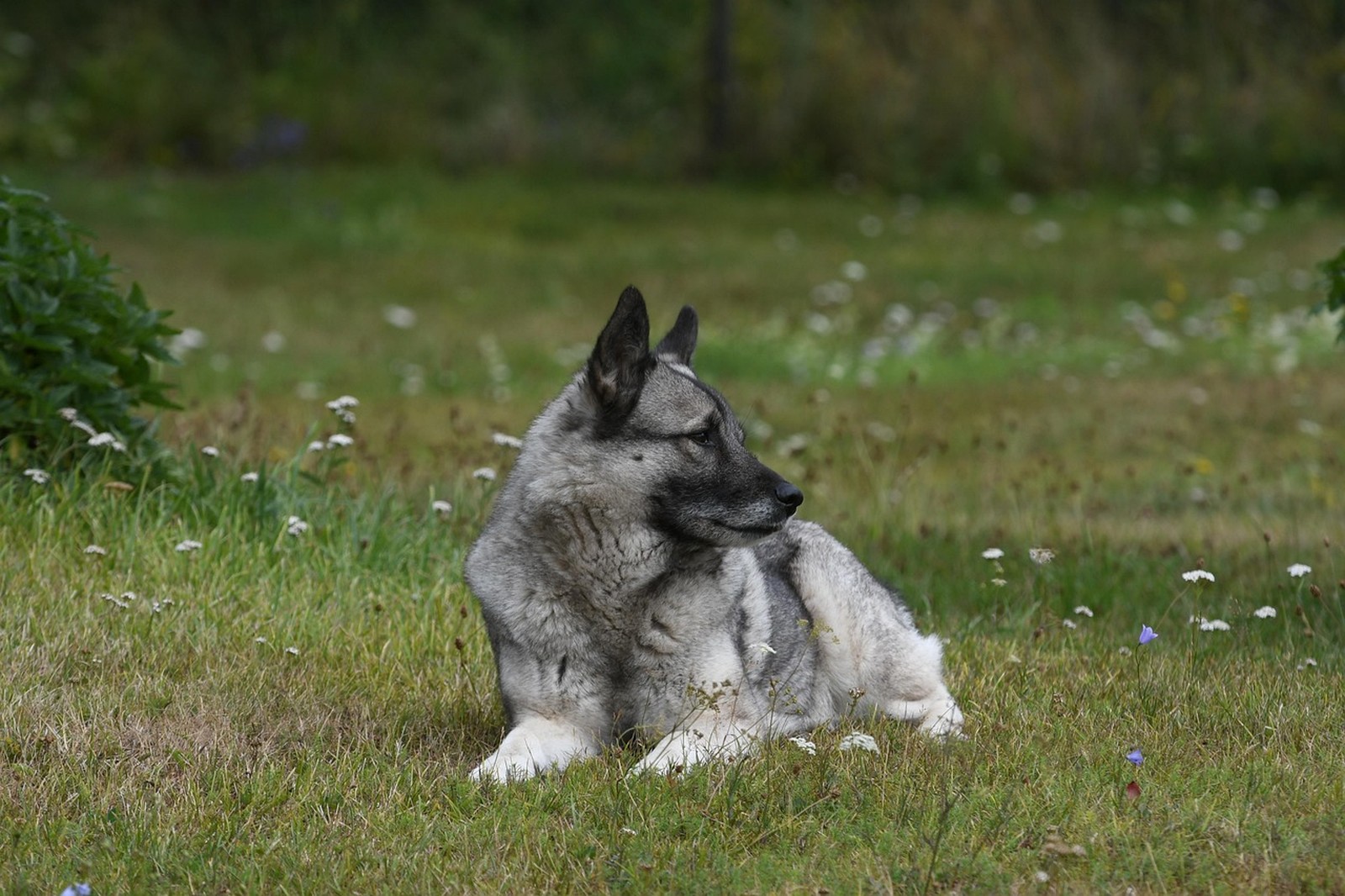
Independence Is This Breed's Great Advantage
The Norwegian Elkhound was developed to hunt large game in hard country, working at a distance from the hunter and thinking for himself. That self-reliance shows up at home as a dog who likes his people without orbiting them, and who can regard a quiet house as a post to hold rather than a problem to solve. A mature Elkhound who has been properly exercised is genuinely capable of resting through a workday, which puts him ahead of many needier breeds. The conditions are still real ones: this is a strong, energetic dog with a famous voice, a heavy coat, and a hunter's interest in anything moving beyond the fence.
Spend His Energy Before You Spend Your Day
The morning walk sets the whole day's tone. An Elkhound left under-exercised does not mope — he patrols, barks, and looks for an outlet, and a dog of his strength can dismantle a door frame if frustration builds. Give him a long, interesting outing over varied ground if you can, let him use his nose, and keep him on a lead or long line anywhere wildlife could pull him into a chase, because his recall around game is a training project, not an assumption. Back home, he should be ready to shake, drink, and settle.
A Cool Post, Not a Warm Corner
That silver-grey double coat insulates against serious cold, which means a centrally heated house can be his biggest workday discomfort. Give him access to the coolest resting spot in the home — a tiled or hard floor away from radiators — and do not restrict him to a carpeted room with the door shut on a mild day. Fresh water in a bowl he cannot tip matters more for a heavily coated dog, and a fan moving air in warm weather is a kindness he will visibly choose to lie in front of.
The Midday Visit and What to Brief
On a standard day a settled adult may not need midday company, but a visit improves the arrangement for younger dogs, longer days, and warm weather, and it is the reliable answer to his toilet needs across a full absence. Brief whoever comes in on three Elkhound specifics: he is strong on the lead if something bolts, so the lead stays clipped and the garden gate gets checked; he should not be given a big meal in the middle of the day unless that is his normal routine; and his barking at the gate is guarding behaviour to be acknowledged calmly, not scolded or hyped up. A visitor who understands the breed turns a quick call into a settled second half of the day.
Barking, Neighbours, and Honest Adjustments
Elkhounds hold game by barking, and many bring that commentary home. If your dog sets up a post at the front window, he will narrate the street all day, which terraced neighbours will not forgive for long. Move his resting area away from the front of the house, cover the low glass, and reward quiet watchfulness during the evenings so the habit forms before you rely on it. If he barks from distress instead — pacing, drooling, destroying exit points — that is a different problem needing shorter absences built up gradually, and a veterinarian's input if it does not improve.
The Evening Shift Belongs to Him
Make the homecoming count with a real second outing and time in company, because even an independent dog banks his tolerance for tomorrow on tonight going well. When the pieces are in place, handing his midday walker a KinsLe Care Pass covering his lead strength, gate check, and cool-room routine means the person who visits meets the same clear instructions every time, and your Elkhound's steady day stays steady.