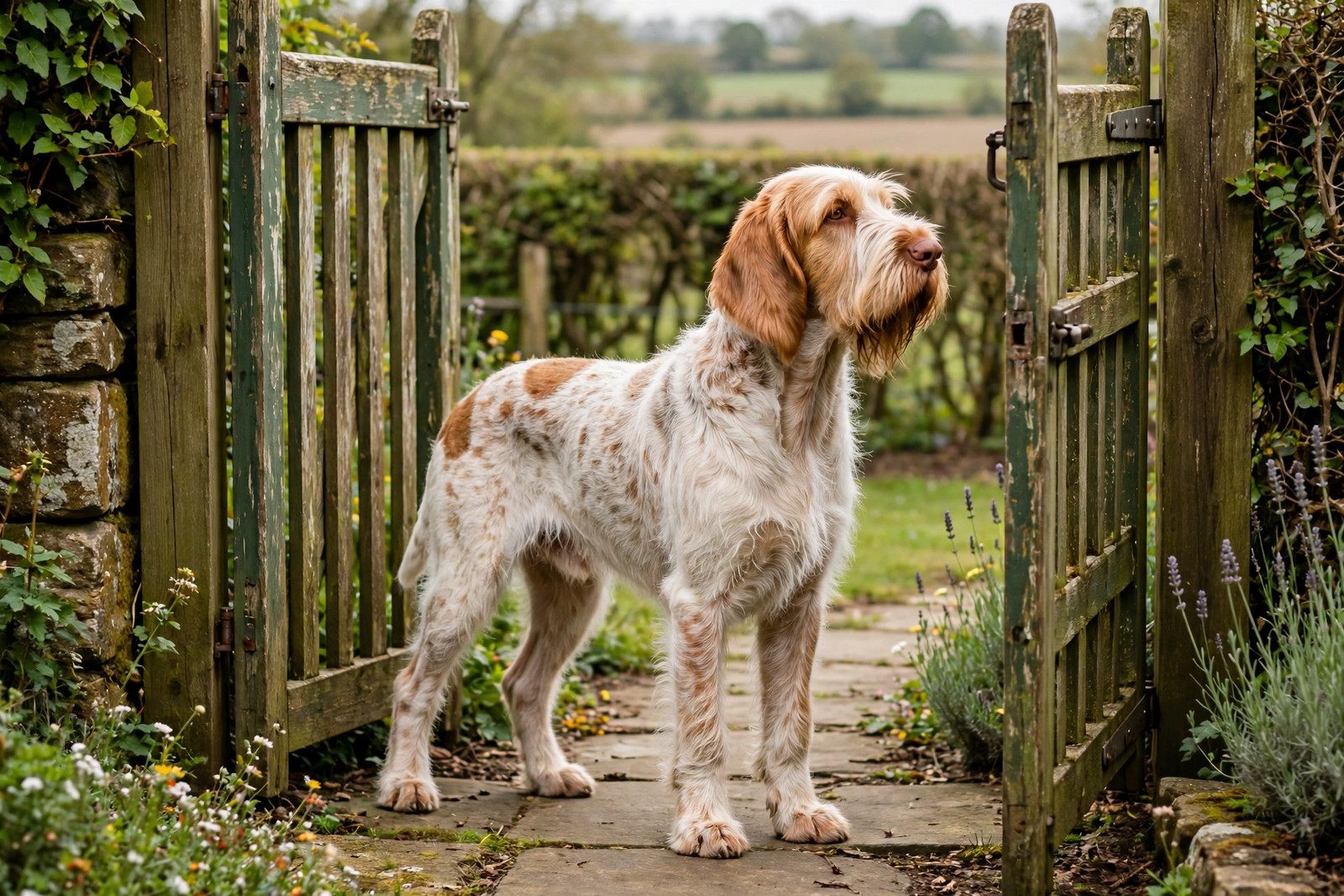
The honest answer for a Spinone
A Spinone Italiano can be left during a workday only if the day is deliberately broken up. This big, bearded gundog was bred to work alongside people all day in the field, and companionship is close to a need rather than a preference for the breed. A healthy adult Spinone left entirely alone from breakfast to evening will usually be unhappy, and an unhappy Spinone has the size and determination to redecorate. With a substantial morning walk, a real midday visit that includes exercise and company, and time with you after work, many Spinoni settle into the rhythm. Puppies and adolescents, who are slower to mature than many breeds, need considerably more input.
Why isolation hits this breed hard
Spinoni are sociable, patient, and famously gentle, but they are not independent. Their working style is steady and cooperative, staying in touch with the handler rather than ranging out of sight, and home life mirrors that: a Spinone typically follows family members from room to room. Long isolation therefore tends to produce vocal protest, drooling, and boredom behaviours rather than quiet rest. The breed is also physically substantial, with a rough coat that brings mud and water indoors and a beard that drips after drinking. A bored, wet-bearded Spinone investigating your kitchen is a memorable clean-up, which is another argument for occupation and company over hope.
Structuring a workable Spinone day
Start with a morning walk long enough to matter, including off-lead or long-line time to sniff and amble where that is safe, because a Spinone exercised only on pavements arrives home still full of field dog. The midday visit is the keystone: at least a proper walk or garden play session, fresh water, and a check of ears and coat if he has been out in wet grass. Leave durable chew and food-dispensing activities for the gaps, rotating them so they stay interesting. After work, resist the urge to collapse; this breed banks its goodwill on the evening walk and on simply being near you while you cook, read, or watch television.
Signs the arrangement is failing
Neighbours reporting howling, a door frame showing teeth or claw marks, emptied bins, or a Spinone who greets you with frantic, full-body desperation all say the alone stretches are too long. So does a dog who shadows you anxiously every evening and cannot settle. Respond by shortening the gaps first, adding a second visit or dog-walking help, rather than by scolding a dog whose behaviour is information. If the distress looks like true panic even in short absences, talk to your vet about next steps. Some households conclude honestly that a Spinone needs a home where someone is around more, and recognising that early is kinder than months of mutual frustration.
Who should think twice
If your job regularly stretches beyond a normal day, involves unpredictable late finishes, or takes you away overnight at short notice, a Spinone will feel every disruption. Households with a second dog often find the breed settles better, though a companion is support, not a substitute for people and exercise. Seniors slow down but keep the same sociable heart, so an older Spinone still wants company even when the walks shorten. The workable version of this breed's workday is a team effort with named people covering each part. KinsLe's Care Teams let you assign your Spinone's morning walk, midday visit, and evening feed to specific helpers, with each finished task marked by a timestamp so you can see the day actually happened.