The short answer for a Vallhund
Yes, a healthy adult Swedish Vallhund can be left during a normal workday, but the condition is mental work. This short-legged, long-bodied herding breed, kin in spirit to the corgi, was built to drive cattle by nipping heels and ducking kicks, and it brings that alert, inventive energy home. A Vallhund given a dull, empty day will fill it personally, usually with barking commentary and reorganised belongings. A Vallhund whose morning included training, whose food arrives partly through puzzles, and who gets a genuine midday walk will mostly rest between jobs. Puppies need far shorter stretches, as with any young dog.
Why boredom is the real risk
Vallhunds are clever problem-solvers with a herding dog's habit of monitoring everything. In an empty house, everything becomes passing feet outside, noises from neighbouring flats, and objects that could be moved. The breed is also notably vocal, using its voice as a working tool, so an under-occupied Vallhund alone can become a genuine neighbour problem rather than a private one. Nipping instincts can surface as ankle-chasing games with visitors or children when the dog is wound up and under-exercised. None of this is naughtiness. It is a working brain with no assignment, which is why the fix is structure, not punishment.
Giving the day a job structure
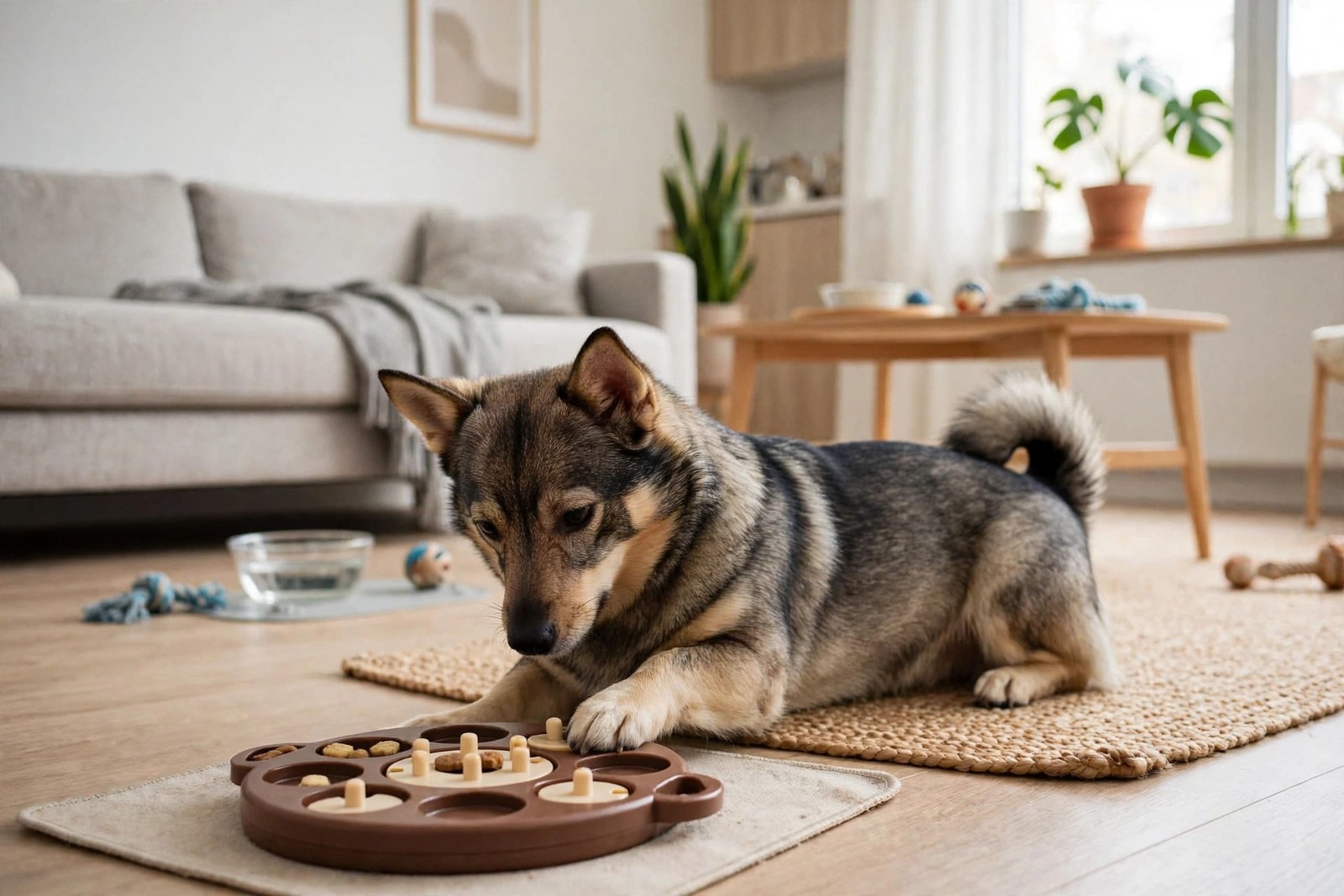
Start the morning with ten minutes of actual training woven into the walk: recalls, waits at kerbs, a few trick repetitions, and sniffing time as the reward. Feed breakfast in stages through a puzzle or scattered in the grass so eating takes twenty minutes instead of one. Before you leave, set out one fresh occupation, rotating between chew, lick, and search games so novelty survives the week. The midday visit should include a walk with a small training moment, not just a door opening, and the evening needs a proper outing plus play. A Vallhund treated like a working dog with shifts will behave like one, resting off duty.
Spotting an under-filled day
Reports of barking, chewed skirting boards, or a dog who ambushes your heels and cannot settle in the evening all point to the same gap: not enough to do. Check a camera once or twice; a coping Vallhund naps in a chosen lookout spot and stirs mainly at real events, while a struggling one patrols and vocalises at every sound. Add occupation before adding hours at home, and if you change jobs or shifts, rebuild the pattern rather than assuming it transfers. If vocal anxiety persists despite a full routine, your vet can advise on whether something more than boredom is driving it.
Practical limits for this breed
A Vallhund's long back deserves a home setup that avoids repeated stair climbing and sofa launching during unsupervised hours, so block risky jumps where you sensibly can. In multi-dog homes a companion helps, but two under-worked herding dogs can amplify each other's commentary, so the routine still matters. Senior Vallhunds stay sharp; shorten the walks with age but keep the puzzles and training games coming, because the brain retires later than the legs. With jobs assigned across the day, this breed can fit working life surprisingly well. KinsLe's Care Teams let you split your Vallhund's training, walks, and feeding puzzles between helpers, and each completed duty is timestamped so you can confirm the day's jobs were done.