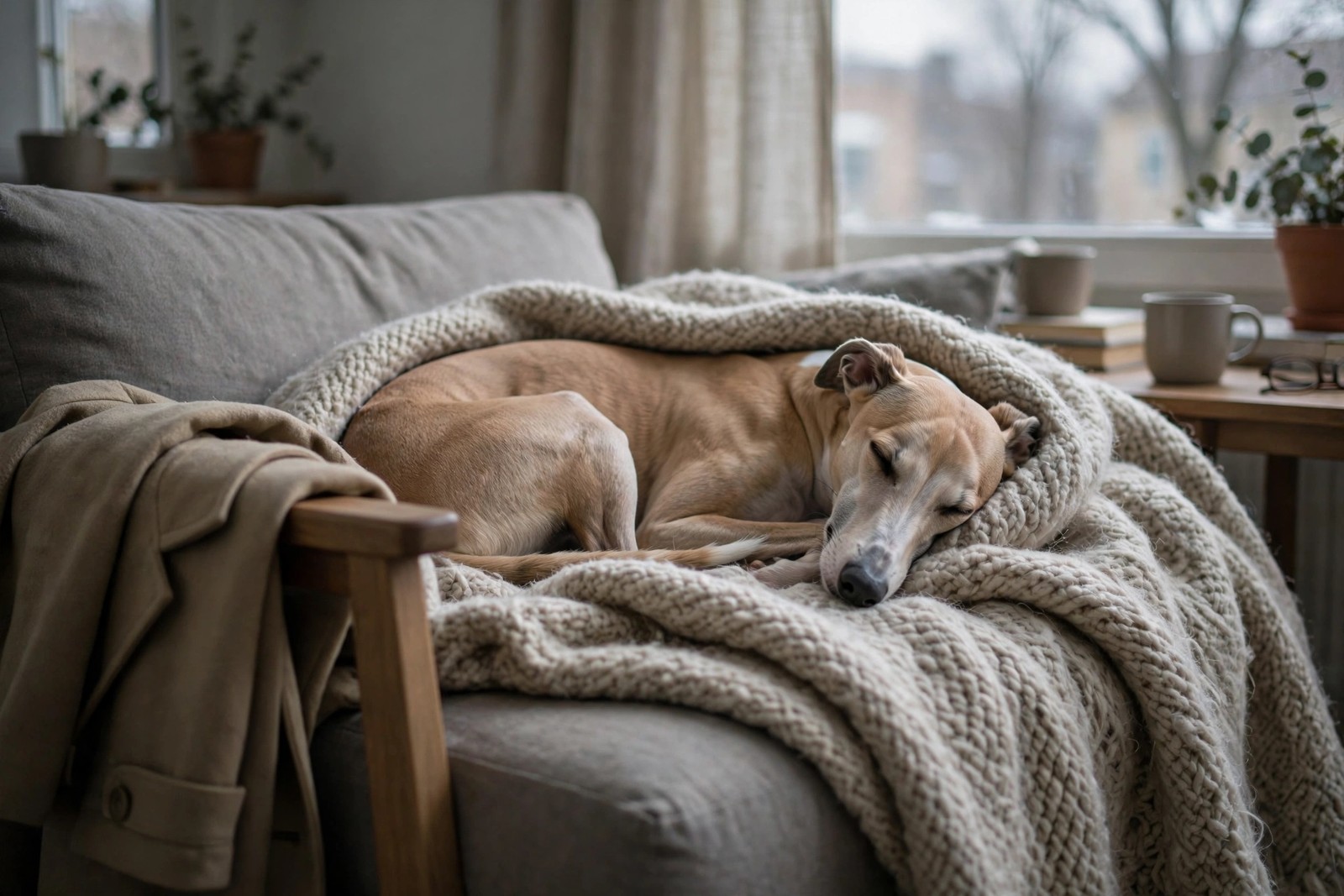
Yes — and the apparent contradiction is the whole answer. A Whippet is built for sprinting, but sprinting is something this breed does in short, spectacular bursts, not all day. A Whippet who has had a proper run is one of the quietest, cleanest, and most apartment-friendly dogs you can live with: it will curl on the softest available surface and sleep for hours.
What several short walks must include
The plan works if the short walks add up to roughly forty-five minutes to an hour a day and at least a few outings a week include free running in a fully secure, fenced area. A Whippet on lead alone, never allowed to open up, becomes frustrated and may redirect that energy into chewing or racing circuits of your flat. In the secure area, expect a few flat-out laps, a game of chase with a suitable dog, and then a dog who is finished — Whippets do not pace themselves like endurance breeds, and young dogs especially should be given rest breaks rather than run to exhaustion.
Never let a Whippet off lead in an unfenced place near roads. This is a sighthound: a squirrel or a plastic bag blowing across a field can trigger a chase at full speed, and recall trained in a garden often fails completely in that moment of fixation.
Indoor life: warmth, softness, and quiet
Whippets have very little body fat and a fine, short coat, so comfort indoors means soft, padded bedding — they will choose your sofa and your bed over any hard floor, every time — and warmth. Many are happiest under a blanket. They are notably quiet dogs who rarely bark without a specific cause, they shed lightly, and they keep themselves clean, which makes them easy neighbours. Housetraining is usually straightforward, though puppies and adults alike dislike going out in cold rain, so keep winter toilet trips brisk, positive, and followed by a warm return indoors.
Cold weather and thin skin
Budget for a well-fitting Whippet coat for winter walks; a shivering Whippet who dreads going out is a common and preventable apartment problem. The thin skin also tears more easily than a thick-coated breed's, so check for small cuts after runs in rough ground, keep nails trimmed so they do not catch, and mention any wound that is deep, gaping, or not healing to your vet.
Feeding and weight in a small home
Feed measured meals and keep your Whippet lean — you should be able to feel the ribs easily and see a clear tuck at the waist, while a few vertebrae showing is normal for the breed. A bored, overfed Whippet in a flat loses both its health and its calm, so use food puzzles sparingly with part of the normal ration rather than adding extra treats.
KinsLe Care Teams helps by letting you and anyone who walks your Whippet log sprint outings, lead walks, and meals in one shared plan, so the balance of bursts and rest that keeps this breed content is easy to maintain.