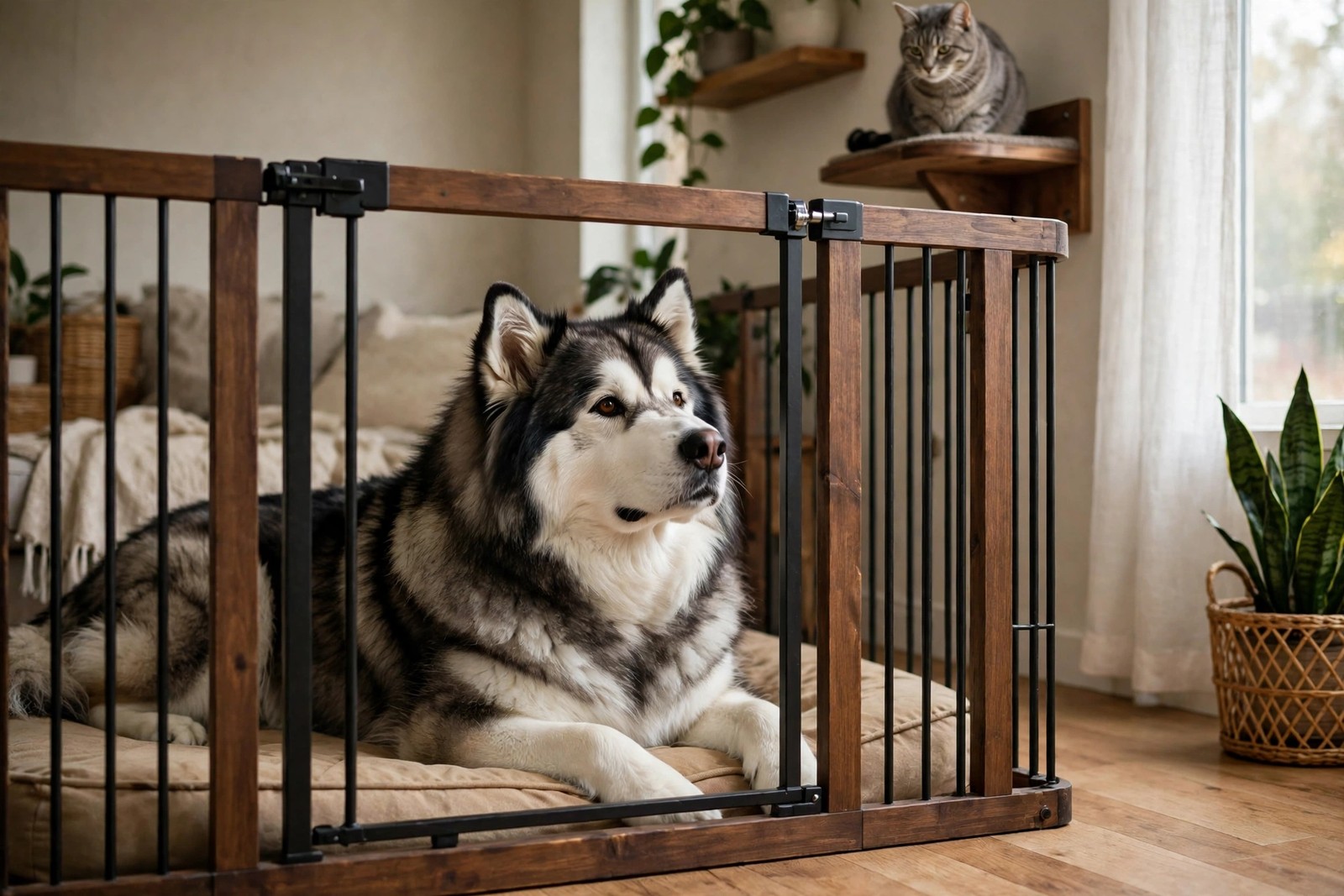
The honest answer is that it depends on the individual Malamute, the individual cat or small dog, and how rigorously the humans manage the arrangement forever. Alaskan Malamutes were developed in a world where chasing and catching small animals was useful, and the breed's prey drive remains strong and sincere. Others can never be trusted around small animals at all. Anyone who promises you a guaranteed outcome is selling you something, and the safe household is the one built on management rather than hope.
Prey Drive Is Built Into the Breed
Prey drive is not aggression and it is not a training failure. It is a hardwired sequence, triggered especially by small animals that run, squeak, or flutter, in which the dog locks on, chases, and grabs before conscious thought gets a vote. A Malamute can be gentle and deliberate with a cat it knows indoors and still react instantly to that same cat bolting across the yard, because movement, distance, and arousal change the equation completely.
That is why the rules do not relax with a good track record. Even a proven pairing stays supervised, because the one unsupervised minute only has to go wrong once, and a full-grown Malamute outweighs a cat many times over. Rehearsed chasing strengthens the very reflex you need quiet at home.
Why Raised-Together Helps but Never Guarantees
The best odds belong to Malamutes raised with cats from puppyhood. A puppy who grows up with a confident household cat learns early that this particular animal is family, boring, and armed, and many of those dogs generalize the lesson to cats indoors generally. Adult Malamutes adopted into a cat home are a bigger unknown: a rescue history of living with cats helps, but you are still relying on a report about a different house, different cats, and different management.
Raised-together dogs have still injured cats during high-arousal moments, redirected excitement, or a chase that started as play. The cat's temperament matters just as much. A calm cat who holds its ground, walks rather than sprints, and has lived with dogs before stacks the odds far better than a timid cat whose every appearance is a dash for cover, because running is the trigger itself.
Introductions Behind Barriers
Introductions should be gradual, scent-based first, and always separated by a barrier until body language on both sides is genuinely relaxed. Start with the animals in separate areas, swap bedding so each sleeps with the other's scent, and feed on opposite sides of a closed door. Then move to visual contact through a sturdy gate or a cracked, secured door, with the Malamute on leash, rewarded heavily for looking at the cat and then calmly back at you. Sessions stay short and end while everyone is still bored.
The cat always controls distance and always has escape routes and high perches the dog cannot reach. Progress to shared space only after repeated calm barrier sessions, keep the leash dragging for early free time together, and separate the animals whenever you leave, sleep, or cannot actively watch, for months at minimum and, for many households, permanently.
Small Dogs and the Size Gap
A Malamute plays with its whole body, bumping, pawing, and wrestling at an intensity bred for work, and a toy breed can be hurt by a friendly paw swipe or a full-speed collision. Small dogs should be supervised in all play with a Malamute, with games interrupted whenever arousal climbs, and the small dog given size-appropriate playmates for its roughest fun.
Watch for the dog who treats a small dog too much like prey: silent fixation, stiff posture, stalking movements, and a chase that does not break when the small dog yelps or hides. Those signs end the experiment in shared off-leash time, whatever the history. When a Malamute moves on, KinsLe sends the Transferrable Profiles notes with it, so the next household starts from real introduction history, not hope.