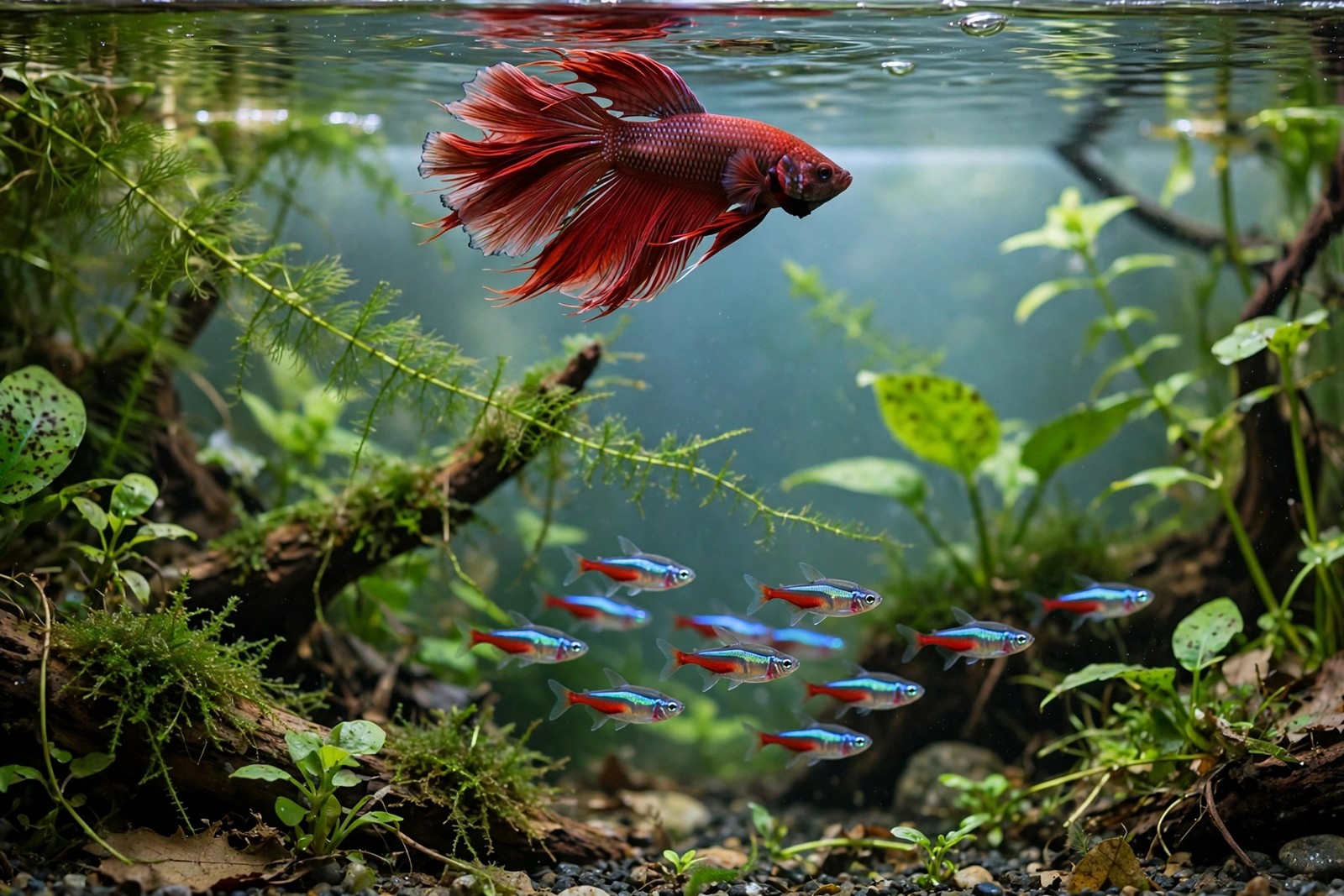
Sometimes, with strict conditions. A single male betta can live peacefully with the right tankmates in the right tank — and can also kill or be killed in the wrong one. Compatibility is decided by sex, tank size, and the other fish's shape, colour, and temperament.
The Rules That Never Bend
Two male bettas must never share a tank, including divided setups where they can see each other constantly through a clear partition, which stresses both. Males were bred for aggression toward rivals, and a fight can be fatal within hours. Do not put a male with long-finned, brightly coloured fish that resemble another betta — many fancy guppies and long-finned angelfish trigger attacks — and do not add known fin-nippers such as many barbs, because a betta's flowing fins are slow, tempting targets; a nipped, stressed betta often develops fin rot and infections. Female bettas are usually less aggressive, but so-called sorority groups of females are an advanced, often unstable arrangement that experienced keepers attempt only in large, heavily planted tanks, and even then fights are common. For almost all owners, one betta per tank is the safe rule for the betta itself.
Tankmates That Commonly Work
Choose fish that are peaceful, short-finned, plainly coloured, fast enough to keep out of trouble, and that use parts of the tank the betta does not. Bettas mostly patrol the top and middle. Bottom-dwellers are therefore the classic choice: a group of small corydoras catfish or a single bristlenose-type pleco in a bigger tank, and hardy schooling fish such as harlequin rasboras or ember tetras in a proper group of six or more often coexist well, each species checked for your tank size and water conditions before buying. Snails and dwarf shrimp are popular companions too, though some bettas hunt shrimp — another individual variation to watch in the first days.
Size, Layout, and Introduction
Tank size is what turns maybe into usually. A 5-gallon tank is a betta-only home; there is no honest room for tankmates. Community attempts belong in tanks of at least 20 gallons, long rather than tall, with dense planting, caves, and broken sightlines so the betta can hold a small territory and other fish can get out of its way. Keep the water warm and stable in the betta's tropical range, filter gently — strong current exhausts long-finned males — and introduce the other fish first where possible, adding the betta last so it does not read the whole tank as its established territory. Feed the betta at its own spot so slower or bolder tankmates do not leave it underfed or let it overeat on their food.
Watch It, and Keep the Backup Plan
The first two weeks decide it. Daily, look for chasing that does not settle, flaring that escalates to contact, torn fins on any fish, tankmates hiding all day, or the betta cowering — bettas can be the victim as well as the aggressor. Any of these means separation, which is why a spare heated, filtered tank or a plan to return fish is part of the setup, not an admission of failure. Temperament is individual: a betta who murdered tankmates in one home may have lived peacefully in another, so never promise success in advance.
Keep notes on feeding, water tests, and behaviour, and share them if several people run the tank. KinsLe's Care Teams assigns those betta duties — feeding, testing, water changes, and the daily compatibility check — with timestamps for each person, so a torn fin or a missed water change is caught by the household, not by the fish.