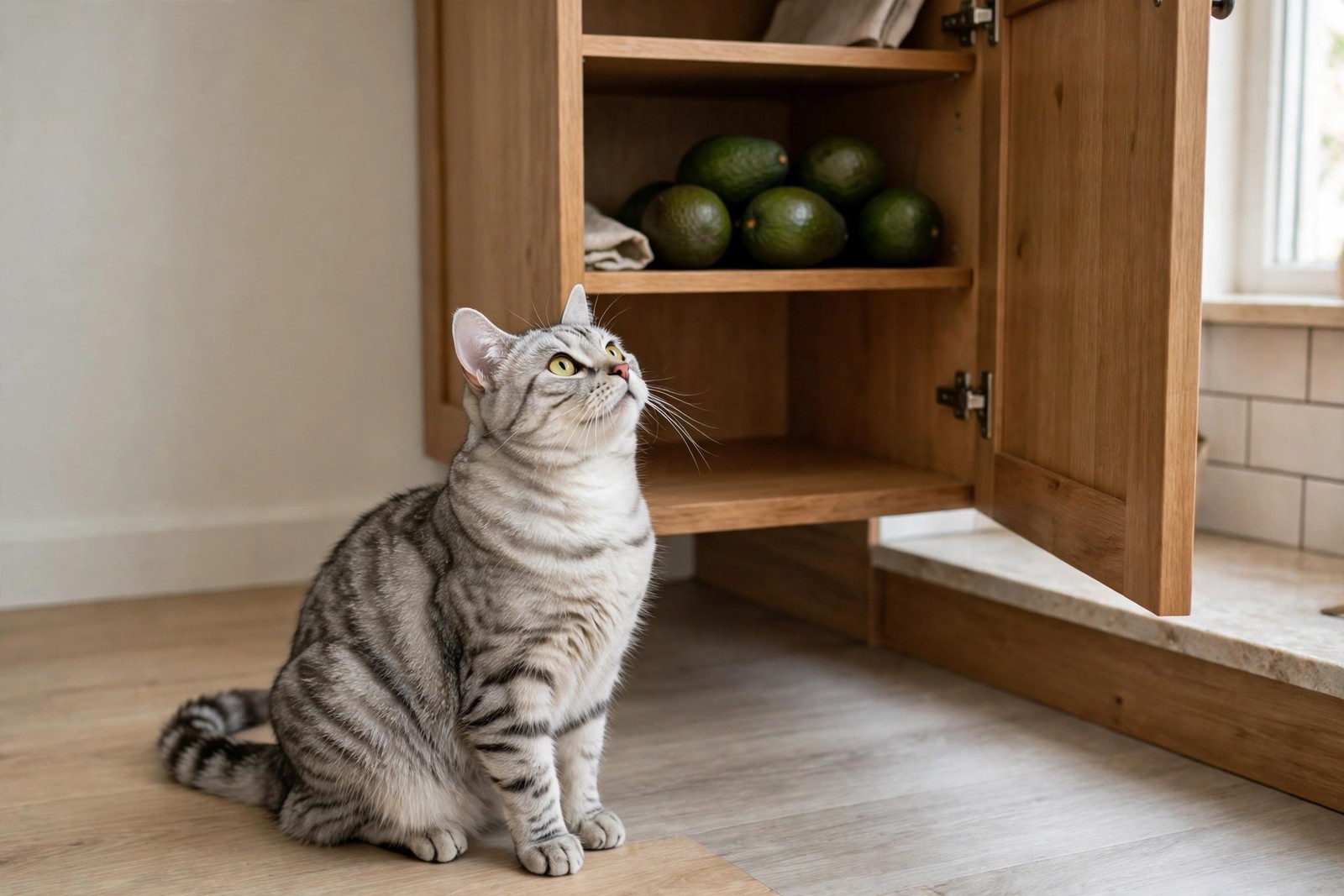
Cats should not be offered avocado at all. Unlike some people foods that are safe in a crumb or a lick, avocado combines several separate problems in one fruit, and a cat gains nothing from it that a complete cat food does not already supply in a safer form.
The Three Problems in One Fruit
First, the flesh is unusually fatty. A few bites that look modest to you can deliver a fat load that upsets a cat's stomach, and cats prone to pancreatitis are the last ones who should be testing rich extras. Second, avocado contains persin, a substance concentrated in the leaves, skin, and pit and present in lower amounts in the flesh. Cats tolerate persin better than birds or horses do, but tolerating a compound is not the same as a food being suitable, and vets advise keeping it out of the bowl. Third, the physical hazards are real: the smooth pit is large enough to obstruct if swallowed by a determined cat, and tough skin pieces do not digest down.
Guacamole and avocado toast spreads are worse than plain flesh, because they commonly add onion, garlic, lime, salt, and chilli, several of which are genuinely harmful to cats. Avocado oil on a plate or pan is also worth wiping up rather than leaving for licking, mainly for the fat load and the calories it quietly adds.
If Your Cat Eats Some Anyway
Do not panic over a single small bite of flesh, but do act methodically. Take the fruit away, check what is missing so you know whether skin or pit is unaccounted for, and offer fresh water. Then watch over the next day for vomiting, diarrhoea, loss of appetite, hiding, or abdominal discomfort such as hunching or growling when picked up. A swallowed pit, repeated vomiting, or a cat who stops eating warrants a prompt call to your vet, and you should describe exactly which part of the fruit was eaten and roughly how much.
Store avocados in the fridge or a closed cupboard rather than ripening in a fruit bowl at cat height, and put pits and skins straight into a bin with a lid. Cats who counter-surf learn the ripening smell quickly, so prevention has to be a habit, not a hope.
Filling the Curiosity Gap
A cat nosing at your avocado is usually chasing novelty, fat aroma, or your attention, not a nutritional need. Redirect with a small meat-based treat, a brief play session with a wand toy, or a few pieces of plain cooked chicken, and the interest usually transfers. Keep that swap in mind for guests too, who often offer whatever is on their plate when a cat performs at their feet. Writing the never list for your household, with avocado named on it, stops well-meant sharing before it starts. Add that list to KinsLe Care Teams next to the feeding assignments, so a sitter never has to guess whether the cat watching them prepare lunch is allowed a taste.