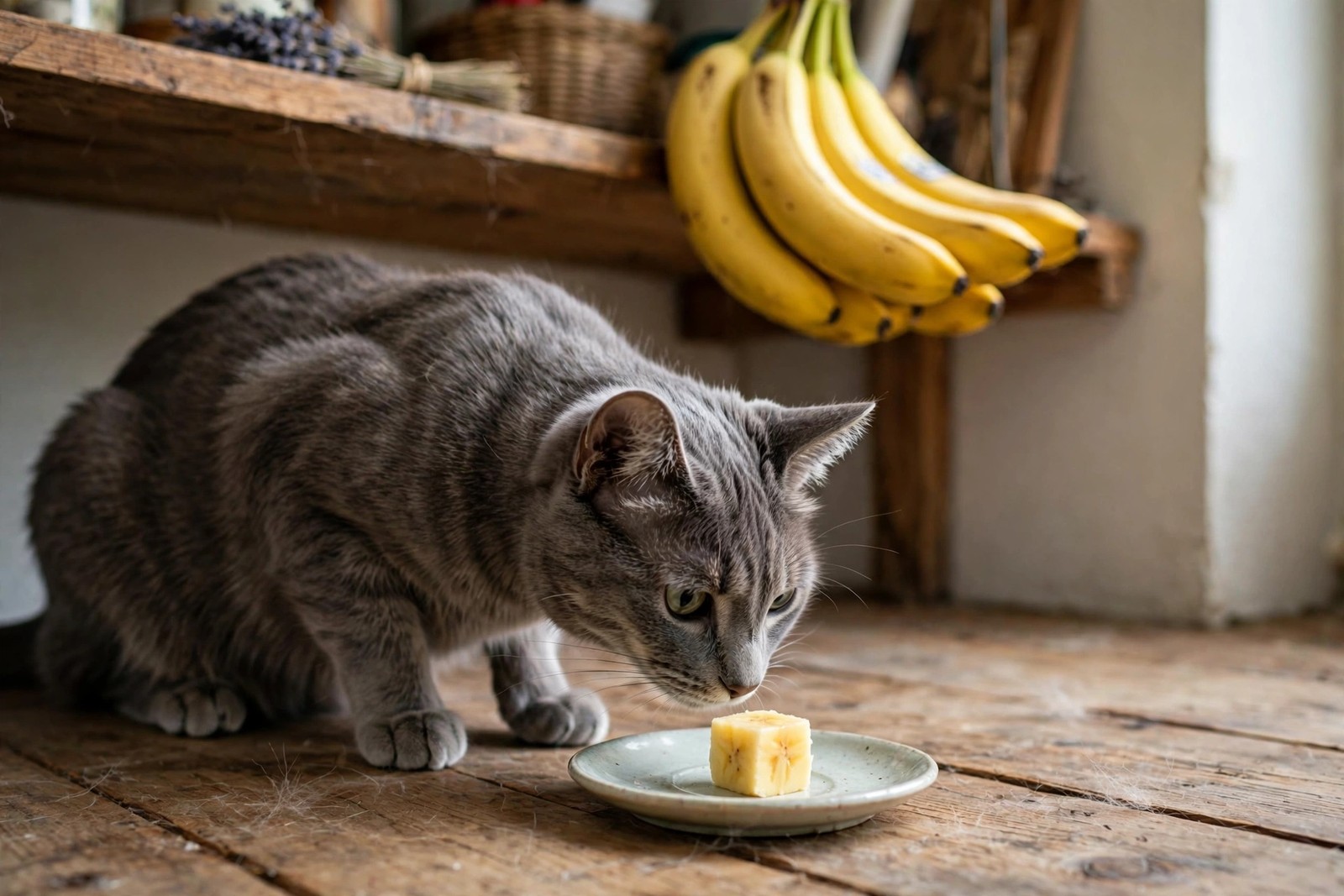
A small piece of banana is safe for most cats, but safe and worthwhile are different questions. Most cats sniff banana, take one experimental bite at most, and walk away, because their taste buds do not register sweetness and their bodies run on animal protein and fat, not fruit.
What a Cat Gets From Banana
Banana offers water, potassium, and soft fibre, all of which a complete cat food already supplies in balanced amounts. The rest is natural sugar and starch, which an obligate carnivore has no dietary slot for. That is why the sensible portion is a single cube roughly the size of your thumbnail, cut from a ripe, peeled banana, offered as an occasional novelty rather than a scheduled treat. A kitten should get even less margin for error, and cats managing diabetes or weight problems should skip fruit extras altogether unless your vet says otherwise.
Choose banana that is yellow and soft. Underripe banana is starchy and harder to digest, while banana bread, banana chips, and flavoured yoghurts are different foods entirely, often carrying added sugar, oils, spices such as cinnamon, or sweeteners that do not belong in a cat's bowl. Peel is not toxic in itself but is tough, hard to digest, and often treated, so bin it out of reach instead of leaving it on the counter for chewing practice.
Serving a Cat Who Is Actually Interested
Some cats like the texture mashed rather than cubed. Press a small amount onto a lick mat or smear it thinly on a saucer so the cat takes it slowly, and stay for the first try so you can see the reaction. Introduce it on its own, not mixed into a meal, so if loose stool or vomiting follows in the next day you know the cause without guessing among several new foods.
Stop offering banana, and mention it to your vet if signs persist, when you see repeated loose stool, unusual gassiness, itching around the face, or a cat who goes off the following meal. A single soft stool after any new food is common and usually passes, but a pattern is information worth recording with the date and amount.
Keeping a Novelty From Becoming a Habit
The real banana risk in a multi-person home is drift: one fingertip piece from you, another from a partner who did not know, and a third from a child, until a novelty is a daily sugar habit nobody chose. Decide the household amount once, write it down, and treat banana like any other treat in the day's allowance rather than as a free extra because it is fruit.
Banana also browns and attracts flies quickly, so never leave a piece in the bowl to be grazed on later, and wash the saucer after use. Cats who enjoy it may start investigating bananas ripening on the counter, so store the bunch where paws cannot help themselves to the peel. Record the agreed banana portion in KinsLe Care Teams with the treat duty, and whoever feeds that day can see at a glance whether this cat has already had its novelty piece.