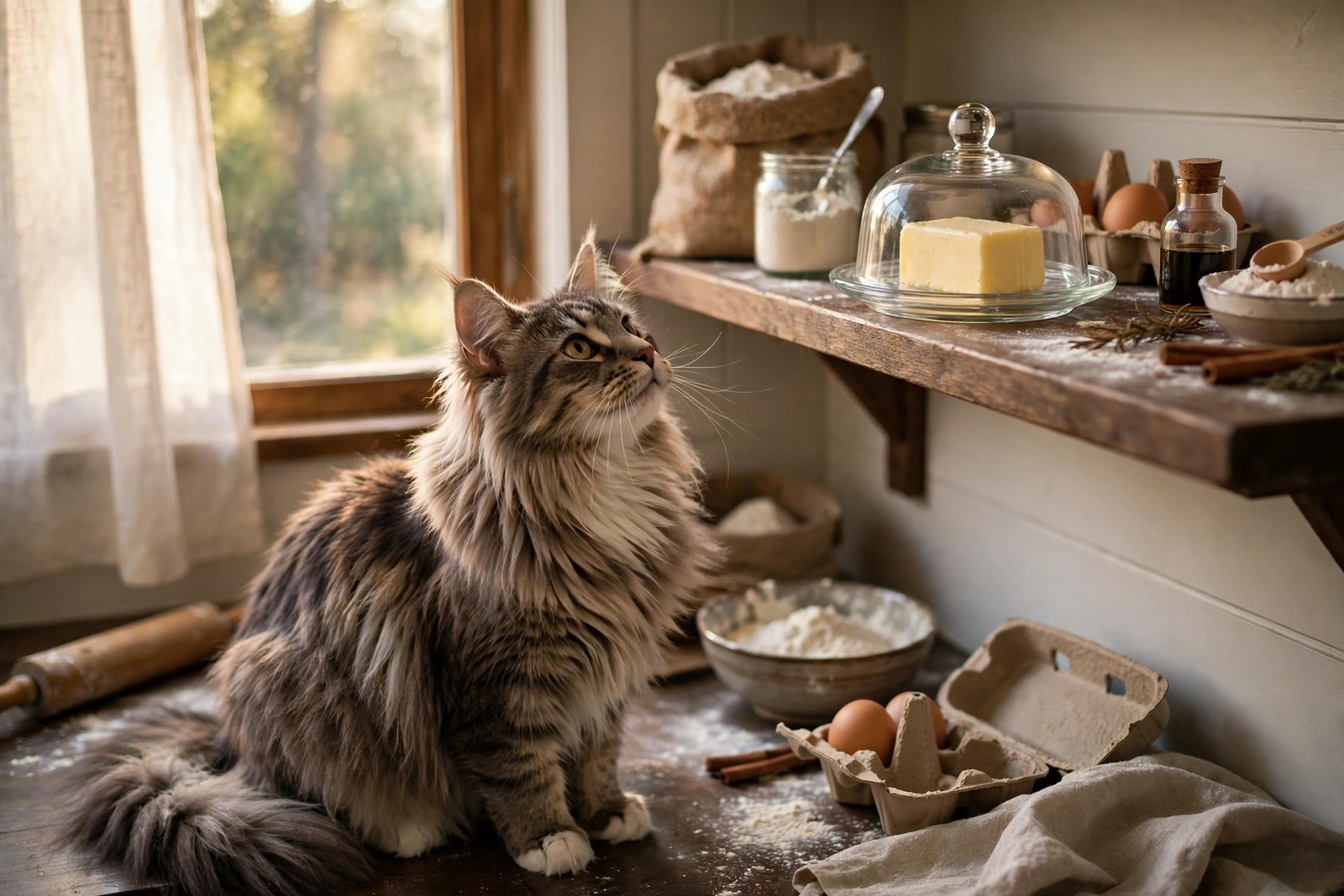
Butter is not a good treat for cats and should not be served deliberately, even in the pea-sized amounts owners often describe as harmless. A cat who licks a buttery plate once will usually come to no serious harm, but butter offers nothing except fat, lactose, and calories, so making it a habit trades real digestive trouble for no benefit at all.
Why Cats Want It and Why It Disagrees
Cats are drawn to butter for its fat aroma and creamy texture, and some owners believe that attraction means it must suit them. In reality many adult cats produce little of the enzyme needed for lactose after weaning, so the milk sugar in butter ferments in the gut and produces gas, cramping, and loose stool. Butter is not as lactose-heavy as milk itself, which is why reactions vary, but the fat load is consistent: a small knob scaled to a cat is the equivalent of a very rich portion for a person, and it arrives with almost no protein to balance it.
For cats prone to pancreatitis, overweight cats, and cats on measured diets for diabetes or kidney disease, rich extras like butter are particularly unwelcome because they disturb a balance their owners are working hard to hold. Salted butter adds a further sodium load on top of the fat.
Serving Situations That Cause Trouble
The common butter incidents are domestic, not deliberate: a covered dish left open on the counter, toast plates within licking range, corn or vegetables served swimming in butter, and baking sessions where a cat patrols the worktop. A cat who gets a proper lick at a butter dish may vomit or produce loose stool over the following hours; watch, keep water fresh, and call your vet if vomiting repeats, the cat goes off food, or discomfort such as hunching appears. Mention the butter specifically, because a rich-food history helps the vet judge the situation.
Prevent the repeat by treating butter like any food a cat must not reach: lidded dish, fridge storage for baking blocks, plates into the sink rather than left on low tables, and worktops wiped after baking so the flavour is not painted across the surface the cat walks on.
What to Offer the Butter Beggar Instead
A cat campaigning at the butter dish wants a rich, savoury taste and your participation. A pea-sized smear of meat-based cat treat paste, a shred of plain cooked chicken, or a small piece of cooked egg gives that savoury satisfaction in a form built for a carnivore. Serve it in the cat's bowl, not from the butter knife, so the association with your food preparation weakens instead of strengthening.
Butter-flavoured shortcuts deserve the same no: margarine spreads, butter oils left in pans, and garlic butter are each worse than the original for different reasons, from fats to genuinely harmful flavourings. Write the rule once for the whole household and keep it where food is prepared. Put butter on the never list in KinsLe Care Teams beside the feeding assignments, and a sitter who cooks in your kitchen will know the covered dish stays covered for this cat.