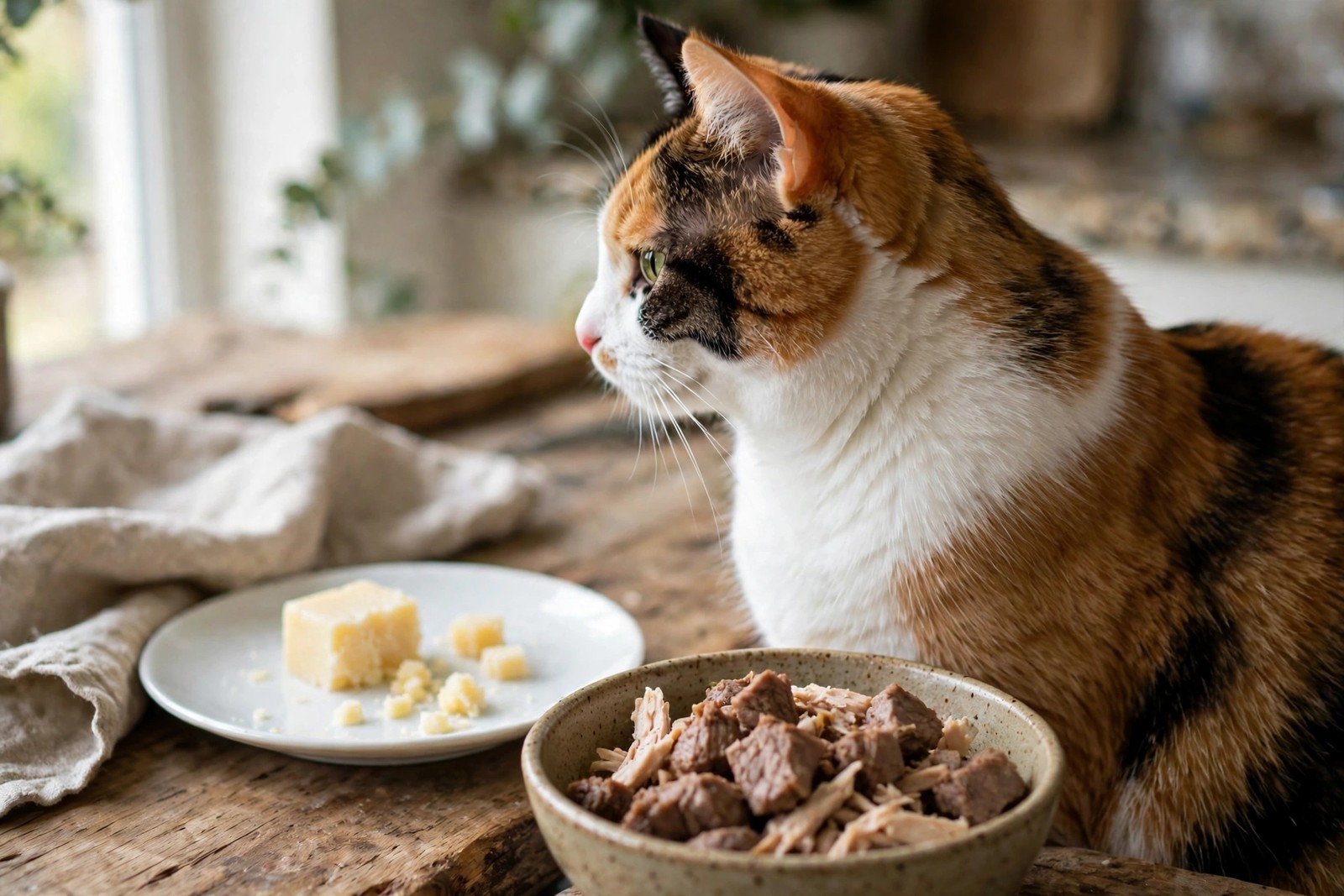
For cats, cheese is a crumb-sized taste at most, and for many cats the right amount is none. The deciding factor is lactose: kittens handle milk sugar while nursing, but most cats produce far less of the enzyme that digests it as adults, so dairy that seems gentle often explains the loose stool that follows a day later.
Hard Cheese, Soft Cheese, and Everything Between
Not all cheese loads a cat equally. Long-aged hard cheeses lose much of their lactose during making and ageing, so a crumb of a hard cheese is the least likely form to cause trouble. Soft, fresh cheeses, cottage-style cheeses, and milk itself retain more lactose and upset sensitive cats more readily. Processed slices and spreads sit in their own category, adding emulsifiers, extra salt, and sometimes flavourings such as onion or chive that cats should not have at all.
Salt and fat apply across the board. Cheese is energy-dense for a small animal, and a cube that looks like a treat to you can equal a significant share of a cat's daily calories while crowding out food that carries taurine and complete protein. Cats with kidney or heart conditions, where sodium is managed carefully, should not be offered cheese even as a crumb unless your vet has said otherwise.
Reading Your Own Cat's Answer
If you offer a first crumb, make it a single variable: one small piece, nothing else new that day, then watch for twenty-four hours. Loose stool, gassiness, vomiting, itching, or a cat who skips the next meal means dairy does not suit this individual, and the answer for your cat is simply no cheese from then on. A cat who tolerates a crumb has earned an occasional crumb, not a promotion to regular cubes, because tolerance and benefit are different things and cheese offers no benefit a cat food does not cover better.
Say the quiet part clearly for the household: the famous image of a cat with cheese is a cartoon, not a feeding guide. Children especially will offer cheese to a willing cat at every opportunity unless the rule and the reason are explained once, kindly and in advance.
Using Cheese Around Medicine, Carefully
Owners sometimes hide tablets in cheese because the smell is strong and the texture moulds around a pill. A crumb-sized wrap for a cat known to tolerate dairy can be reasonable, but ask your vet first, since some medicines should not be given with calcium-rich foods and a refused, half-chewed dose helps nobody. If your vet approves the method, keep the wrap as small as the pill allows and follow it with the cat's normal meal.
Store cheese in the fridge in closed containers, clear cheese boards promptly, and never leave rind and offcuts on a low table after a meal, because a determined cat will vote with its paws. Record your cat's verdict, tolerant or intolerant, in KinsLe Care Teams with its feeding notes, and the next person reaching for a treat works from evidence about this cat instead of optimism.