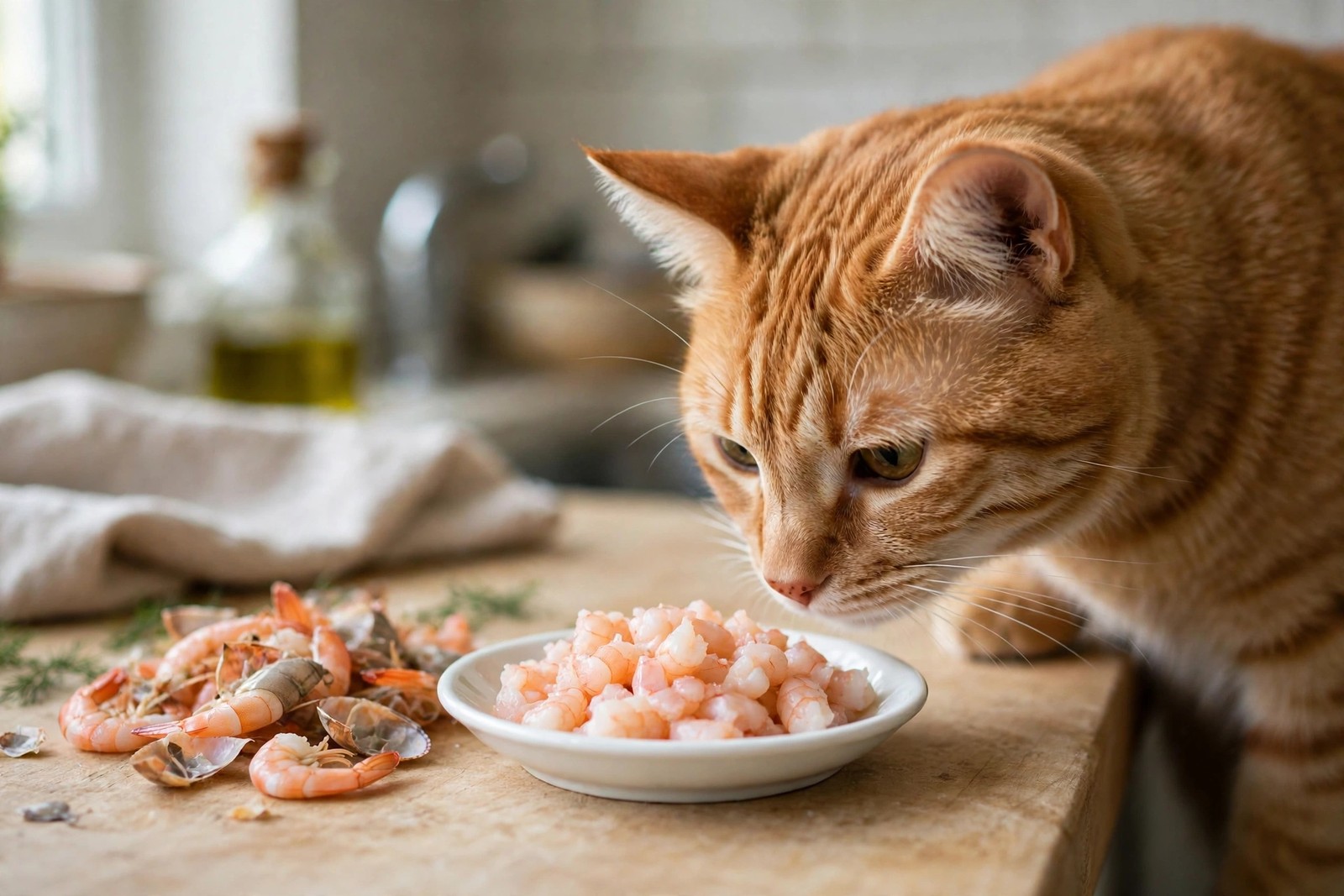
Yes — a cat can eat cooked shrimp in a small amount, provided it is peeled, plain and cooked all the way through, with the head, tail and shell taken off. Raw shrimp is not safe to offer. Shrimp smells intensely fishy to a cat, so enthusiasm at the bowl is normal, but enthusiasm is not the same as nutritional need.
What Makes Shrimp Suitable, and What Ruins It
Shrimp is mostly protein and water, which is why a little fits a carnivore better than a sweet or starchy extra. It is not, however, a complete cat food. A shrimp contains none of the careful balance of a proper feline diet, so it belongs in the treat corner of the day, not in place of a meal.
Preparation decides whether it stays a reasonable treat. Serve the flesh only. Shells, tails and heads are hard, sharp-edged and difficult to digest, and a gulped piece can be a choking risk for a cat who eats quickly. Cook it plain by boiling, steaming or baking until opaque and firm. Skip cocktail sauce, garlic butter, breading, chili, lemon marinades made for people, and the salty liquid from pre-cooked packs. If shrimp was cooked for the family table with sauce or seasoning, it is no longer a cat treat — set aside one plain piece before saucing, or skip it entirely.
How Much, and How Often
For a first try, offer a pea-sized chopped piece and wait a day before offering more. If stool, appetite and skin stay normal, the usual ceiling is one small shrimp, chopped into bite-size pieces, on an occasional basis — think a seafood treat day, not a daily topper. Chopping matters: a whole curled shrimp invites gulping, while small pieces are chewed and easier to portion across two cats without doubling the amount.
Do not let shrimp quietly become a meal replacement for a fussy cat. A cat who fills up on shrimp and then refuses balanced food is training the household, not improving the diet. Put the piece on top of, or just after, the normal meal rather than using it to bribe a cat who has skipped eating, and take note if skipped meals become a pattern worth raising with your veterinarian.
Allergy and Upset: The First-Taste Rule
Shellfish sensitivity is uncommon but real in cats. Signs after a first taste can include vomiting, diarrhoea, drooling, face rubbing, itchy skin or new ear scratching in the hours that follow. Because those signs can also follow simple overindulgence, the cleanest test is one tiny piece, one new food at a time, and no second helping that same day. If signs are strong, repeated, or paired with lethargy or loss of appetite, stop the food and contact your veterinarian for advice rather than trying a smaller amount next time.
Leftover plain shrimp should be refrigerated promptly and treated like any cooked seafood for freshness — if you would not eat it, do not feed it. Cats are not protected from spoiled food by being carnivores.
Keeping Treat Day From Happening Three Times
The most common shrimp problem in a busy home is not the shrimp itself but duplication: one person offers a piece at lunch, another shares from dinner, and the cat receives a small seafood meal nobody planned. In KinsLe, Care Teams helps by making that single occasional shrimp a named, timestamped duty on the cat's care list, so the whole household can see it has already been given.