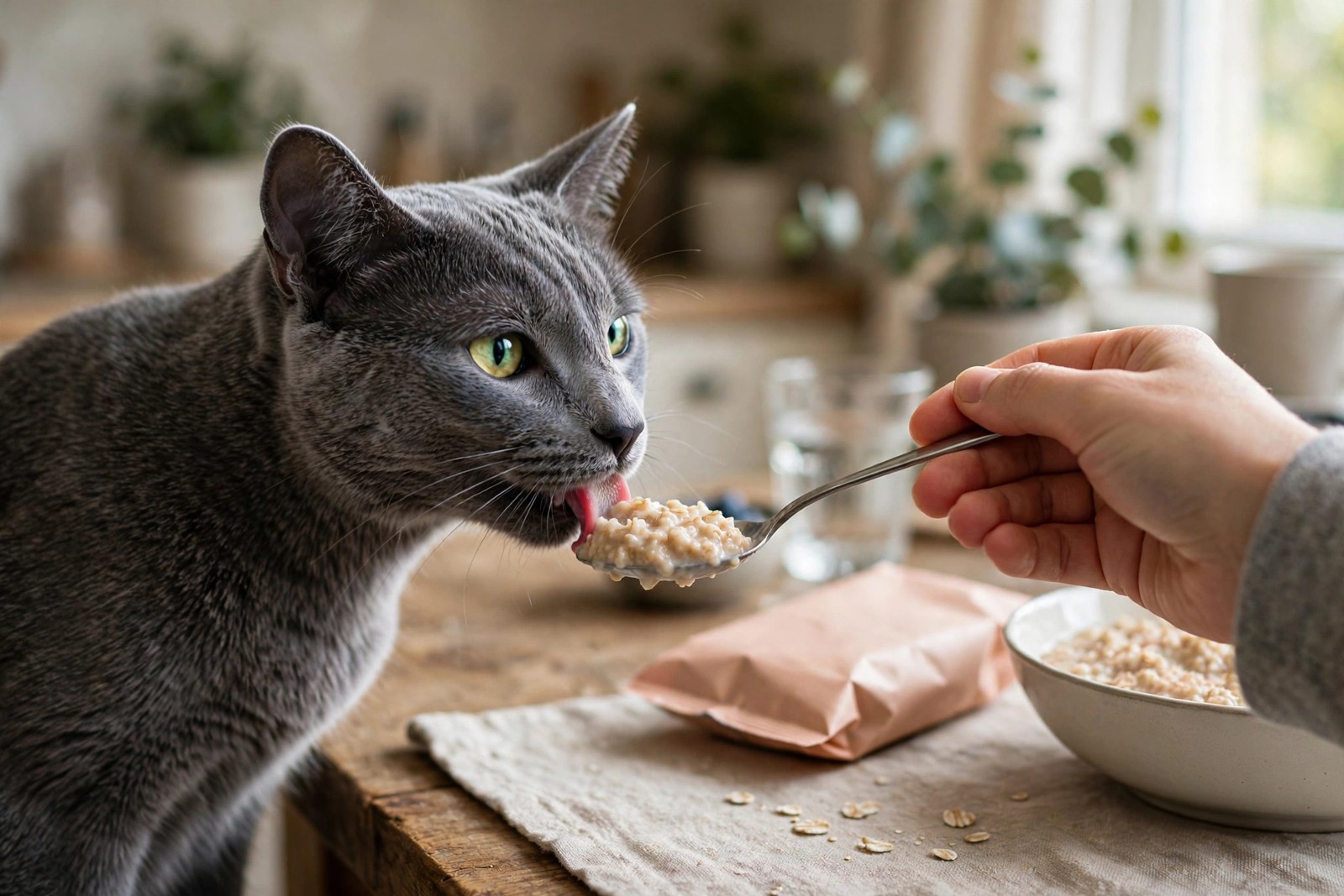
A spoonful of plain cooked oatmeal is safe for most cats as an occasional taste, but it should stay exactly that — a taste. Cats are obligate carnivores with little use for grains. Oatmeal must be cooked in water with no milk, sugar or flavourings, and uncooked oats are hard to digest. There is no need to add oatmeal to a healthy cat's diet; if a veterinarian suggests a little fibre for a specific reason, follow their amount rather than improvising a serving routine at home.
Why Oatmeal Offers a Cat So Little
Oatmeal's reputation comes from human nutrition: slow energy and soluble fibre. A cat's short, meat-built digestive system handles carbohydrate modestly and extracts little of what makes oats valuable to people. The cat does not need the energy in starch form — it is designed to run on protein and fat — and the fibre in a spoonful is a drop beside what a balanced cat food already balances carefully. That is why oatmeal for a cat is best understood as a texture some cats enjoy licking from a spoon, not as a supplement with a job to do. A cat who shows no interest has lost nothing.
The Versions That Are Not Suitable
Your breakfast oatmeal and a cat-safe spoonful are usually different foods. Instant flavoured packets bring sugar, salt and flavourings, and some contain raisins or raisin-like dried fruit, which cats must not eat. Stovetop oats cooked in milk reintroduce the lactose problem that upsets most adult cats. Oats served with honey, syrup, brown sugar, cinnamon-heavy spice mixes or nut toppings are all human preparations. If you want to offer a taste, the reliable method is to cook a small separate amount in plain water, let it cool to lukewarm, and offer a spoonful of that — soft, bland and fully cooked. Dry, raw oats should not be offered; they are difficult to digest and can swell with moisture.
Texture, Temperature and the Spoonful Rule
Serve oatmeal warm, never hot, and soft rather than stiff — a loose, porridge-like consistency is easiest for a cat to lick and swallow. One tablespoon is the right order of size for an adult cat's taste, and even that should be an occasional event, not a standing addition to the bowl. Because it is an extra, it belongs alongside or just after the normal meal, counted within the day's food rather than stacked on top of a full ration week after week. Overweight cats and cats whose veterinarian manages blood sugar are better off skipping grain extras altogether.
Watch the response as you would with any new food: gas, a looser stool or vomiting in the following day means oatmeal comes off the list for that cat. If fibre was the reason you reached for oats — a cat with recurrent hairballs or inconsistent stool, for example — that underlying pattern is worth raising with your veterinarian, who can judge whether fibre helps and in what form, instead of the household settling into an unmeasured daily scoop.
Stopping a Taste From Becoming Breakfast
Oatmeal creeps in at the shared breakfast table, one spoonful per person per morning. In KinsLe, Care Teams lets you note the oatmeal taste as a single occasional duty with a completion timestamp, so everyone can see it happened and the cat's actual breakfast stays its own food.