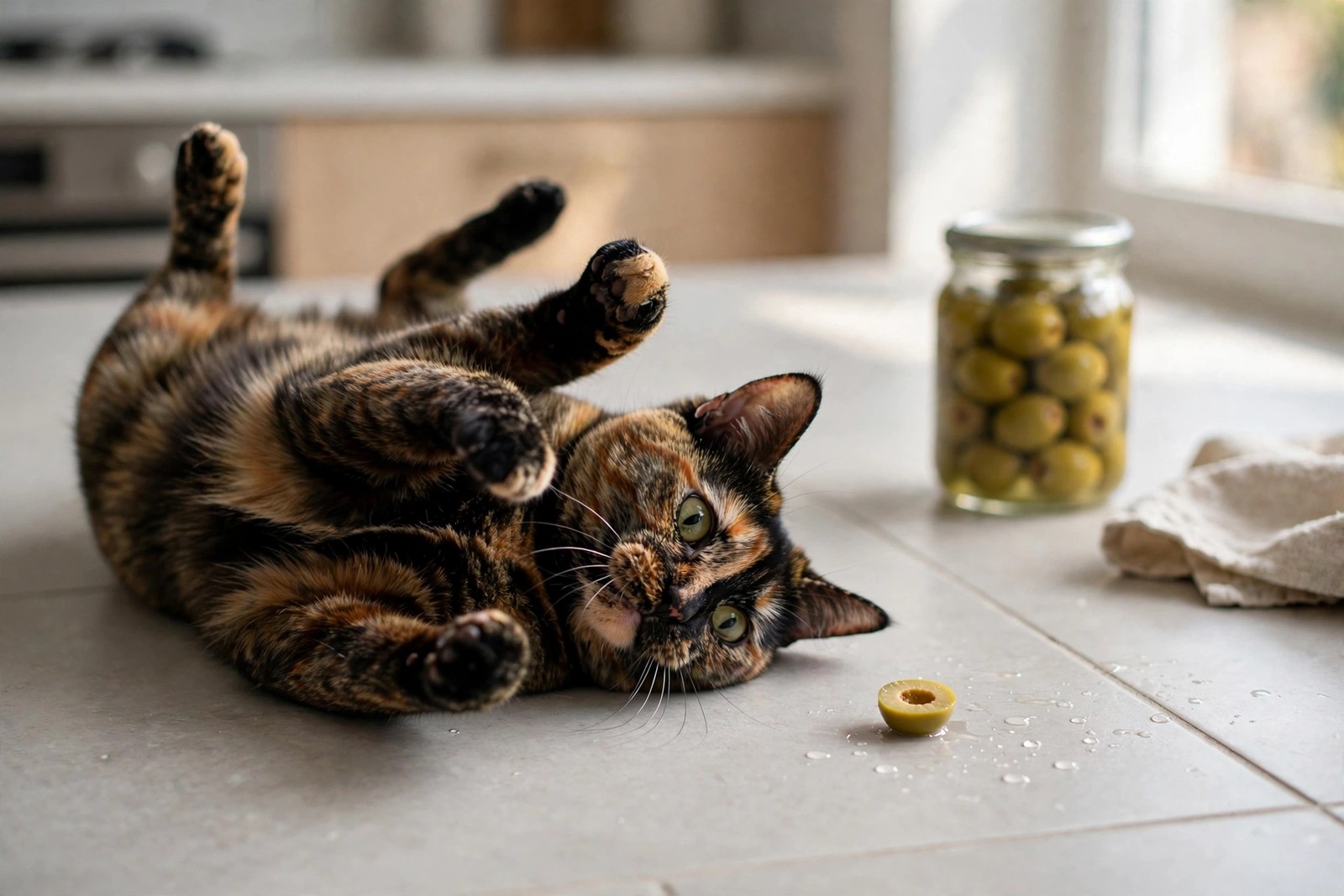
A small piece of olive is not toxic to cats, and some cats react to olives with the same playful rolling seen with catnip, thanks to compounds in the fruit. Olives should still stay a rare, tiny treat. They are usually packed in salty brine, and salt loads matter in a small body, so rinse a pitted olive well and offer a small slice at most, never olives stuffed with garlic or peppers.
Why Your Cat May Roll on an Olive
The performance surprises owners: a cat sniffs an olive, rubs its face on it, rolls, kicks and acts briefly delighted. Olives contain aromatic compounds in the same broad family as the active scents in catnip and certain other plants cats respond to, and a sensitive cat reads the olive as entertainment rather than food. Not every cat reacts — sensitivity varies by individual, much as it does with catnip — and a cat who simply eats the slice or ignores it is entirely normal. The reaction is harmless in itself, but let it stay a reaction to a scent on the floor for a moment rather than a cue to feed olive after olive to keep the show going.
Green and black olives follow the same rules. Green olives are picked unripe and tend to be firmer and especially salty from the jar; black olives are riper and a little oilier. Either way, the slice you offer should be small, rinsed and pit-free.
The Pit and the Brine: The Real Issues
The pit is a genuine hazard out of proportion to its size. It is hard enough to damage teeth if crunched, and the right size to be a choking or gut problem if swallowed, which is why only a checked, pitted olive, sliced, should ever be offered. Tinned and jarred olives swim in brine, and an unrinsed slice carries that salt straight to a small animal. Rinse the slice under water, pat it dry, and treat one thin slice as the whole event. A cat who drinks a lot afterwards, vomits, or seems uncomfortable after eating more than that — for instance, after fishing olives from a discarded pizza or salad — should be watched closely, and your veterinarian called if signs persist or the amount was large for the cat's size.
Stuffed olives change the food entirely. Garlic stuffing is a hard no, because garlic is harmful to cats. Chilli, pepper, anchovy and cheese fillings bring heat, salt and fats a cat does not need, and cocktail olives from drinks carry alcohol residue from the glass they sat in. Plain is not a preference here; it is the condition.
A Reaction Is Not a Reason to Repeat It Nightly
Because the rolling is funny, olives risk becoming a party trick, produced whenever guests visit. Resist building that routine: the salt alone argues for rare. Offer the slice, enjoy the response, and let weeks pass before the next one, if there is a next one.
That rarity is easier to hold when it is written down somewhere everyone sees it. In KinsLe, Care Teams lets you log the olive slice as a one-time completed duty on the cat's list, timestamped, so the next person tempted to repeat the trick knows it already happened.