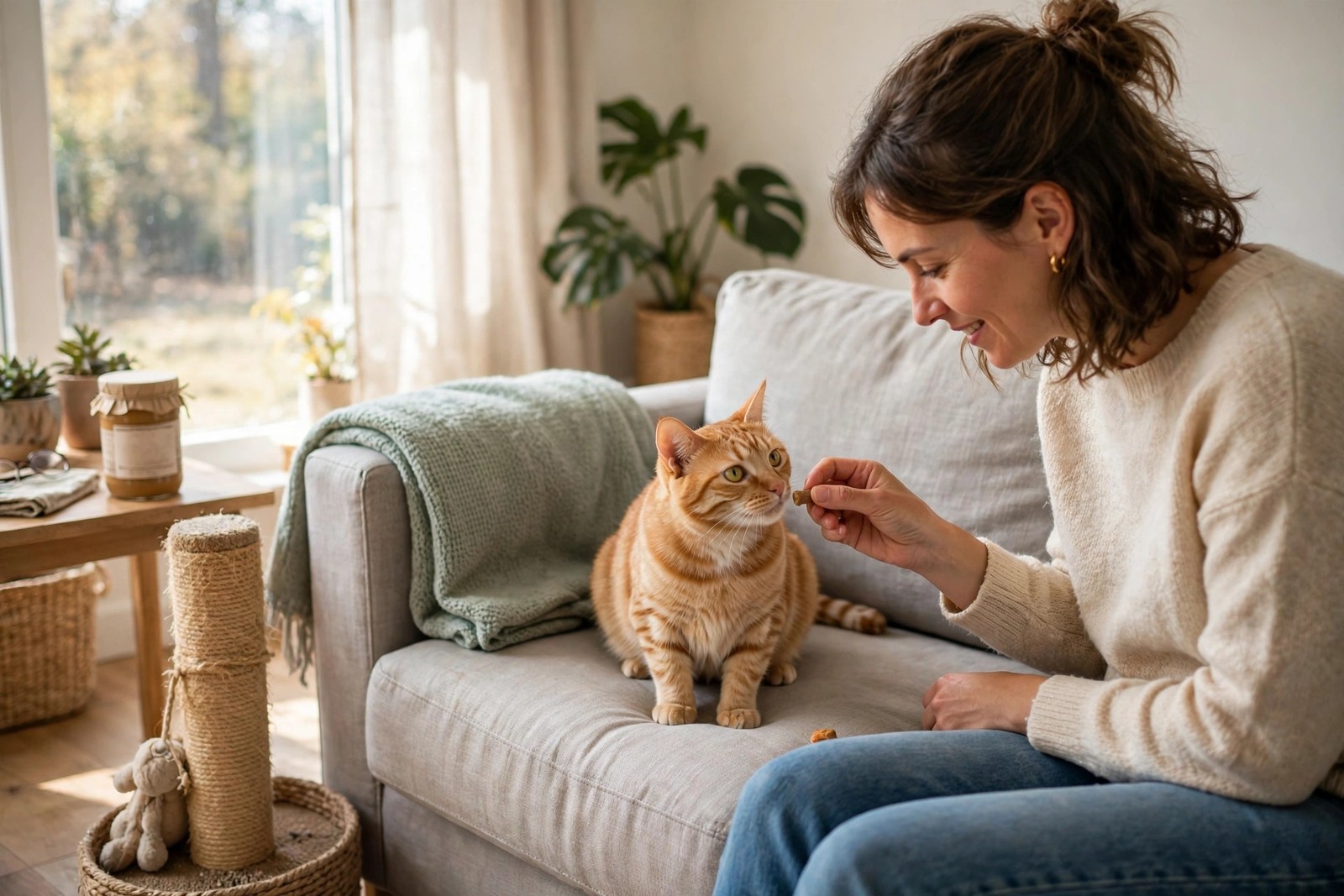
Some cats will lick peanut butter with apparent enthusiasm, and that enthusiasm misleads owners, because willingness to eat something sticky and fatty says nothing about whether it belongs in a feline diet. For peanut butter, it does not.
Nothing a cat needs, in a texture that causes trouble
Peanut butter was designed as a human spread, and its profile shows it. The fat content is high for a small animal, the protein is plant protein rather than the animal protein an obligate carnivore is built to use, and the thick, clinging texture can coat a cat's mouth and throat in a way that makes swallowing awkward. None of that buys the cat anything: a complete meat-based food already covers its nutrition without the sticky detour.
The sweetened and sugar-free jars are the real hazard
Plain peanut butter is a poor choice; flavoured jars are worse. Sweetened versions add sugar a cat cannot even taste, and sugar-free versions may be sweetened with xylitol, which is dangerous for pets and has no place anywhere near a cat's food. That risk is why peanut butter should never be used to disguise medication or fill a lick mat for a cat:
- Skip peanut butter as a treat, a reward and a pill disguise for cats altogether
- Check any household jar's sweetener before it is used around pets at all
- Choose a small piece of plain cooked meat or a proper cat treat instead
- Keep jars closed and stored away, since a cat left with an open jar will overeat the fat
- Contact a veterinarian promptly if a cat eats a sugar-free product, rather than waiting for symptoms
The calorie side is easy to underestimate. A spoonful that looks trivial on a human scale is a large serving for an animal the size of a cat, and peanut butter delivers those calories in a dense, fatty form that can sit heavily and loosen the stool afterwards. A cat does not need to eat much of it for a well-meant treat to become the richest thing it ate all week.
One household rule, clearly shared
Disagreement is how peanut butter usually reaches a cat: one person knows it is off the menu while another offers a spoon out of kindness. State the rule once, swap in the meaty treat everyone agrees on, and mention any episode of vomiting, drooling or appetite loss after eating it when you next speak to your veterinarian. In KinsLe, Care Teams gives that swap a rota, letting the person on treat duty log the proper treat as given, so the peanut butter stays in the cupboard where it belongs.