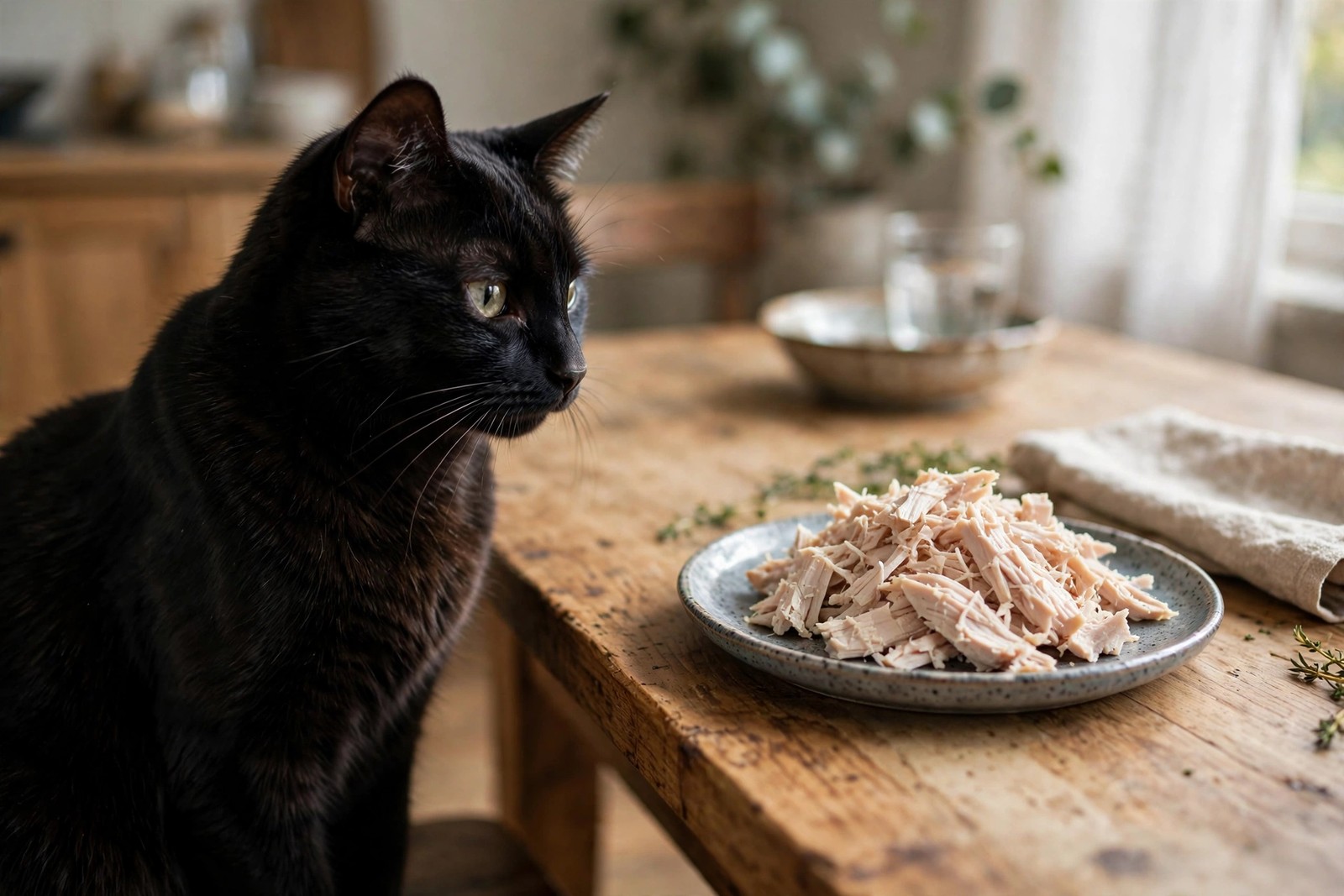
Yes, cats usually do well with plain cooked turkey when it is boneless, skinless, unseasoned, and cut into small pieces. Turkey is one of the easiest people foods to share safely, and also one of the easiest to get wrong, because the bird on a family table rarely stays plain for long.
White Meat, Dark Meat, and Skin
Plain white breast meat is the best choice: lean, mild, and simple to shred into cat-sized pieces once every trace of bone is removed. Dark leg meat is richer and fattier; a tiny amount will not trouble most cats, but it is not the portion to serve generously, and a cat with a sensitive stomach or a history of pancreatitis should stick to white meat or skip the treat. Skin should always come off. It concentrates fat, often carries salt and seasoning from roasting, and can turn a sensible snack into the kind of rich mouthful that produces vomiting or diarrhoea overnight. Cook turkey through, and never offer it raw, since raw poultry carries the same bacterial risks for cats that it does for the people handling it.
Bones Are the Real Hazard
A turkey carcass is dangerous in a way the meat is not. Cooked poultry bones turn brittle and can splinter into sharp fragments that injure the mouth, throat, or gut, and small bones can lodge or obstruct. Cats are persistent scavengers around a roast, so the practical steps matter as much as the rule: carve away from an audience, put bones straight into a lidded bin or a bag removed from the kitchen, wipe surfaces, and never leave the carcass cooling within reach while the room empties. If you suspect your cat has eaten a cooked bone, watch for drooling, retching, pawing at the mouth, appetite loss, or straining, and call your veterinarian for advice the same day rather than waiting for trouble to declare itself.
Holiday Turkey and Deli Turkey
Brined, butter-basted, smoked, or herb-rubbed turkey carries salt and seasonings in every slice, and anything cooked with onion or garlic, or served under gravy, should stay on human plates. Gravy is fatty, salty, and frequently onion-based, making it one of the worst parts of the meal to share. Stuffing is similarly off limits, typically built on onion, garlic, herbs, and fat. Deli and sandwich turkey are a different trap: processed, salty, sometimes sweetened or spiced, and cut for people. A cat begging at a holiday table gets one safe answer, which is a few shreds of plain meat set aside before the bird was seasoned, or nothing but their own dinner served on time.
Portions and First Tastes
Offer a few small shreds, roughly a tablespoon, as an occasional treat alongside the normal complete diet, not a saucer of turkey that quietly replaces a meal and unbalances the day. Introduce it on its own, watch stools and appetite for a day, and remember that a cat who adores turkey will lobby for it at every roast afterwards, so the household rule needs agreeing before the first shred is served. Cats on prescription or elimination diets should not receive turkey until their veterinarian clears it, because a single well-meant extra can confuse a carefully controlled trial.
Keeping Guests Inside the Rule
Visitors mean well and feed cats anyway, especially during long meals when a cat works the room. A short, friendly instruction given early beats a correction given late. KinsLe's Care Teams gives that instruction a permanent home, letting you attach the plain, boneless, skinless rule to your cat's feeding duties so family and helpers alike serve turkey correctly without needing to be told twice.